The coffee in the plastic cup didn’t even ripple. It just vanished. One second, a specialist at a remote outpost in Western Iraq was staring at the dark horizon, thinking about a mortgage or a girl back in Ohio, and the next, the world turned into a strobe light of orange and grit.
Pressure. That is what they tell you about first. It isn't the sound, because the sound is too big for human ears to process in the moment. It is the sudden, violent compression of the air in your lungs, the way the plywood walls of a barracks flex like cardboard, and the realization that the earth beneath your boots has become liquid. You might also find this similar article insightful: The $2 Billion Pause and the High Stakes of Silence.
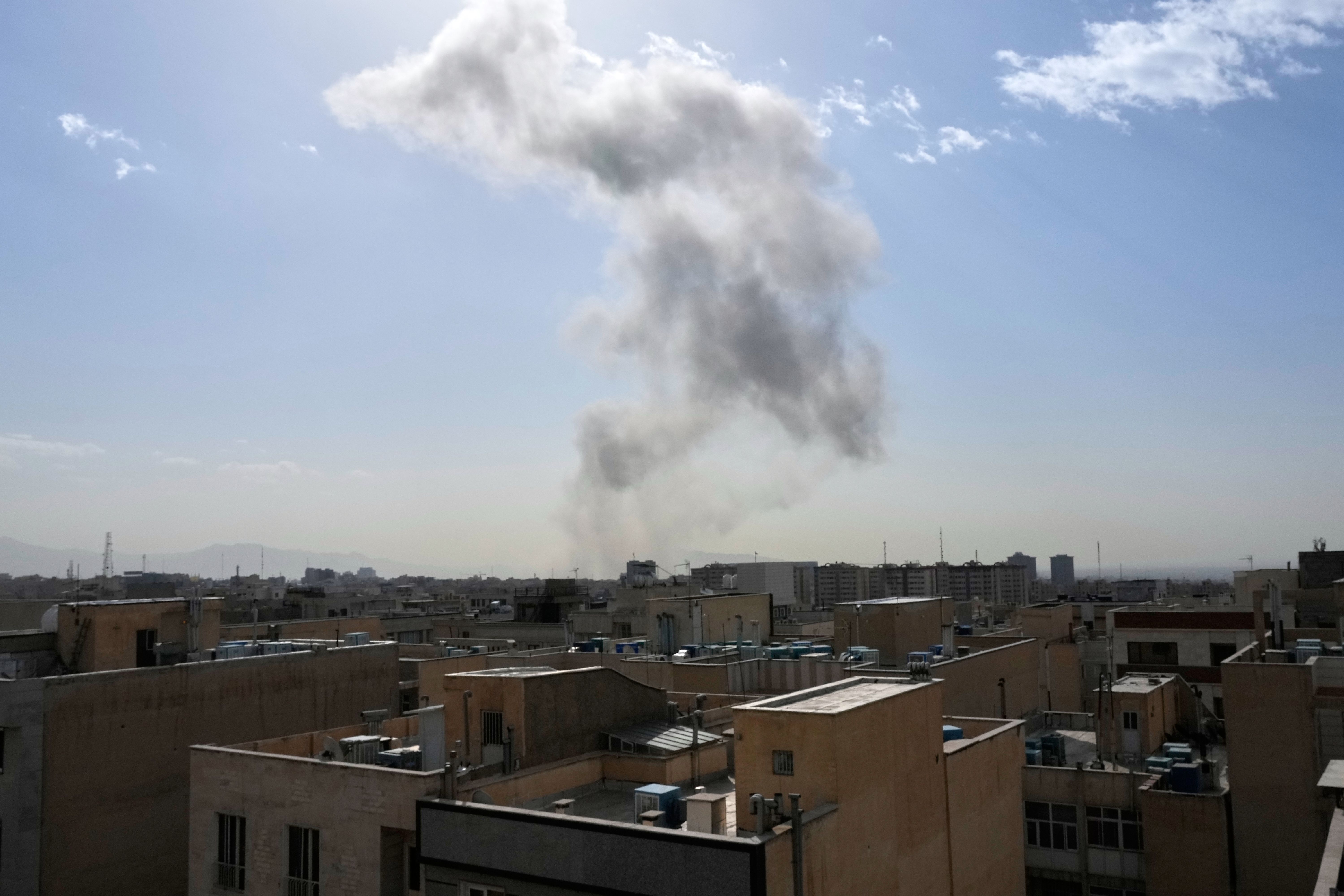
When Iran launched a series of ballistic missiles at U.S. airbases, they weren't just sending metal and high explosives across a border. They were sending a message written in fire. The official statements from Tehran called it a "defense of the homeland." In Washington, the briefings focused on "minimal casualties" and "strategic restraint." But between those two clinical descriptions lies the terrifying, human reality of a world teetering on a tripwire.
The Calculus of the Crater
Imagine standing in a field. You are told that at any moment, a bus-sized object traveling at several times the speed of sound might fall from the stars and erase everything within a hundred yards. You have a bunker, but the bunker is just a concrete tube covered in dirt. You wait. As highlighted in detailed articles by USA Today, the effects are widespread.
This isn't a hypothetical fear for the soldiers at Al-Asad Airbase. It is the baseline of their existence. When the warnings flashed on the monitors—detected by infrared satellites hanging in the cold silence of space—the shift from routine to survival happened in milliseconds.
Iran’s military commanders claimed these strikes were a measured response, a way to signal that their borders are sacrosanct without triggering a total, apocalyptic war. They used short-range ballistic missiles, weapons designed to hit hard and fast. From a geopolitical perspective, it was a move on a chessboard. From the perspective of a nineteen-year-old in a flak vest, it was the end of the world.
The missiles carved craters into the tarmac. They shredded hangars. They turned million-dollar equipment into jagged scrap. Yet, the most profound damage wasn't to the infrastructure. It was to the illusion of safety. For decades, the sheer scale of American power acted as a dome. That dome has been cracked.
The Language of the Homeland
To understand why a country would risk the wrath of a superpower, you have to look at the words they choose. Tehran didn't use the language of aggression; they used the language of the hearth. "Defending the homeland" is a phrase that resonates in every culture. It invokes the image of a father standing at the door, or a wall built to keep the wilderness at bay.
But the "homeland" is a flexible concept in the Middle East. It isn't just a map with lines on it. It is a sphere of influence. It is a history of perceived humiliations and a desperate, grinding need to prove that they cannot be pushed any further.
By launching those missiles, Iran was attempting to rewrite the regional hierarchy. They were betting that the American public, weary of "forever wars" and distracted by domestic fractures, would have no appetite for a full-scale invasion. They were betting on fatigue.
The Silence Between the Blasts
After the last explosion faded, a strange thing happened. Silence.
Not the peaceful silence of a sleeping city, but the heavy, ringing silence of a room where someone has just pulled the pin on a grenade and then decided to hold the lever down. Both sides looked at the wreckage. Both sides checked their watches.
The U.S. military’s response was surprisingly muted in the immediate aftermath. No "shock and awe." No immediate retaliatory sorties over Iranian cities. This wasn't because of a lack of capability. It was because the people in the "Situation Room" understood something the public often forgets: war is a conversation where both people are screaming. If one person stops to breathe, the other might too.
We often talk about these events in terms of "escalation ladders." It’s a clean, academic term. It suggests a steady, controlled climb. But real life is more like a slide covered in oil. Once you start moving, gravity takes over. The restraint shown in the hours following the attack was a desperate attempt to find friction, to grab onto anything that would stop the slide into a conflict that would make the last twenty years look like a skirmish.
The Cost of the Invisible
What happens to a person who survives a ballistic missile strike?
Physically, they might be fine. Maybe a few scratches, some ringing in the ears. But the brain is a delicate instrument. The Traumatic Brain Injury (TBI) numbers that trickle out of these reports weeks later are the true casualty list. A TBI isn't a broken arm. It is a shifting of the self. It is a loss of memory, a sudden irritability, a fog that never quite lifts.
When we read a headline about "explosions at US bases," we look for the death toll. If the number is zero, we move on to the next tab. We assume nothing happened.
But something always happens.
Thousands of miles away, families sat in living rooms in North Carolina and Texas, clutching phones, waiting for a text that said I'm okay. Those hours of waiting are a form of warfare too. They are the collateral damage of a "homeland defense" policy that uses human beings as bargaining chips.
The geopolitical experts will tell you that the deterrent has held. They will point to the fact that the oil markets didn't collapse and that the embassies stayed open. They will say the system worked.
The Fragile Architecture of Peace
We live in a world where we expect the giants to clash, but we rarely think about the dust they kick up. The tension between Iran and the United States is not a static problem to be solved; it is a chronic condition to be managed.
Every time a drone is launched or a missile battery is activated, we are testing the limits of human error. What if a missile had hit a crowded barracks instead of an empty runway? What if a defensive system had malfunctioned and shot down a civilian airliner in the chaos?
Peace is not the absence of conflict. Peace is the tireless, often invisible work of preventing the worst-case scenario from becoming the morning news. It is a fragile architecture made of phone calls, back-channel messages, and the occasional, harrowing decision to take a hit and not hit back.
The desert in Western Iraq is quiet again, for now. The craters are being filled with fresh concrete. The specialists are drinking their coffee, though their eyes might linger on the horizon a little longer than they used to.
We watch the screens and wait for the next update, hoping the people with their fingers on the buttons remember that the "homeland" is not a map or a slogan. It is the person standing next to you in the dark, hoping the world doesn't end before sunrise.
The dust has settled, but the air still tastes like iron.
Would you like me to analyze the specific types of ballistic missiles used in these engagements and their bypass rates against modern defense systems?