The air in the Upper Galilee doesn’t just get cold in late September; it turns heavy. It carries the scent of ripening apples from the orchards and the metallic tang of static electricity that precedes a summer-ending storm. But on this particular Monday night, the electricity wasn’t coming from the clouds. It was the hum of engines. Thousands of them. Low, vibrating frequencies that rattled the windowpanes of abandoned living rooms in Metula and Kirib Shmona.
For eleven months, this border had been a phantom. A line on a map guarded by ghosts and long-range optics. Then, with a series of rhythmic thuds that felt less like an invasion and more like a closing door, the phantom became flesh. Israel announced "targeted and limited" ground operations into Southern Lebanon.
The words "limited" and "targeted" are comforting to a strategist in a windowless room in Tel Aviv. They suggest surgical precision. Scalpels. They imply a beginning, a middle, and a very specific end. But for the family huddling in a basement in Marjayoun, or the reservist adjusting the straps of a ceramic vest for the fourth time in an hour, those words are paper-thin.
War is never limited to the people who have to breathe its dust.
The Geography of Anxiety
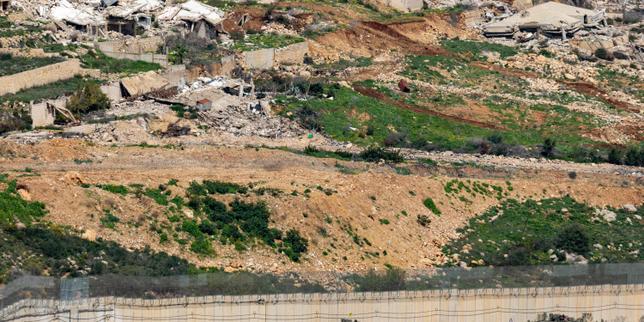
To understand why tanks are once again churning the red soil of South Lebanon, you have to look past the headlines of the last 48 hours. You have to look at the porch swings. Since October 8th, tens of thousands of Israelis have been unable to sit on their own porches. Their homes are within sight of Hezbollah outposts. They have lived with the knowledge that a Radwan commando could, in theory, walk across a road and change their lives forever.
On the other side of the Blue Line, the anxiety is mirrored, though the architecture is different. Lebanese villagers in places like Odaisseh and Khiam have watched the sky. They know the sound of a drone—that persistent, mosquito-like whine—better than the sound of their own children’s laughter.
The Israeli government frames this move as a necessity of return. They say they cannot ask their citizens to live in a "no man's land" forever. To fix the north, they argue, they must dismantle the infrastructure south of the Litani River. They are hunting for tunnels. They are looking for rocket caches tucked into the basements of civilian homes. They are looking for a sense of security that was shattered nearly a year ago.
But history has a long memory in this part of the world. In 1978, it was a "limited" operation. In 1982, it was a "forty-kilometer" plan that ended at the gates of Beirut. In 2006, it was a thirty-four-day war that felt like a lifetime. The ground here is thirsty for blood, and it rarely settles for a sip.
The Invisible Stakes of the Litani
The Litani River is more than a body of water. It is a psychological barrier. Under UN Resolution 1701, Hezbollah was never supposed to be south of it. Yet, as any shepherd in the region could tell you, the resolution was a polite fiction. The "limited" nature of the current operation is designed to force that fiction into reality.
Imagine a neighborhood where your neighbor keeps a loaded shotgun pointed at your front door from his second-story window. You ask him to move it. He refuses. The police say they’ll handle it, but they never show up. Eventually, you decide to walk across the lawn and take the gun yourself.
That is the logic currently driving the Merkava tanks across the border.
The risk, however, is the reaction. Hezbollah is not a ragtag militia. They are a disciplined, state-like entity with an arsenal that makes some European armies look under-equipped. They have spent two decades preparing for this exact moment. They know every cave, every ridge, and every blind spot in the valley. They aren't just fighting for territory; they are fighting for their identity as the "Resistance."
When the first boots hit the Lebanese soil, the chess match shifted from the air to the mud. In the air, Israel is a god. On the ground, everyone is mortal.
The Human Cost of a "Surgical" Strike
There is a specific kind of silence that falls over a village when the power goes out and the artillery starts. It’s not a true silence. It’s a vacuum.
A hypothetical man named Youssef sits in a village three miles from the border. He is not a fighter. He is a teacher who likes old Mercedes cars and strong coffee. For weeks, he ignored the flyers dropped from the sky telling him to flee. This is his home. His grandfather planted the olive trees that now provide the only shade for his children.
But as the "limited" operation begins, Youssef realizes that "targeted" doesn't mean "safe." If a missile hits the house next door because a launcher was hidden in the garage, Youssef’s walls will still crumble. The debris doesn't check for political affiliation before it falls.
Across the fence, a woman named Maya waits in a hotel room in Tiberias. She has been there for nearly a year. Her kids are falling behind in school. Her marriage is straining under the weight of living in a single room. She wants the army to go in. She wants the threat neutralized so she can go home and see if her garden is still alive.
She fears the operation. She wants the operation. She is caught in the impossible duality of the border-dweller: the desire for peace and the grim realization that, in this landscape, peace is often bought with violence.
The Shadow of the Patron
This isn't just a fight between two neighbors. It is a proxy war that has finally stepped out from behind the curtain. Behind Hezbollah stands Tehran, watching the attrition with a cold, calculated eye. Behind Israel stands a Washington that is simultaneously providing the munitions and pleading for "de-escalation"—a word that has lost all meaning in the Levant.
If the operation stays "limited," it is a tactical victory for Israel. It clears the immediate threat. It allows the displaced to return.
If the operation creeps—if the tanks keep rolling past the next ridge, and the next, and the next—it becomes something else entirely. It becomes a quagmire. It becomes a regional conflagration that could draw in actors who have, until now, been content to shout from the sidelines.
The invisible stakes are the lives of millions who have nothing to do with the ideology of the combatants. It is the economy of Lebanon, already in a death spiral, facing total collapse. It is the soul of a generation of Israeli youth who are being sent into the same hills their fathers and grandfathers fought in, wondering if the cycle ever actually ends.
The Rhythms of the Night
By 3:00 AM, the initial reports began to stabilize. The IDF confirmed the raids. The sirens in the north continued to wail as Hezbollah fired back, a desperate attempt to show they were still standing.
War is a series of choices. The choice to cross a line. The choice to pull a trigger. The choice to stay or to flee. On this night, the choices became irreversible.
The "limited" operation is a gamble. It is a bet that a short, sharp shock can reset twenty years of failed diplomacy. It is a bet made with the lives of young men and the futures of ancient villages.
As the sun begins to rise over the Golan Heights, the smoke from the border isn't just a sign of conflict. It’s a signal fire. It tells the world that the old status quo is dead. Something new is being born in the fire and the dust of the South Lebanese hills, and though the generals call it "targeted," the tremors are being felt across the globe.
The border hasn't just moved. It has dissolved. And when a border dissolves, the darkness on the other side has a way of coming home with you.
A lone tank commander pauses at the crest of a hill, looking down into a valley where the lights of a dozen centuries-old towns have been extinguished. He checks his watch. He checks his coordinates. He moves forward.
Behind him, the world waits to see if he ever comes back.