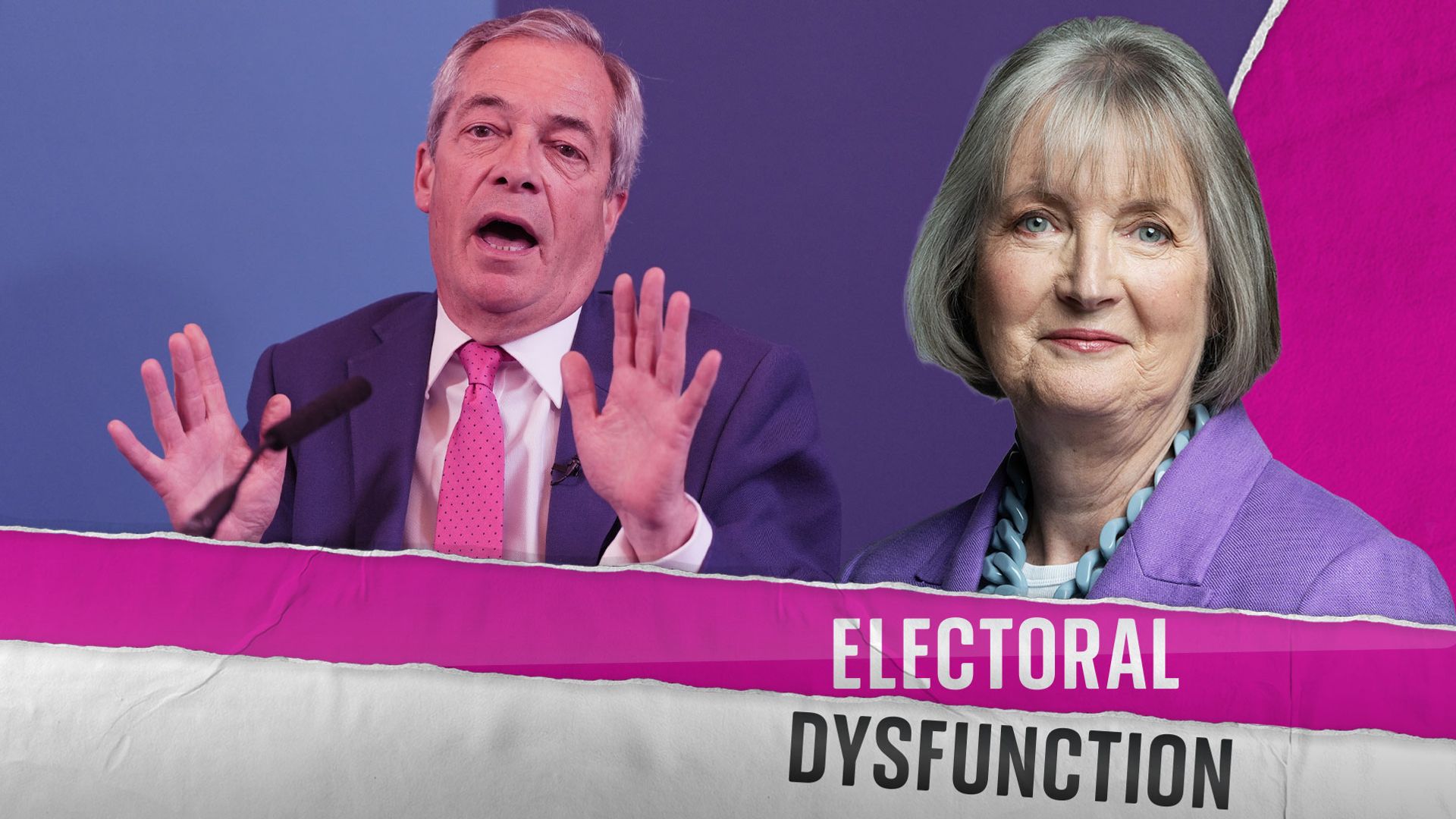
The collision of British populist politics and American celebrity meltdowns is rarely accidental. When Nigel Farage publicly defended Kanye West—the artist now known as Ye—following a series of antisemitic outbursts and conspiratorial rants, the reaction from Westminster was swift. Harriet Harman, the Mother of the House, didn't just offer a rebuttal; she accused Farage of deliberately fueling a "culture war." This isn't a simple disagreement over a rapper's right to free speech. It is a calculated alignment between the British hard-right and the "anti-woke" movement in the United States.
The core of the issue lies in how Farage uses West as a proxy for his own grievances against the mainstream establishment. By framing West’s isolation as a form of "cancellation" or "silencing" by the liberal elite, Farage bridges the gap between traditional British Euroscepticism and the modern, internet-driven populist movement. This strategy seeks to convince a disillusioned electorate that their values are under siege by the same forces supposedly "de-platforming" a billionaire musician. Discover more on a similar subject: this related article.
The Anatomy of the Farage Defense
Farage’s support for West was never about the music. It wasn't even about the specific content of West’s frequent outbursts. Instead, it focused on the reaction to those outbursts. Farage positioned himself as a defender of "objective truth" and "free inquiry," suggesting that the immediate condemnation of West was proof of a narrow-minded media class.
This is a classic maneuver. By shifting the focus from West's actual statements—which included praising Hitler and peddling tired tropes about Jewish influence—to the process of how he was treated, Farage avoids having to defend the indefensible. He turns a conversation about bigotry into a conversation about censorship. It is an effective shield. It allows him to flirt with the fringes of the far-right while maintaining a veneer of civil liberties advocacy. Additional analysis by BBC News delves into comparable perspectives on this issue.
Harriet Harman’s critique centers on this exact mechanism. She argues that Farage is not an innocent bystander or a curious observer. She views him as an architect of division who sees profit—both political and financial—in the breakdown of social cohesion. To Harman, Farage is importing a brand of Americanized identity politics designed to make the British public feel alienated from their own institutions.
Why the British Right is Looking Across the Atlantic
The shift in Farage’s focus from Brexit to "culture" reflects a broader trend in British conservatism. With the European question settled (at least legally), the populist right needed a new engine. They found it in the American culture wars.
- The Shared Language of Victimhood: Both Farage and the pro-West faction in the US utilize a narrative where the "common man" and the "truth-teller" are victims of a shadowy, powerful elite.
- The Disruption of Traditional Media: Farage’s tenure at GB News and his heavy social media presence mirror the tactics of American pundits who bypass traditional gatekeepers.
- The Monetization of Outrage: Content that defends a controversial figure like West generates significantly higher engagement than discussions on fiscal policy.
This transatlantic feedback loop is powerful. When Farage speaks about West, he isn't just talking to voters in Clacton or Kent. He is talking to a global audience that consumes the same "anti-establishment" content. He is building a brand that transcends British borders, positioning himself as a leader in a global movement against what he terms "the woke agenda."
The Harriet Harman Counterpoint
Harriet Harman represents the old guard of the Labour Party, but her intervention here is more than just partisan bickering. It is a defense of the post-war consensus on hate speech and public decency. When she accuses Farage of leading a culture war, she is pointing to the erosion of the "red lines" that used to govern political discourse.
The danger, according to Harman, is that by validating West’s "right to be heard" without unequivocally condemning his antisemitism, Farage gives permission for those views to seep back into the mainstream. It is a process of normalization. If a major political figure says we should "listen" to someone who praises Nazis, the gravity of that praise is diluted.
However, Harman’s approach carries its own risks. For Farage’s base, her condemnation is a badge of honor. To them, she is the embodiment of the very establishment they despise. Every time a senior Labour figure attacks Farage, it reinforces his "outsider" status. It is a symbiotic relationship where both sides use the other to energize their respective camps.
The Kanye West Factor as a Political Tool
Kanye West is a unique vessel for this conflict. He is a Black man who has embraced symbols of the American far-right, including the "White Lives Matter" slogan. For Farage, West provides a shield against accusations of racism. The logic is as crude as it is effective: How can I be a bigot if I am defending a Black icon?
This ignores the reality that West’s recent rhetoric has been centered on antisemitism, a form of prejudice that has historically been used by both the far-right and the far-left to explain away complex economic problems. By latching onto West, Farage isn't just defending a man; he is testing the waters for how far he can push the boundaries of acceptable speech in the UK.
The Breakdown of Public Discourse
We are seeing a fundamental shift in how political arguments are won. It is no longer about the strength of an idea or the validity of a statistic. It is about the "vibe." Farage is a master of the vibe. He understands that most people won't read a manifesto, but they will watch a three-minute clip of him "owning" a reporter or defending a celebrity against "the mob."
The West controversy provided the perfect "vibe" check. It allowed Farage to play the role of the cool, common-sense uncle who isn't afraid to say what everyone else is "thinking." The fact that what he is saying often aligns with dangerous historical tropes is treated as a secondary concern, or worse, a deliberate provocation meant to "trigger" his opponents.
The Real Objective Behind the Rhetoric
Do not mistake this for a genuine interest in the mental health or artistic output of Kanye West. This is about power. Farage is looking for a way to stay relevant in a post-Brexit landscape where his primary mission has been accomplished. By moving into the "culture war" space, he ensures a permanent seat at the table.
There is a vacuum in British politics for a movement that speaks to the anxieties of those who feel left behind by rapid social change. Farage is attempting to fill that vacuum with a mixture of British nationalism and American-style grievance politics. Kanye West is merely the latest prop in a long-running play.
Harman’s warning is that this play has a dark ending. History shows that when political leaders start playing with the fires of identity and conspiracy, they eventually lose control of the flames. The "culture war" isn't a game; it's a restructuring of how we perceive our neighbors and our country.
The public needs to look past the celebrity headlines. The story isn't about what a rapper said on a podcast or what a politician said on a news channel. It is about the deliberate dismantling of the shared reality that allows a democracy to function. When the truth becomes "subjective" and bigotry is rebranded as "free speech," the foundation of the state begins to crack.
Stop looking at the distraction and start looking at the hand that is pointing toward it. Farage is not defending Kanye West; he is using West to build a fortress for himself. The question is not whether West should be "canceled," but whether we are willing to let our political discourse be hijacked by those who see division as their only path to victory. Look at the patterns, not the personalities.