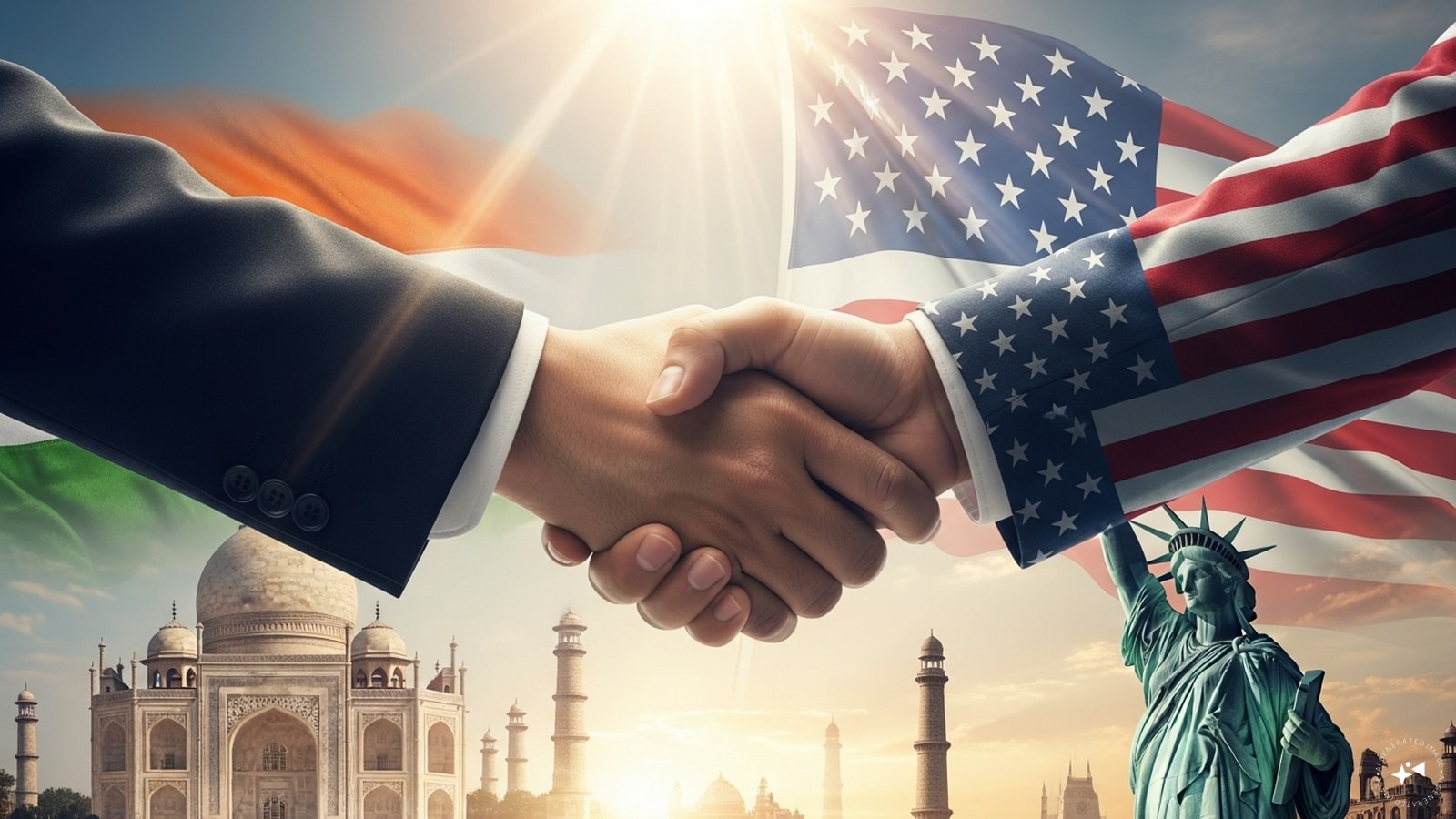
Indian exporters are celebrating a bit too early. Commerce Minister Piyush Goyal just announced that New Delhi and Washington are on the verge of signing the first phase of an interim trade pact, potentially locking it in by next month. The legal texts are basically done, with negotiators down to sorting out the commas and full stops. On paper, it looks like a massive win. The US is ready to lower reciprocal tariffs on Indian goods from 50% to 18%, and India is opening up its markets to American agricultural products, tree nuts, and industrial goods.
But don't buy the hype just yet.
If you think this interim deal means smooth sailing for Indian exports to America, you are misreading the current mood in Washington. The reality is that an interim pact is a band-aid on a structural fracture. Even if the ink dries on this agreement tomorrow, Indian businesses remain highly exposed to sudden, unilateral tariff hikes. The American trade machine has changed its playbook, and a signed piece of paper won't protect India from the trade storms brewing in late 2026.
The Section 301 Weapon That Changes Everything
The biggest blind spot for businesses right now is assuming that standard trade agreements guarantee permanent market access. They don't. While Indian negotiators were sitting in New Delhi ironed out the final details of this interim deal, the US Trade Representative (USTR) dropped a bombshell. The US proposed a fresh 12.5% tariff on 54 countries, and India sits right near the top of that list.
This isn't a random tax. It is the result of a unilateral Section 301 investigation under the US Trade Act of 1974. The US claims India and dozens of other nations have failed to effectively ban and police imports of goods made with forced labor in third countries. Simultaneously, Washington is running another Section 301 probe into structural overcapacity in sectors like solar modules, processed food, steel, and aluminum.
Here is why this matters. Section 301 investigations bypass traditional trade treaties. They are unilateral economic tools. If the USTR decides a country's policies burden American commerce, the White House can slap on tariffs regardless of what any interim trade pact says.
Think-tanks like the Global Trade Research Initiative (GTRI) have pointed out that the US is stretching the legal definition of Section 301. Historically, these probes targeted trade barriers inside a foreign country that hurt US companies trying to sell there. Now, Washington is using them to police what other countries import from places like China. It is a aggressive pivot. The US is using the threat of these tariffs as leverage to force India into compliance on wider geopolitical goals, including supply chain decoupling from Beijing.
The Shrinking Competitive Edge
To understand why Indian exporters are vulnerable, look at how the tariff math has shifted over the last few months.
In early February, the initial framework for this India-US deal looked incredibly lucrative. India was supposed to get preferential tariff rates that would give its textiles, leather, and jewelry sectors a massive leg up over regional rivals like Bangladesh, Pakistan, and Sri Lanka.
Then the policy environment shifted. Following a US Supreme Court ruling that disrupted previous emergency tariff structures, the White House pivoted to a uniform 10% tariff on all global imports for a 150-day window ending in late July.
When everyone faces a flat 10% tariff, India’s relative advantage evaporates. A trade deal is only valuable if it gives you a distinct edge over your competitors. Right now, the constant adjustments to US trade policy mean the ground is shifting beneath the negotiators' feet. This is why the current round of talks requires intense recalibration. India isn't just negotiating for lower duties anymore; it is scrambling to preserve a relative advantage that Washington can wipe out with a single executive order.
The Hidden Costs of Compromise
Washington does not give away market access for free. The concessions India had to make to get this interim deal over the finish line are massive, and they carry their own economic risks.
- The Russian Oil Concession: Under the agreed framework, the US dropped a punitive 25% tariff on Indian goods that was originally slapped on due to India’s purchases of discounted Russian crude. To get that penalty removed, India had to agree to curb its intake of Russian oil. Replacing that cheap energy with more expensive alternatives will hit India's domestic refining margins.
- The 500 Billion Dollar Promise: Trump announced that India committed to buying $500 billion worth of US goods over the next five years, focusing heavily on energy, coking coal, aircraft components, and technology. To put that in perspective, India currently imports less than $50 billion annually from the US. Bumping that up by several hundred percent is an astronomical target that will severely strain India's trade balance.
- Agricultural Openness: New Delhi has agreed to lower barriers on US industrial goods and a long list of agricultural products, including dried distillers' grains, red sorghum, and fresh fruits. While this protects small-scale Indian manufacturing exporters, it opens up the sensitive domestic agricultural sector to intense American competition.
How to Navigate the Unpredictable Trade Landscape
If you run a business relying on India-US trade, relying on the headlines of a "historic pact" is a dangerous strategy. You need to actively de-risk your operations from the tariff volatility that will persist through 2026.
First, audit your supply chains for third-country vulnerabilities immediately. The USTR's forced labor probe is focused heavily on Chinese components winding up in Indian finished goods. If your product uses raw materials, components, or chemicals sourced from regions under US scrutiny, you are a target for the upcoming 12.5% tariff. Move toward verifiable, clean supply chains with ironclad documentation.
Second, don't price your goods based on the promised 18% tariff rate just yet. Build your financial models around the current baseline realities, keeping a buffer for sudden Section 301 duties. The public hearings for the forced labor tariffs are set for July 7. That means we will see a final decision right around the time this interim deal is supposed to take effect.
Diversify your market focus. The US remains India's critical trading partner, with bilateral trade crossing $190 billion, but putting all your eggs in the American basket is increasingly risky. Accelerate your push into the European Union or the UK, where trade negotiations are also active but operate under more predictable, rule-based frameworks. The interim deal with Washington is a useful political tool, but your business strategy needs to survive the unilateral tariff actions that are bound to follow it.