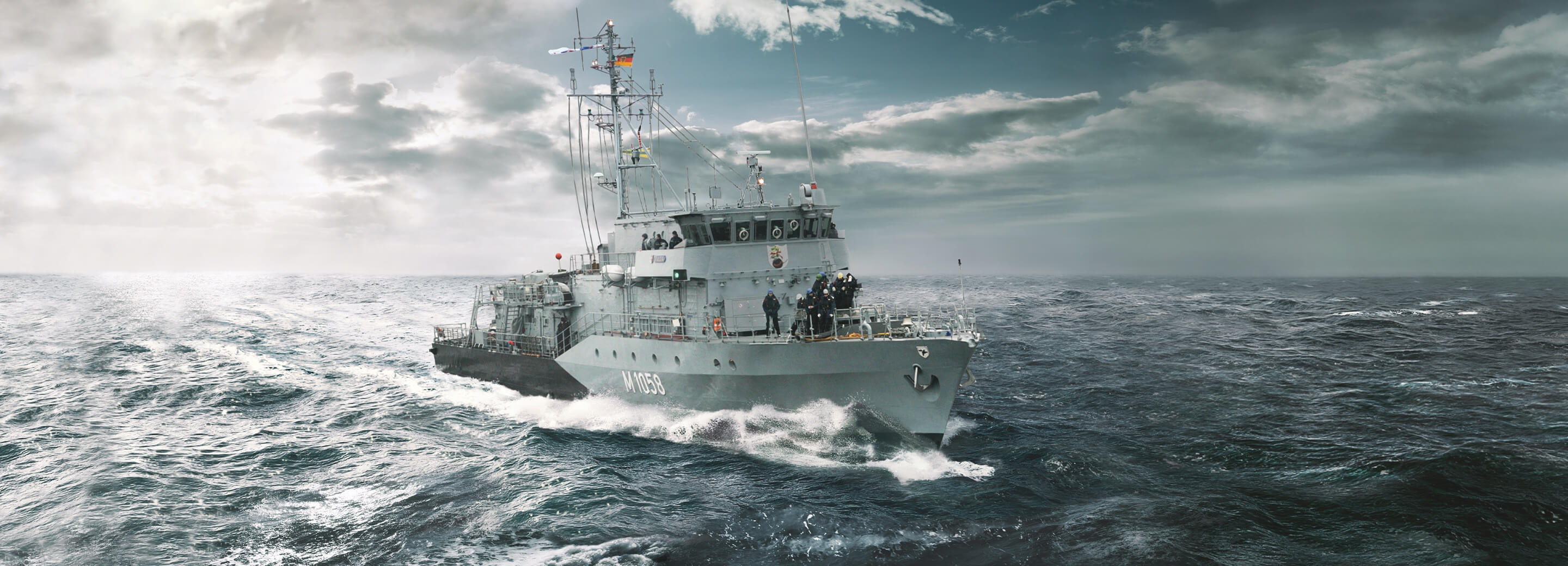
The strategic efficacy of naval mining rests on a radical cost-imbalance ratio: a primitive sea mine costing less than $5,000 can disable a multi-billion-dollar littoral combat ship or a Tier 1 destroyer. This asymmetry is not merely financial; it is temporal. While a minefield can be deployed in hours via aircraft, surface vessel, or submarine, the neutralization of that same field requires weeks of high-risk, slow-motion operations. Modern maritime security is currently bottlenecked by the physical limits of sensor resolution and the prohibitive risk-to-life inherent in traditional Mine Countermeasures (MCM).
The Triad of Mine Categorization and Threat Vectors
To analyze the difficulty of clearance, one must first categorize the threat by its physical placement and trigger mechanism. The complexity of the task scales non-linearly based on where the device resides in the water column. Don't miss our recent coverage on this related article.
- Moored Mines: These are buoyant cases tethered to an anchor on the seabed. They target hulls at specific depths. While the easiest to detect via sonar, they remain dangerous due to "snag" lines that trigger explosives upon contact with a sweeping cable.
- Bottom (Grounded) Mines: These rest on the seafloor and are designed for shallow or littoral waters. They are frequently "stealthy," coated in non-reflective materials or shaped to mimic rocks. Over time, siltation can bury these mines, rendering standard high-frequency sonar ineffective.
- Drifting Mines: Floating freely, these are banned by international law (Hague Convention VIII) unless they become harmless within one hour of deployment. Despite this, they remain a cheap tool for non-state actors to disrupt shipping lanes.
The sensors used to trigger these devices have evolved from simple contact spikes to multi-influence signatures. A modern "smart" mine monitors a combination of acoustic (engine noise), magnetic (hull mass), and pressure (displacement) changes. Advanced logic gates within the mine can be programmed to ignore small escort vessels and only detonate when the specific pressure signature of an aircraft carrier or a massive LNG tanker passes overhead.
The Search and Identification Bottleneck
The primary constraint in mine clearance is the "False Alarm Rate" (FAR). The seabed, particularly in high-traffic or post-conflict zones, is littered with "Non-Mine Bottom Objects" (NOMBOs), such as discarded refrigerators, sunken shipping containers, and geological formations. If you want more about the background of this, The Next Web provides an in-depth breakdown.
Traditional MCM logic dictates a four-stage process:
- Detection: Locating an anomaly on the seabed using Side-Scan Sonar (SSS) or Synthetic Aperture Sonar (SAS).
- Classification: Determining if the anomaly's dimensions and shadow match known mine profiles.
- Identification: Deployment of a Diver or a Remotely Operated Vehicle (ROV) to obtain visual confirmation.
- Neutralization: The controlled detonation of the mine using a "donor charge."
The inefficiency lies in the transition between detection and identification. A single square mile of seabed may contain hundreds of anomalies. If a mine-hunting vessel must stop and deploy an ROV for every piece of scrap metal, the "clearing rate" drops to a negligible crawl. This creates a strategic opening for an adversary to perform "area denial" simply by dumping metallic debris into a channel, forcing the clearing force to treat every object as a live threat.
The Cost Function of Human Divers vs. Autonomous Systems
The reliance on human divers represents the highest risk-cost in the naval budget. A diver's effectiveness is limited by physiological constraints—nitrogen narcosis, thermal exhaustion, and decompression requirements—alongside the psychological pressure of working in zero-visibility environments near "influence" mines that might trigger based on the magnetic signature of their equipment.
The shift toward Maritime Autonomous Systems (MAS) attempts to decouple the sensor from the sailor. This transition follows a specific technological roadmap:
Phase 1: Man-in-the-loop ROVs
Tethered vehicles operated from a "mother ship" that remains within the minefield. The ship itself remains at risk, but the human stays dry. The cable (tether) limits maneuverability and is prone to snapping in high-current environments.
Phase 2: Autonomous Underwater Vehicles (AUVs)
Untethered drones like the REMUS or Hugin. These execute pre-programmed lawnmower patterns, recording high-resolution data to an internal drive. The limitation here is the "Post-Mission Analysis" (PMA) lag. Data can only be analyzed after the drone is recovered, meaning the clearing force is always acting on information that is hours or days old.
Phase 3: Collaborative Swarms
The theoretical peak of MCM strategy. Multiple low-cost AUVs communicate via acoustic modems. If one unit detects a high-probability target, it signals "identification" drones to move in immediately, while "neutralization" drones carry disposable shaped charges. This removes the mother ship from the danger zone entirely.
Environmental and Physical Interference
The physics of the ocean serves as a natural defense for the mine-layer. Sonar performance is dictated by the "Sound Pressure Level" and is subject to the following degradations:
- Thermoclines: Layers of water with different temperatures act as acoustic mirrors. A mine sitting below a sharp thermocline may be invisible to a surface-mounted sonar because the sound waves refract (bend) away from the target.
- Biologics: Schools of fish or snapping shrimp create acoustic "clutter" that masks the signature of a mine's firing mechanism.
- Seabed Composition: A rocky bottom provides high "backscatter," making it nearly impossible to distinguish a cylinder-shaped mine from a cylindrical rock. Conversely, soft mud allows mines to sink, necessitating the use of Low-Frequency (LF) sonar that can penetrate the sub-bottom, albeit at a much lower resolution.
The Attrition of Global Supply Chains
Mine warfare is rarely about sinking the entire fleet; it is about the "Insurance Stop." If a single mine is detonated in a chokepoint like the Strait of Hormuz or the English Channel, global shipping insurance premiums (War Risk Rating) spike instantly. In many cases, commercial shipowners will refuse to enter the area until the "Probability of Detection" (Pd) reaches an acceptable threshold, typically $99.9%$.
Achieving that final $1%$ of certainty requires an exponential increase in time and resources. This is the "Long Tail" of mine clearance. To clear $90%$ of a field might take three days; to clear the remaining $10%$ to satisfy commercial safety standards might take three months. The adversary wins by simply maintaining the uncertainty of a clean channel.
Strategic Realignment for Littoral Dominance
Navies must move away from the "MCM Ship" as a platform and toward "MCM as a Capability" distributed across the fleet. The current reliance on dedicated, wooden, or glass-reinforced plastic (GRP) hull mine-hunters is a legacy approach that creates a single point of failure.
The integration of "Automatic Target Recognition" (ATR) powered by machine learning is the only path to solving the FAR (False Alarm Rate) bottleneck. By training neural networks on millions of seabed images, AUVs can begin to perform classification in real-time, discarding NOMBOs without human intervention. However, the limitation of this strategy is "Over-fitting"—an AI trained on the sandy bottoms of the Persian Gulf will likely fail in the kelp forests of the North Atlantic.
Future operations must prioritize "Pre-emptive Environmental Mapping." To clear a minefield effectively in 2026, a navy must already possess a high-resolution baseline map of the "clean" seabed from 2025. By comparing the two datasets (Change Detection), the clearing force can ignore every object that was present a year ago and focus exclusively on new anomalies. This reduces the search space by orders of magnitude.
Effective maritime strategy now dictates that mine clearance is no longer a post-conflict "cleanup" task. It is a continuous, data-heavy persistence mission. Failure to maintain a live, digital twin of critical sea lanes ensures that in any future conflict, the global economy will be held hostage by 20th-century explosives that cost less than a mid-range motorcycle.