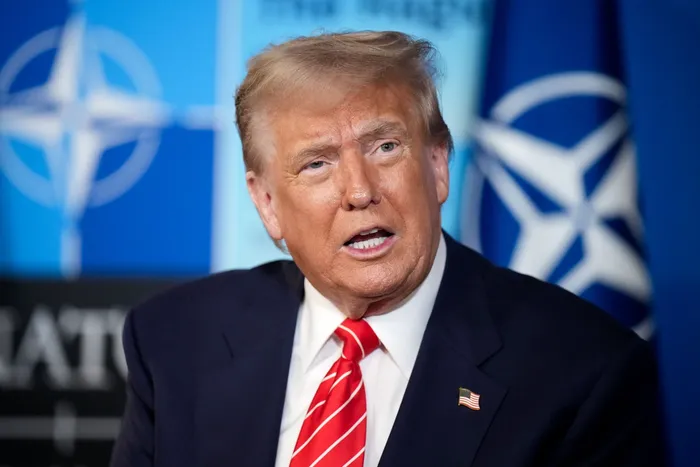
The facade of a unified Western military front has finally cracked, not in the snows of Eastern Europe, but in the sweltering heat of the Persian Gulf. After decades of strategic ambiguity, the "Article 5" era is facing its most brutal reality check to date. Donald Trump’s recent declaration that most NATO allies have refused to join the U.S.-Israeli campaign against Iran isn't just a typical Truth Social outburst. It is a post-mortem for an alliance that no longer agrees on what constitutes a "shared" threat.
For the better part of seventy years, Washington assumed that when the klaxon sounded, Europe would eventually fall in line. That assumption died this week. As the U.S. and Israel press forward with Operation Epic Fury, a campaign designed to systematically dismantle Tehran’s nuclear and military infrastructure, the silence from Brussels and Berlin has been deafening. This isn't a mere diplomatic spat; it is a fundamental decoupling of Western security interests.
The Great Hormuz Holdout
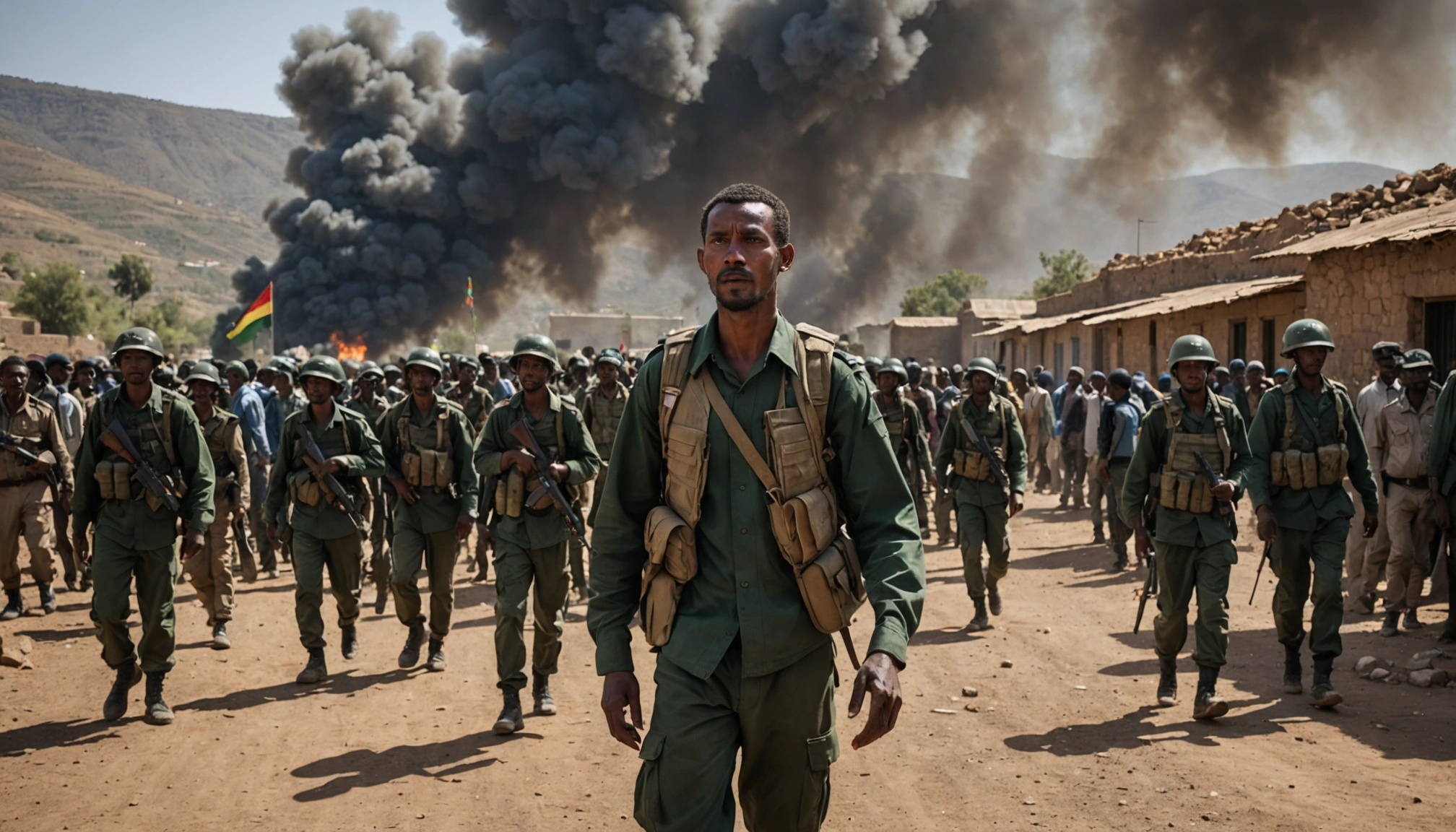
The immediate flashpoint is the Strait of Hormuz. Following the initial U.S.-Israeli strikes in late February, Tehran moved with practiced efficiency to throttle the world’s most critical energy artery. Mines, swarming fast-attack boats, and shore-based ASCMs (Anti-Ship Cruise Missiles) have effectively turned the 21-mile-wide waterway into a kill zone.
Trump’s demand was simple: NATO members must provide warships to escort tankers and "protect their own territory" by securing the oil they consume. The response from Europe was a collective, albeit polite, "no."
German Chancellor Friedrich Merz and British Prime Minister Keir Starmer have both signaled that while they find the Iranian regime distasteful, they have zero interest in being "drawn into the wider war." Their refusal highlights a glaring strategic divergence. To Washington, Iran is a rogue state that must be neutralized to prevent a nuclear arms race. To much of Europe, a full-scale war in the Middle East is an economic and humanitarian catastrophe that will trigger massive refugee surges and permanent energy poverty.
A One Way Street
Trump’s critique of NATO as a "one-way street" is gaining traction because it targets a specific, long-festering resentment in the American defense establishment. The U.S. currently accounts for roughly 70% of total NATO defense spending. For years, the argument was that this lopsided investment bought the U.S. a global coalition.
The Iran conflict has exposed that coalition as a mirage. When a ballistic missile was recently intercepted heading toward Turkish airspace, NATO Secretary-General Mark Rutte was quick to downplay the incident, stating that "nobody is talking about Article 5." This hesitation reveals the legal and political loophole at the heart of the treaty. Article 5 is geographically limited to the North Atlantic area. Attacks on U.S. assets in the Middle East do not technically trigger a mandatory collective response.
Europe is using this technicality as a shield. They are betting that they can remain "neutral" in a conflict that involves their primary security guarantor and their most significant energy supplier. It is a high-stakes gamble that ignores the reality of modern warfare: you cannot be half-allied.
The New Transactionalism
We are seeing the birth of a strictly transactional security model. Trump’s "we don't need them anyway" rhetoric is more than just bravado; it’s a pivot toward a "Shield of the Americas" and "selective bilateralism."
Instead of relying on the cumbersome consensus-building of the North Atlantic Council, Washington is leaning on regional partners who have skin in the game. The UAE, Qatar, and Bahrain have provided more tangible support for current operations than most of the G7 combined. This shift signals a permanent move away from the post-WWII institutional framework.
The "loyal test" Trump referred to wasn't about whether Europe could actually tip the scales in a fight against the IRGC. The U.S. Navy remains the only force capable of sustained carrier operations in the Gulf. The test was about political legitimacy. By refusing to participate, NATO members have effectively branded the U.S.-Israeli operation a "private war" rather than a collective defense of international order.
The Cost of Neutrality
There is a brutal irony in the European position. While leaders in Brussels talk of diplomacy and "reasoned negotiation," their economies are the ones bleeding out. Since the closure of the Strait, Brent crude has spiked to nearly $120 per barrel. European gas prices have surged by 50%.
By staying out of the fight, the EU hopes to preserve its ability to "rebuild" relations with whoever survives in Tehran. However, this neutrality comes at the cost of their relationship with Washington. If the U.S. is expected to defend the Suwalki Gap or the North Sea while its allies sit out the Hormuz crisis, the political math in the U.S. Congress will eventually break.
The American public is already weary. Recent polling shows a 52% disapproval rating for the Iran conflict among U.S. voters, largely driven by the gas pump. If the "burden sharing" remains this lopsided, the calls to "Bring the Boys Home"—not just from the Middle East, but from Ramstein and Lakenheath—will become a bipartisan roar.
The NATO of 1949 was built to stop tanks in the Fulda Gap. The NATO of 2026 is an aging bureaucracy struggling to find its pulse in a world where the threats are asymmetrical and the interests are fragmented. Washington has signaled it is ready to go it alone. The real question is whether Europe is actually ready for the isolation that follows.