The steel hull of a double-paned Aframax tanker is roughly two inches thick. It seems like a fortress until you are standing on the bridge, looking out at the shimmering, deceptive calm of the Strait of Hormuz. Here, the world’s industrial pulse thumps through a passage so thin that it feels like trying to fit a marathon through a hallway. To the north, the jagged, rust-colored cliffs of Iran’s Musandam Peninsula loom like a silent spectator. To the south, the Arabian Peninsula. Between them lies a strip of water barely twenty-one miles wide.
If this vein clogs, the world catches a fever.
For decades, the security of this passage was an unwritten law of nature, guaranteed by the sheer, overwhelming presence of the United States Navy. It was a simple arrangement: the world’s superpower kept the taps open, and the global economy stayed lubricated. But the air changed when Washington decided to tear up the nuclear map and pivot toward a policy of "maximum pressure" against Tehran. Suddenly, the tankers weren't just ships. They were targets. They were leverage.
The Ghost in the Machine
Consider a logistics manager in Dusseldorf or a factory foreman in Lyon. They likely never think about the Stena Impero or the Grace 1. They don't need to. Their reality is the price of synthetic rubber, the cost of heating a warehouse, and the stability of a supply chain that assumes the sea is a neutral highway.
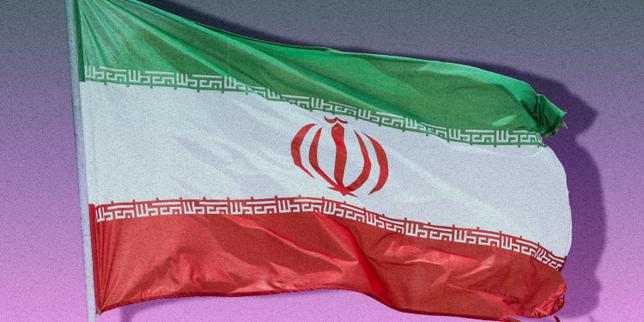
When the Trump administration exited the Joint Comprehensive Plan of Action (JCPOA) and reimposed sanctions, that neutrality evaporated. Iran, backed into a corner where its own oil couldn't flow, looked at the Strait. If we don’t eat, they reasoned, nobody eats.
The response was a series of "shadow" escalations. Limpet mines attached to hulls in the dead of night. Drones swarming like angry wasps. The seizure of European-flagged vessels. For a moment, the world held its breath, waiting for the inevitable American-led armada to sweep in and restore the old order.
But the old order was dying.
Washington’s invitation to a "maritime security constructor"—later known as Operation Sentinel—was met with a chilling silence from its oldest allies. Europe found itself caught in a geometric impossibility: it needed the oil to flow, but it couldn't afford to be dragged into a war it didn't choose.
The European Dilemma
Walking the halls of the Berlaymont in Brussels or the Quai d’Orsay in Paris, the tension wasn't about ships. It was about sovereignty.
To join the American mission was to endorse the "maximum pressure" campaign. It was an admission that European foreign policy was merely a shadow of the White House's whims. If France, Germany, and the United Kingdom followed the U.S. lead into the Strait, they would be signaling the final death of the nuclear deal they had fought so hard to preserve.
Yet, doing nothing was equally impossible. European companies were the ones operating these ships. European insurers were the ones holding the risk. The continent couldn't simply watch from the sidelines while its energy security was auctioned off to the highest bidder in a game of geopolitical chicken.
The solution was uniquely, stubbornly European. It was called EMASOH—European-led Maritime Awareness in the Strait of Hormuz.
It was a mission born of a desperate need for a third way. Headquartered at a French naval base in Abu Dhabi, it wasn't designed to provoke. It didn't carry the heavy-handed baggage of a "coalition of the willing." Instead, it was framed as a de-escalation force. Its purpose was to watch, to listen, and to provide a "reassuring presence."
It was a diplomatic tightrope act performed over a shark tank.
The Invisible Stakes
We often speak of "global markets" as if they are sentient beings, but they are really just a collection of human fears. When a tanker is seized, the "risk premium" on a barrel of oil doesn't go up because of a physical shortage. It goes up because a trader in London is afraid.
The Strait of Hormuz handles roughly 21 million barrels of oil a day. That is about 20% of the world’s consumption. Imagine one-fifth of the blood in your body suddenly encountering a clot. The damage isn't localized. The brain starves. The limbs go numb.
The European response was an attempt to thin the blood. By refusing to join the U.S. mission, Paris and Berlin were trying to tell Tehran: We are not your enemy, even if our ally is. They were trying to preserve a sliver of trust in a region where trust had been burned to the ground.
But how do you protect a ship without looking like you’re preparing for a broadside?
The French frigate Courbet and the Dutch ship De Ruyter became the physical manifestations of this paradox. They sailed the waters of the Persian Gulf not as aggressors, but as witnesses. They provided "situational awareness." In the dry language of bureaucracy, this sounds like doing nothing. In the high-stakes theater of the Middle East, it was a profound statement of independence.
The Cost of Independence
Building a separate security architecture was a messy, expensive, and legally complex endeavor. It required navigating the different appetites for risk among EU member states. Denmark, a shipping giant, was eager to contribute. Others were wary of the "French-led" label, fearing it was just another move in Emmanuel Macron’s play for European strategic autonomy.
The friction was real. While the U.S. had the raw power of the Fifth Fleet, the European mission had the power of nuance. Nuance, however, doesn't stop a cruise missile.
The gamble was that Iran would respect the distinction. Tehran needed Europe as a potential economic lifeline, a way to bypass the suffocating wall of American sanctions through mechanisms like INSTEX. By keeping the Strait open through a non-American mission, Europe was offering Iran a face-saving exit. It was a way to lower the temperature without either side having to admit defeat.
A Fracture in the Foundation
The real story of the Strait of Hormuz in this era wasn't about the ships. It was about the cracking of the Transatlantic alliance.
For seventy years, the West acted as a monolith on matters of high-seas security. The Gulf was the ultimate proving ground for that unity. When the UK eventually wavered—initially joining the U.S. mission before trying to bridge the gap with the Europeans—it revealed a continent in an identity crisis.
This wasn't just a spat over a trade deal. It was a fundamental disagreement on the nature of power. The U.S. believed in the hammer. Europe, out of necessity and perhaps a bit of lingering idealism, believed in the net.
The result was a crowded waterway. You had the Americans patrolling with a heavy footprint. You had the Europeans patrolling with a lighter, more diplomatic one. You had the Iranians watching both, looking for the seams between them. And underneath it all, the tankers kept moving—rusting giants carrying the lifeblood of modern civilization, manned by sailors from the Philippines, India, and Ukraine who just wanted to get through the day without becoming a footnote in a history book.
The Fragility of the Flow
If you look at a map of the Strait today, it looks peaceful. The blue water stretches out, seemingly infinite. But that peace is a manufactured product. It is held together by a fragile web of phone calls between capitals, secret intelligence sharing, and the calculated restraint of naval commanders who know that a single nervous finger on a trigger could reset the global economy.
Europe’s "answer" to the American pressure cook was not a counter-strike, but a buffer. It was an admission that the world is no longer unipolar, and that the safety of our coffee machines, our car engines, and our heated homes depends on more than just the biggest gun.
It depends on the ability to talk when everyone else is shouting.
The Strait remains. The mountains of Oman still shadow the passing hulls. The tide still pulls the salt water back and forth through that narrow, twenty-one-mile gap. We live in a world that is physically connected by these tiny, vulnerable chokepoints, yet politically drifting further apart.
The next time you see the price of gas tick up by a few cents, don't look at the pump. Look at the horizon of the Persian Gulf. Look at the two-inch-thick steel of a tanker, and the silent, invisible tug-of-war being played out by nations that can't agree on how to keep the world moving, yet can't afford to let it stop.
The water is deep, but the margin for error has never been thinner.