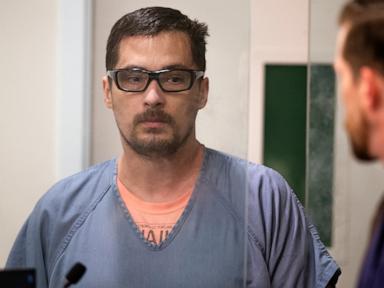
The courtroom smells of damp wool and industrial floor cleaner. It is a sterile, fluorescent-lit room designed to process the worst moments of human existence with bureaucratic efficiency. On the wooden benches, family members sit shoulder to shoulder. They hold hands so tightly their knuckles turn the color of chalk. They are waiting for a man who systematically erased the people they loved.
When the defendant enters, he does not look like a monster. He looks ordinary. Deflated, even. This is the grand illusion of public tragedies; the perpetrators rarely possess the cinematic malice we expect. Instead, they look like the background noise of a crowded street. But the paperwork trailing behind him tells a far more calculated story.
The state calls it an arraignment. The fifth one, to be precise.
For months, the local community watched a horrifying ledger write itself in real time. One body discovered. Then two. Then a pattern emerging from the weeds of vacant lots and the forgotten corners of abandoned properties. With every discovery, a family’s desperate hope mutated into a permanent, agonizing grief. The legal system moves slowly, processing these horrors one filing, one jurisdiction, and one charge at a time. To the prosecutors, it is a matter of building an airtight case, stacking evidence like bricks to ensure a conviction that can never be overturned. To the people in the gallery, it is a agonizingly slow confirmation of their worst nightmares.
Consider the anatomy of a serial investigation. It does not look like the television shows where a brilliant detective solves a riddle in forty-five minutes. It looks like hundreds of hours of tedious logbooks. It is the careful cross-referencing of cell phone tower pings, the painstaking retrieval of DNA from degraded environments, and the quiet, heartbreaking work of forensic anthropologists identifying remains that the elements have tried to claim.
The fifth charge represents more than just an amendment to a legal document. It represents a specific person. A woman who had a laugh that could fill a room, a favorite song, a morning routine, and people who wondered why her side of the conversation suddenly went dead.
When a community faces this kind of repetitive, targeted violence, a subtle shift occurs in the collective psyche. Trust fractures. Neighbors look at neighbors with a fleeting, ugly suspicion. Women walk faster beneath the streetlights, keys gripped tightly between their fingers like makeshift weapons. The fear is not abstract. It is visceral. It sits in the stomach like cold stone.
The defense attorney stands, speaks in measured, rhythmic tones, and enters a plea of not guilty. It is a standard procedural step, a necessary part of the machinery that guarantees a fair trial, yet it feels like a physical blow to those listening. The contrast between the clinical language of the law and the raw asymmetry of the loss is staggering. The court speaks of "counts," "alleged offenses," and "depositions." The families think of birthdays that will never be celebrated and empty chairs at the dinner table.
Behind the legal maneuvering lies a broader, systemic question that courts rarely answer: How do individuals slip through the cracks of society so completely that their absence isn't immediately met with flashing red lights and search parties?
The vulnerable are often targeted precisely because the perpetrator gambles on the world’s indifference. They gamble on the assumption that certain lives are valued less, that a disappearance will be blamed on lifestyle, or transient habits, or bad choices, rather than foul play. Every delay in finding a missing person is a tactical advantage for a killer. When the system fails to notice the missing until it is too late, it becomes an unwitting accomplice to the silence.
The detectives who spent months combing through the mud and the debris of the dumping grounds know this burden intimately. They carry the photographs of the victims in their pockets. They see those faces when they close their eyes at night. For them, the fifth charge is not a victory; it is a grim acknowledgment of a debt owed to the dead. A promise kept to not look away, no matter how grim the dirt becomes.
The judge schedules the next hearing. The date is read aloud, a mundane Tuesday in a month that feels far too distant. Papers are shuffled into manila folders. The handcuffs click into place with a sharp, metallic snap that echoes against the wood paneling.
As the defendant is led back through the side door, the courtroom empties slowly. People don't rush. They move with the heavy, dragging steps of those who have survived an ordeal but know the mountain ahead is still impossibly high. Outside, the sun is bright, blindingly so, casting long shadows across the concrete steps of the courthouse. The city moves on around them, buses roaring past and commuters rushing to catch trains, entirely unaware of the weight that was just measured out in a quiet room upstairs.
The ledger is closed for today, but the names remain, etched into the public record and burned into the hearts of the people who are left to pick up the pieces of a broken world.


