Political commentators love a predictable car-wreck metaphor, especially when the vehicle is the United States Senate and the driver is John Thune. The conventional narrative insists that the newly minted Senate Majority Leader is on an unavoidable, catastrophic collision course with Donald Trump. This thesis assumes that Thune, an institutionalist from South Dakota with roots in the traditional wing of the Republican Party, must eventually choose between total capitulation and career ending defiance.
It is an entertaining script, but it fundamentally misreads the mechanics of power in Washington. Thune is not driving headfirst into a crash. He is engineering an intricate system of legislative absorption, designed to process Trump's chaotic demands without shattering the delicate machinery of the upper chamber.
The assumption that Thune cannot survive the Trump era ignores the reality of how the Senate functions. Unlike the House of Representatives, where a narrow majority can be driven by raw populist fervor, the Senate operates on friction. Thune’s survival does not depend on a dramatic showdown. It depends on his ability to use the institutional rules of the Senate as a shield for both himself and his members.
By framing every policy disagreement as an existential battle for survival, observers miss the real story. The actual tension lies in the structural gridlock of the legislative process itself, where Thune has quietly positioned himself as an indispensable shock absorber rather than a target.
The Legislative Buffer Strategy
To understand Thune's operational playbook, look no further than the recurring fights over structural rules, specifically the legislative filibuster.
Trump has repeatedly urged Senate Republicans to "go nuclear" and abolish the 60-vote threshold to push through contentious immigration bills and funding measures, including the SAVE America Act and Department of Homeland Security appropriations. A conventional leader might engage in a public rhetorical battle over the preservation of Senate traditions. Thune does something far more effective. He blames the math.
With a slim Republican majority, Thune does not need to frame his opposition to changing the rules as a personal rejection of Trump. Instead, he points to the reality that he simply lacks the votes within his own conference to execute a rules change.
Senate Majority Requirements:
┌───────────────────────────────┐
│ Regular Legislation: 60 Votes │
├───────────────────────────────┤
│ Rules Change (Nuclear): 51   │ --> Thune lacks the internal
└───────────────────────────────┘     unanimity for this option.
This structural reality transforms a potential ideological conflict into a mathematical certainty. Thune cannot give Trump what he wants on the filibuster because his members will not let him, protecting the leader from direct political retaliation by sharing the burden of saying no across the entire conference.
This strategy was on full display during the negotiations over sweeping domestic policy and tax packages. While Trump demanded immediate, sweeping victories via the budget reconciliation process, Thune managed expectations by slow-rolling the procedural gears.
He allowed individual senators to voice objections over specific provisions, such as the fiscal impact on the deficit or targeted tax hikes, effectively using his conference's internal dissent as a negotiating lever with the White House. The legislation eventually moves forward, but only after it has been scrubbed of its most volatile components through the quiet, grinding machinery of committee markups.
The Myth of the Unmendable Rift
The idea that Thune is marked for destruction by Mar-a-Lago overlooks a concerted, years-long effort to repair a fractured relationship.
The two men certainly have history. Following the 2020 election and the events of January 6, Thune was vocal in his criticism, prompting Trump to publicly call for a primary challenger to oust the South Dakotan in 2022. That challenge never materialized, and Thune won reelection handily.
Rather than nursing a grudge, Thune embarked on a methodical campaign to mend fences, culminating in a crucial trip to Palm Beach in early 2024. He understood a basic truth about modern Republican politics. You do not have to love the populist movement, but you cannot govern the Senate if you are actively at war with it.
This detente has borne significant fruit. While Trump still occasionally throws rhetorical grenades at the Senate leadership, Thune has established a reliable operational rhythm with the executive branch.
When Trump roiled the Senate GOP by backing primary challengers against sitting incumbent senators like John Cornyn and Bill Cassidy, Thune did not launch a counter-offensive. He merely reiterated his support for his colleagues while validating the base's enthusiasm for the president.
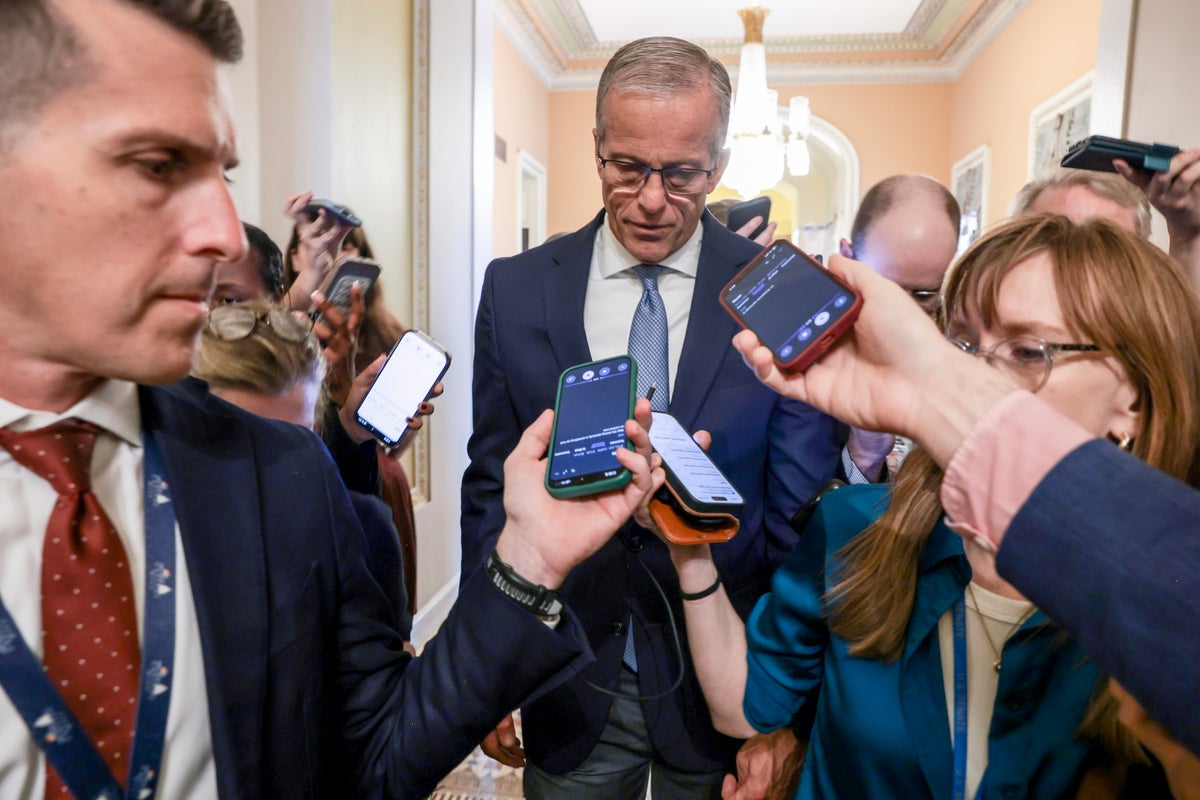
"None of us control what the president does," Thune remarked coolly to reporters. It was an admission of reality, not a declaration of war. By separating Trump’s campaign trail rhetoric from the day-to-day legislative output of the Senate, Thune preserves his political capital for the fights that actually matter.
Institutional Friction as a Shield
The core error of the "collision course" theory is the belief that Trump genuinely desires the total destruction of the Senate's institutional power.
In reality, the White House needs a functioning Senate to confirm judges, pass tax policy, and secure cabinet appointments. If Thune were to be replaced by a pure populist loyalist, the basic mechanics of the chamber would grind to a halt.
A hyper-partisan leader would alienate moderate Republicans, destroying the party's functional majority and rendering the executive branch completely impotent in the face of unified Democratic filibusters. Thune's institutionalism is not a liability to Trump; it is a secret asset.
Take the ongoing struggle over immigration and borders. Trump wants hardline policies passed immediately. Thune wants the same, but he understands that without a 60-vote threshold, any passed bill must be attached to must-pass funding vehicles or ground down through reconciliation.
When conservative senators demand that recess be cut short to force a vote, Thune balances the pressure by allowing the debate to play out on the floor, knowing the clock is his greatest ally. He gives the populist wing of his party the spotlight they crave while ensuring the actual legislative product remains within the realm of the possible.
The Real Vulnerability
If Thune faces a genuine threat, it does not come from a sudden bolt of lightning from Mar-a-Lago. It comes from the compounding friction of inflation, government spending, and the shifting economic anxiety of the American electorate.
While Washington obsesses over interpersonal drama between the leader and the president, voters are focused on the cost of living. Senate Republicans recently found their policy goals complicated by public blowback over high-profile real estate acquisitions and rising costs, highlighting a growing disconnect between elite political maneuvering and working-class economic realities.
Thune’s survival strategy relies on keeping his conference focused squarely on these economic pressures, using them as a unifying force to paper over ideological divides. He knows that as long as he can deliver wins on judges and tax cuts, the occasional rhetorical skirmish with the White House is just background noise.
The political graveyard is filled with pundits who predicted the imminent demise of institutionalist leaders who dared to manage, rather than mirror, populist energy. Thune understands that in the Senate, the race does not belong to the loudest voice, but to the driver who knows how to use the brakes.
Senate Majority Leader John Thune weighed in on the SAVE America Act, saying "I can't guarantee an outcome" for the bill's passage; watch this CBS News report on John Thune's legislative challenges to understand how he navigates thin majorities and pressure from the White House.