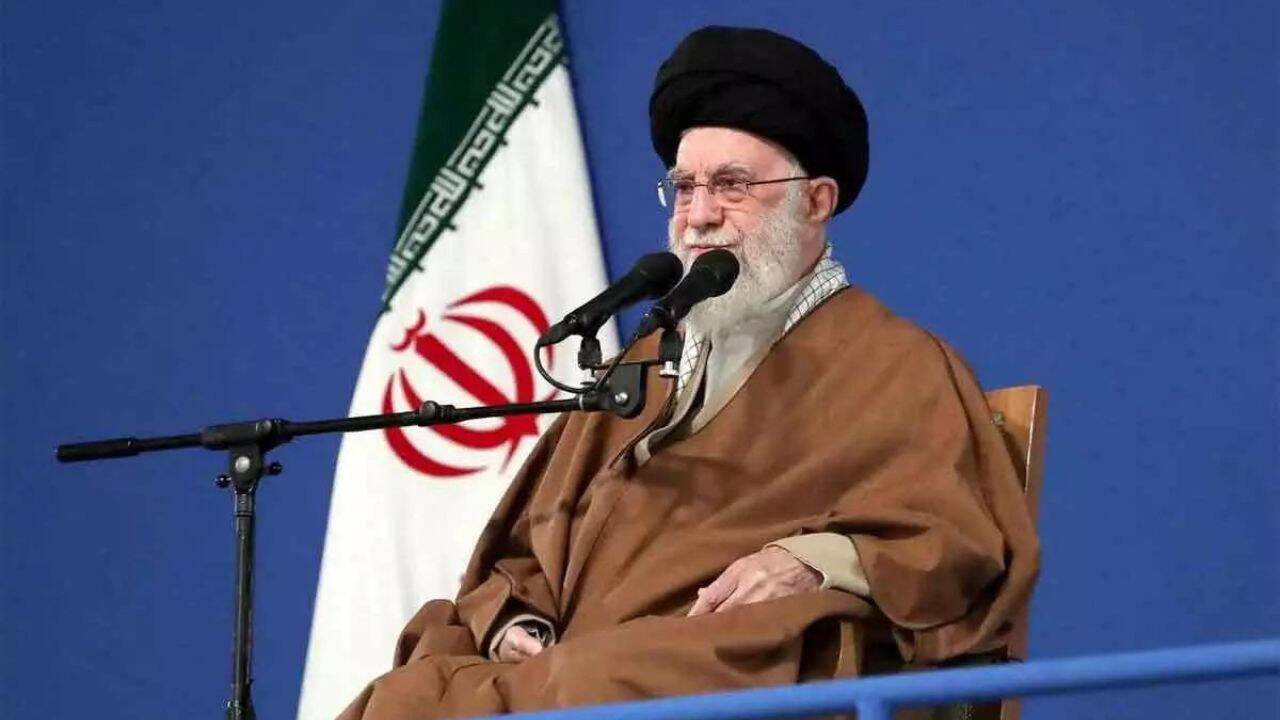
Western analysts love a good funeral. They look at the official guest list for Ayatollah Ali Khamenei’s eventual memorial service—or any major Iranian state funeral—see a front row dominated by Hamas, Hezbollah, and the Houthis, and immediately declare victory.
"Look how isolated Iran is," the talking heads say. "They only have non-state actors and militias left."
This is lazy analysis. It conflates conventional diplomatic popularity with strategic influence. It assumes that because European ambassadors and G7 leaders aren’t RSVPing to a funeral in Tehran, the Iranian regime is backed into a corner, friendless and desperate.
The reality is far more dangerous. Iran isn't isolated. It has spent the last two decades intentionally opting out of the traditional Westphalian diplomatic framework to build something far more resilient: a decentralized, asymmetrical power grid that operates entirely outside the reach of Western sanctions and military doctrine.
Measuring Iran’s power by its lack of Western state guests is like judging a tech company's market dominance by how many fax machines they own. You are looking at the wrong metric.
The Lazy Consensus of the Guest List
The mainstream foreign policy establishment operates on an outdated premise: that legitimacy only comes from state-to-state recognition. When they look at an event in Tehran attended primarily by Ismail Haniyeh's successors, Naim Qassem, and Houthi representatives, they see a "low-profile" gathering.
They miss the point entirely.
These groups are not mere proxies or disgruntled militants hiding in caves. They are the governing authorities of critical geopolitical choke points.
- The Houthis effectively control the Bab al-Mandab Strait, dictating terms to global shipping conglomerates.
- Hezbollah possesses a missile arsenal that rivals most sovereign European militaries and holds a veto over Lebanese state decisions.
- Hamas rewrote the security architecture of the Middle East in a single day.
To call a gathering of these leaders "low-profile" is a profound misunderstanding of hard power. Iran doesn't need the French foreign minister to show up to validate its status. The men standing in the front row of these funerals control the levers of energy security, maritime trade, and regional stability.
The Strategic Shift: From Pariah to Hub
I have watched Western intelligence agencies and think tanks cycle through the same predictable talking points for thirty years. Every time a major Iranian figure dies or an election is held, the narrative is identical: The regime is on its last legs. The sanctions are working. They are completely cut off.
If the sanctions were working, Iran wouldn't be supplying Russia with thousands of Shahed drones for the war in Ukraine. If Iran were truly isolated, it wouldn't have secured a historic, Beijing-brokered normalization deal with Saudi Arabia, nor would it have gained full membership in the BRICS bloc and the Shanghai Cooperation Organisation (SCO).
Iran has systematically immunized itself against Western disapproval. The regime recognized long ago that trying to play by the rules of the international financial and diplomatic system was a losing game for them. So, they built an alternative.
The Asymmetrical Network
Instead of building a massive, expensive conventional military that the United States could blow out of the sky in forty-eight hours, Tehran invested in low-cost, high-yield proxy warfare. This is the Axis of Resistance.
Consider the economics of this strategy:
- A single US Patriot interceptor missile costs roughly $4 million.
- A Houthi drone made with off-the-shelf components costs about $2,000.
Iran has forced its adversaries into a mathematical impossibility. They are burning through billions of dollars in defensive munitions to stop pennies' worth of Iranian-engineered tech. This isn't isolation. This is an masterclass in asymmetrical leverage.
The Flawed Premise of "People Also Ask"
Look at the standard questions people ask online about Middle Eastern geopolitics. The premises are fundamentally broken.
"Is Iran economically isolated?"
No. It is isolated from Western markets. That distinction matters. Iran’s oil continues to flow directly to China through a complex network of dark tankers and ghost fleets. Beijing gets discounted energy; Tehran gets a financial lifeline that Washington cannot shut off. The creation of non-dollar trade mechanisms between Russia, China, and Iran means that the US Treasury's sanctions power is hitting a wall of diminishing returns.
"Why doesn't Iran have state allies?"
It does, they just don't show up to funerals to hold hands for the cameras. Russia relies on Iranian military tech. China relies on Iranian oil. India is actively investing in the Chabahar Port to secure a trade route to Central Asia. Iran has state allies where it counts: in the transactional, cold-blooded realm of mutual self-interest. They don't need ideological affinity when they have shared adversaries.
The Downside of the Axis Strategy
To be fair, this contrarian reality isn't without major vulnerabilities for Tehran. The strategy of relying on non-state actors has a critical flaw: plausible deniability works both ways.
When you govern through a network of decentralized militias, you lose absolute control. The Houthis can pull Iran into a broader conflict with the West that Tehran might not feel entirely prepared for. Local commanders in Iraq can strike US bases without explicit orders from the Islamic Revolutionary Guard Corps (IRGC) Quds Force, triggering a retaliatory chain reaction that threatens the core of the Iranian state.
Furthermore, this strategy offers zero internal economic relief for the domestic Iranian population. The elite can celebrate their regional reach all they want, but inflation, water scarcity, and currency devaluation are rot from within. The network keeps the regime alive externally, but it does nothing to solve the ticking clock of domestic unrest.
Stop Misreading the Room
The West needs to stop comforting itself with the illusion that Iran is a lonely pariah state sitting in the dark.
The lack of Western suits at an Iranian state funeral isn't a sign of Tehran’s weakness; it’s a reflection of the West’s growing irrelevance in the strategic calculations of the Global South. Iran has picked its side in the multi-polar world order, and its partners are the ones willing to disrupt the global economy, shut down shipping lanes, and challenge Western hegemony by any means necessary.
If you are still measuring a nation's power by its diplomatic social calendar, you have already lost the war.