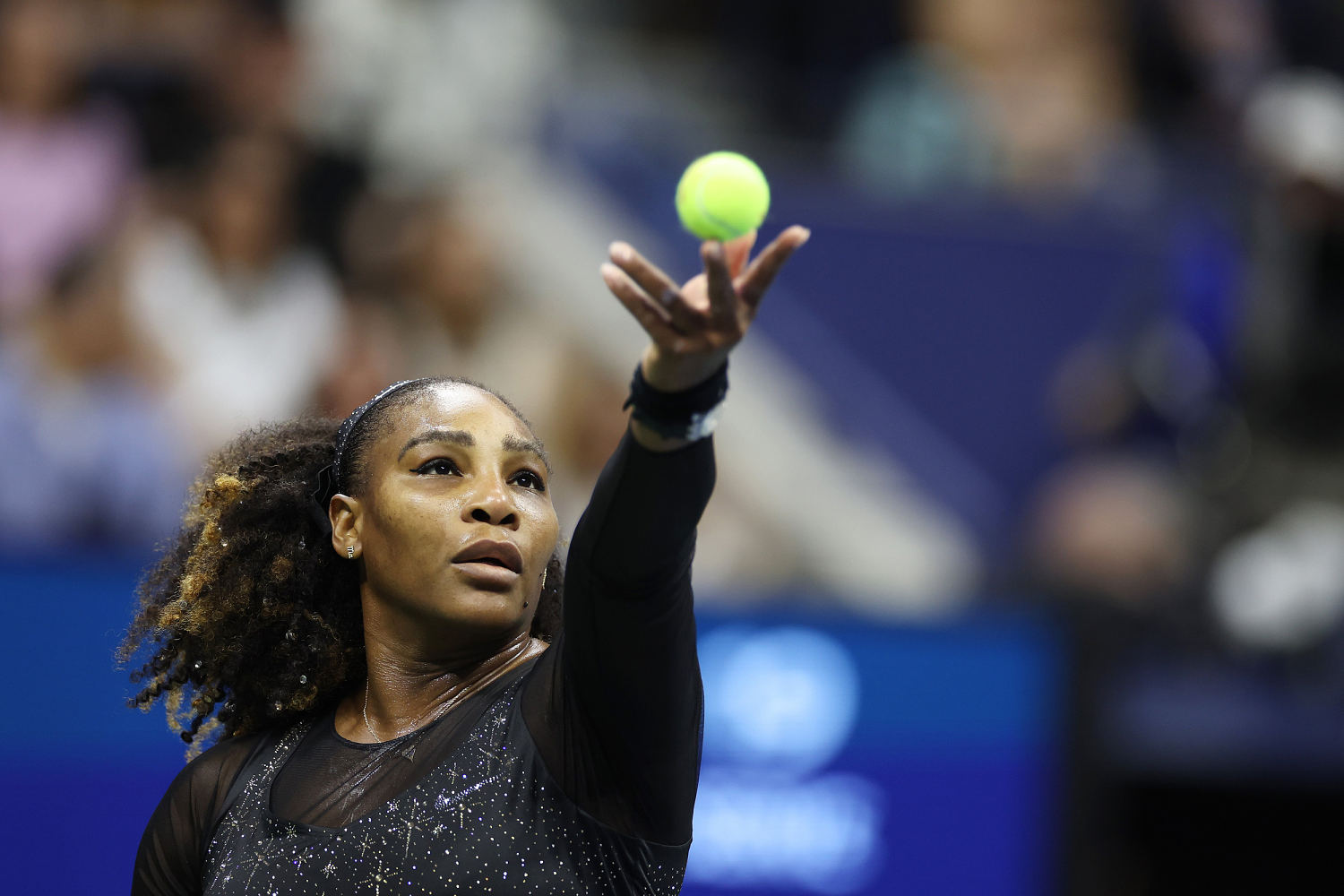
Serena Williams is returning to professional tennis, shattering the carefully constructed narrative of her 2022 farewell. At 44 years old, the 23-time Grand Slam singles champion has accepted a wildcard entry to play doubles at the upcoming Queen’s Club grass-court tournament in London. The announcement ends months of quiet preparation, intense training sessions in Florida, and a mandatory six-month stint in the international drug-testing pool. By stepping back onto the grass, Williams is not just launching a competitive comeback; she is challenging the brutal physical realities of modern tennis and the historical precedent of how sporting legends age.
When Williams walked off Arthur Ashe Stadium in September 2022 after a grueling three-set loss to Ajla Tomljanović, she rejected the word retirement. She claimed she was "evolving away" from tennis to focus on her venture capital firm, Serena Ventures, and to expand her family. She gave birth to her second daughter in 2023. The world accepted the evolution story because it provided a clean, dignified exit for the greatest player of the Open Era.
The corporate world and motherhood, it turns out, cannot replicate the singular adrenaline of a break point on a grass court.
The mechanics of this return have been underway for nearly a year, hidden behind regulatory paperwork. To eligible players wishing to return from retirement, the International Tennis Integrity Agency mandates a six-month window of unannounced drug testing. Williams quietly re-entered this testing pool late last year. While public relations statements attributed her sudden drug-testing status to a bureaucratic anomaly, her physical preparation told a different story. Throughout the spring, she was spotted training on hard courts in Florida, hitting with current tour professionals like Alycia Parks.
Playing professional tennis at 44 is an elite physical anomaly. Martina Navratilova previously held the benchmark for modern longevity, launching a doubles comeback at 43 years and 10 months. Williams will surpass that milestone the moment she strikes a ball at Queen's Club.
The strategy for this comeback is risk-averse but highly calculated. By entering the doubles draw alongside 18-year-old Canadian prospect Victoria Mboko, Williams protects her body from the extreme lateral movement and cardiovascular demands of the singles game. Doubles requires coverage of only half the court, relies heavily on serve-and-volley mechanics, and shortens rallies. It is the perfect laboratory to test whether her reflexes, timing, and shoulder speed can still match the pace of a modern WTA tour that has grown significantly faster since her departure.
The ultimate target is not Queen's Club. The timing of this return, precisely three weeks before the gates open at the All England Club, points directly toward Wimbledon. Williams has hoisted the Venus Rosewater Dish seven times in singles. Grass is the most forgiving surface on aging joints, offering short points and rewarding raw power over defensive baseline grinding. If her serve remains intact, she can be a threat on grass without needing peak physical conditioning.
Yet, history is unkind to the second acts of aging icons. The sport Williams left in 2022 is not the sport she is re-entering. A new generation of athletes, led by power hitters who grew up modeling their games after the Williams sisters, now dominates the baseline. Players like Iga Swiatek, Aryna Sabalenka, and Coco Gauff play with a relentless physical intensity that punishes any drop in foot speed.
Consider the physical toll of a four-year absence. Professional tennis requires micro-second adaptations to ball spin, court velocity, and opponent positioning. Muscle memory can preserve the mechanics of a stroke, but it cannot prevent the natural deceleration of fast-twitch muscle fibers that occurs in a mid-40s athlete. The risk of soft-tissue injury increases exponentially when an athlete attempts to force a mature body into explosive movements it has not performed under competitive stress for forty-five months.
There is also the psychological burden of unmatched expectations. Williams does not enter tournaments to lose in the second round. Every match she plays will be framed by the media as a quest to tie Margaret Court’s all-time record of 24 Grand Slam singles titles, an obsession that haunted the final years of her primary career. If she struggles against low-ranked opponents or suffers an early exit at a Major, the aura of invincibility that defined her career risks being diluted by the mundane reality of athletic decline.
Conversely, the commercial stakes for women's tennis have never been higher, and the tour needs her presence. Tournaments have struggled to generate consistent television ratings and ticket sales in the post-Serena era. The announcement of her wildcard alone has shifted the focus of the entire tennis world away from the clay of Roland Garros and toward the grass courts of London. Fellow players have voiced uniform excitement, with Naomi Osaka and Madison Keys openly admitting they will tune into every point.
This comeback is a deeply personal gamble. Williams has nothing left to prove to sponsors, fans, or historians. Her legacy as a cultural icon and sporting pioneer is secure. The return suggests that the transition away from a life defined by professional competition is far more complex than a glossy magazine essay can capture. The court remains the only place where the parameters of success and failure are entirely within her control.
The experiment begins on the lawns of West Kensington. Whether this return yields a historic late-career trophy or serves as a stark reminder of why athletes leave the game, Williams is refusing to let her story be written by anyone else. She is forcing the sport to watch her try.