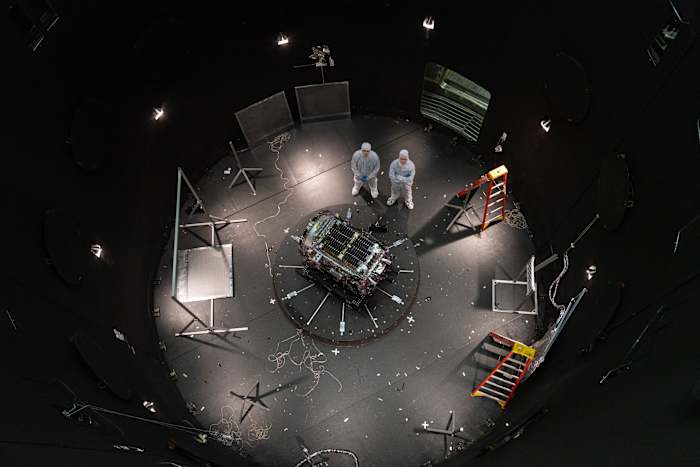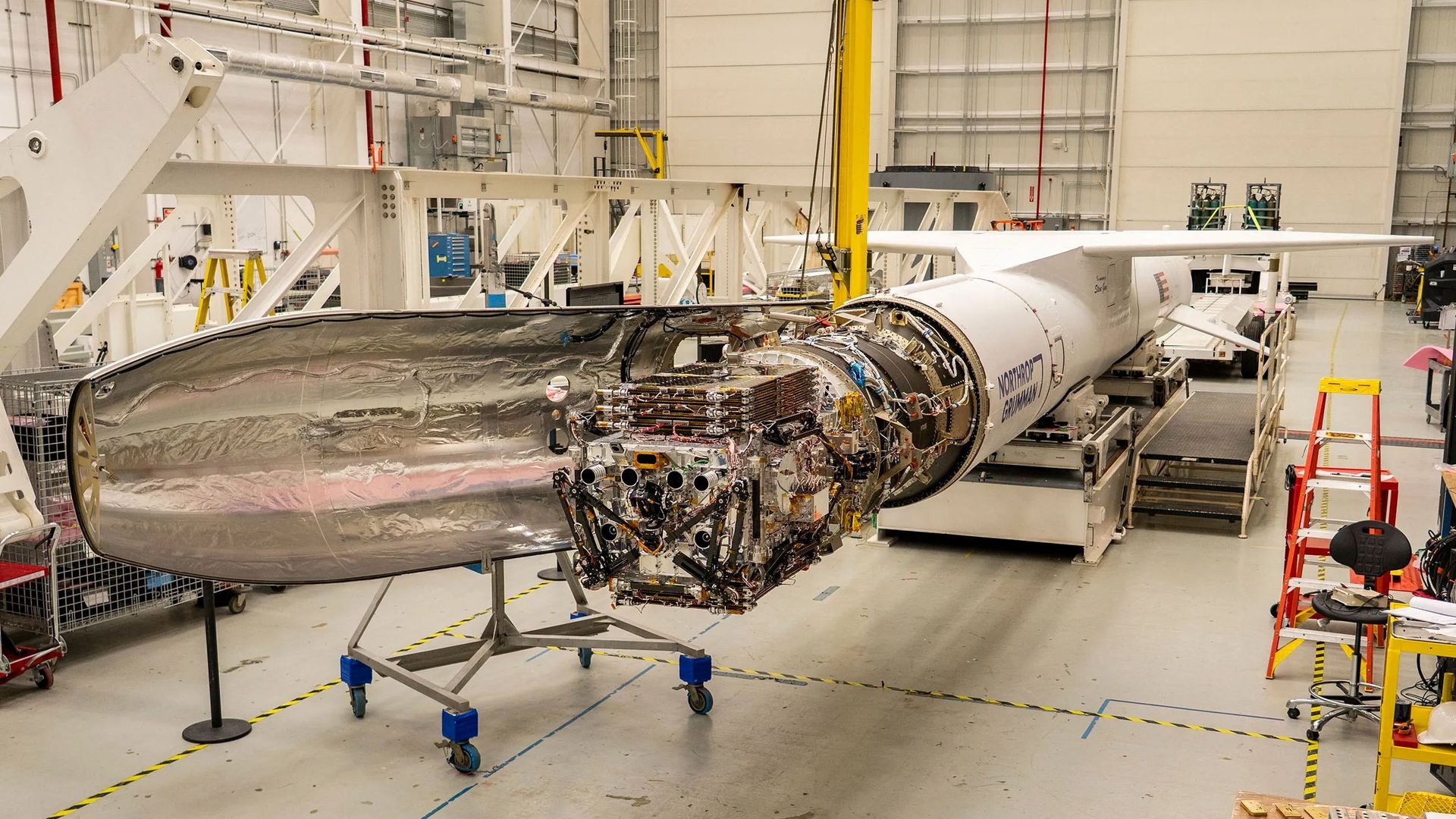
A high-stakes orbital salvage operation is underway to save a vital piece of space infrastructure before it burns up in the atmosphere. The mission involves a specialized spacecraft designed to rendezvous with, capture, and elevate the orbit of a degrading NASA space telescope. Without this emergency intervention, the observatory face an uncontrolled re-entry within the decade, ending its scientific contributions prematurely and creating a massive piece of space debris.
Engineers and orbital mechanics experts have spent months mapping out the trajectory for this rescue. The core problem stems from atmospheric drag. Even in low Earth orbit, a trace amount of atmosphere exists, creating a microscopic braking effect on traveling satellites. Over years, this friction robs a spacecraft of its velocity, pulling it lower into the denser parts of the atmosphere until gravity wins. For uncrewed telescopes launched decades ago without onboard propulsion systems, this decay is an inevitability unless someone goes up to push them back into a safe altitude.
The Invisible Friction Threatening Space Science
Most people view space as a perfect vacuum. It is not. In low Earth orbit, between 200 and 600 kilometers above the surface, the environment is populated by highly sparse but persistent atmospheric particles. Satellites traveling at speeds exceeding 27,000 kilometers per hour collide with these particles constantly.
This interaction causes orbital decay. When a telescope lacks its own thrusters to periodically correct its altitude, it enters a slow downward spiral. The lower it gets, the thicker the air becomes, accelerating the descent. The current rescue mission targets an observatory that has reached a critical threshold where the rate of descent has begun to curve sharply upward.
The mechanics of the rescue require an extraordinary degree of precision. Autonomous docking with a piece of machinery that was never designed to be captured is a profound engineering challenge. There are no standard handles, no universal docking ports, and no magnetic locks on these older scientific platforms. The incoming rescue vehicle must use advanced optical sensors and machine vision to match the exact spin and drift of the target, approaching at a relative speed of mere centimeters per second to avoid a catastrophic collision that would create thousands of dangerous fragments.
The Economic and Scientific Calculus of Orbital Salvage
Building and launching a modern space telescope requires billions of dollars and often more than a decade of development time. Replacing an existing asset that still features functioning mirrors, instruments, and data-transmission systems is financially irresponsible if a cheaper mechanical intervention can extend its operational lifespan.
Consider the cost breakdown of a modern astronomical platform:
- Initial research and instrument development: 40% of budget
- Launch vehicle procurement and logistics: 25% of budget
- Ground control operations and data analysis over a ten-year lifespan: 35% of budget
By sending a compact, specialized propulsion unit to act as an external engine for the telescope, space agencies can bypass the massive capital expenditure of a new build. The rescue vehicle effectively acts as a jetpack. Once securely attached, it fires its high-efficiency ion engines or chemical thrusters to raise the perigee—the lowest point of the orbit—by several hundred kilometers, buying the scientific community another one to two decades of observation time.
There are significant technical risks to this approach. A single miscalculation during the docking phase could damage the delicate solar arrays or sensitive optical shielding of the telescope, rendering it useless despite a successful orbit raise. Furthermore, older electronics on the telescope are susceptible to radiation degradation over time, meaning space agencies are gambling that the instruments will remain viable long after the physical orbit is corrected.
The Broader Implications for Earth Orbit Stability
This mission represents more than a preservation effort for astronomical data collection. It serves as a real-world test case for active debris removal and satellite servicing technologies that will define the future of low Earth orbit management.
The orbital environment is becoming increasingly crowded with defunct satellites and spent rocket stages. If left unaddressed, these massive objects pose a long-term collision risk to active constellations, including weather satellites, global positioning systems, and communications networks. Developing the capability to safely intercept, grapple, and manipulate uncooperative, non-propulsive objects is a critical national security and commercial asset.
The data gathered during this specific telescope rendezvous will inform international protocols for dealing with defunct space hardware. It proves that aging infrastructure can be managed actively rather than abandoned to the elements of orbital decay. The era of disposable spacecraft is coming to an end, driven by the sheer necessity of keeping our orbital corridors clean and functional.