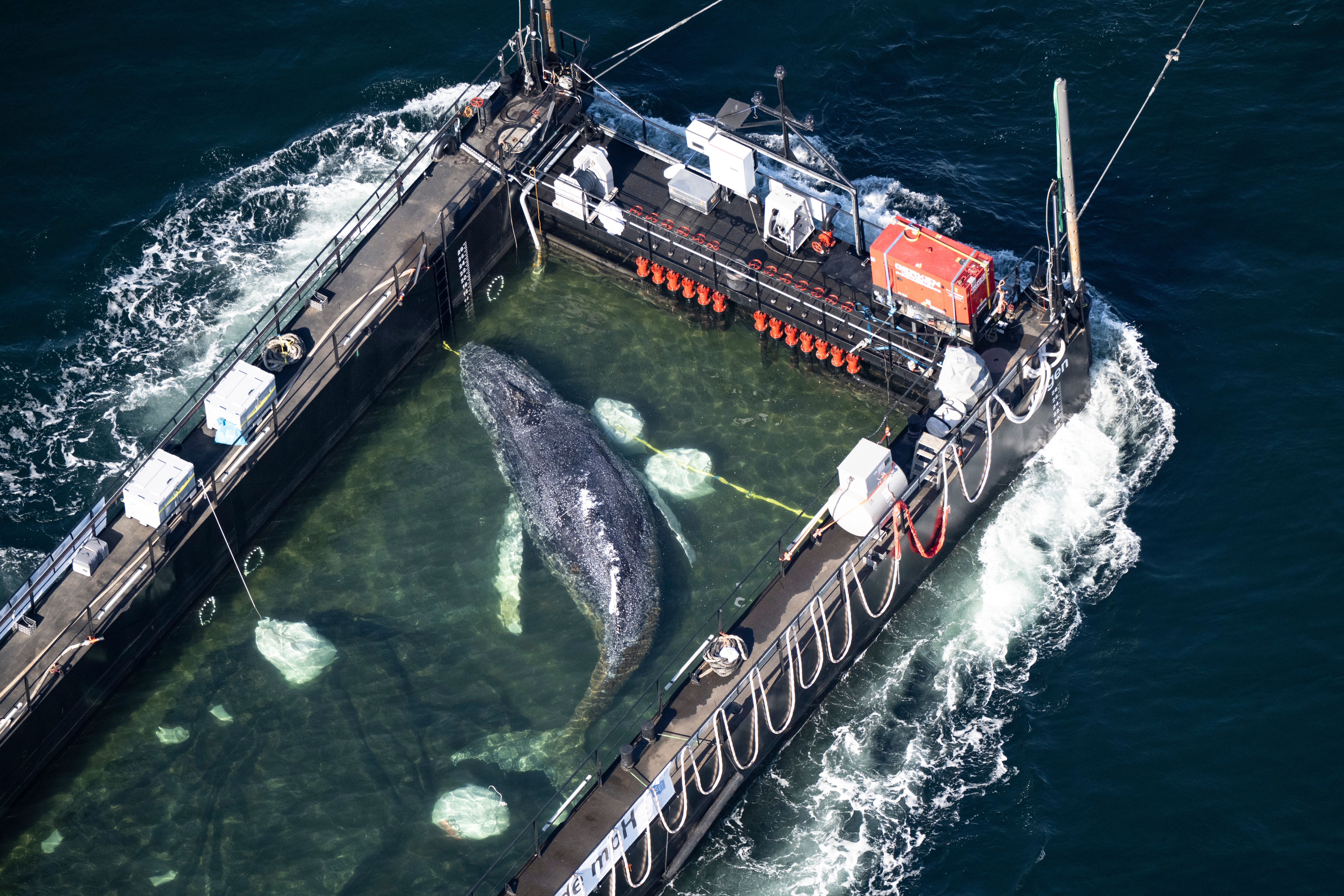
The internet is drowning in collective grief over "Timmy," the humpback whale that recently washed up dead off the Danish coast near Skagen. The media playbook for this is as predictable as it is exhausting. Queue the somber drone footage. Quote a local onlooker who claims their heart is broken. Speculate wildly about ship strikes or climate change, and then wrap it up with a vague plea for humanity to "do better."
It is a masterclass in performative environmentalism. Meanwhile, you can read similar events here: The Anatomy of Border Kinetic Attrition Analysis of Sovereign Risk in North Atlantic Treaty Organization Flank Corridors.
Here is the uncomfortable truth that marine biologists whisper behind closed doors but mainstream outlets refuse to print: the death of a single whale is not a tragedy. It is statistical background noise. By obsessing over the photogenic demise of one mammal, we are blinding ourselves to the actual, systemic collapse of marine trophic structures. We are crying over a single fallen leaf while the entire forest is being quietly clear-cut.
Let’s dismantle the lazy consensus surrounding this carcass and look at the brutal reality of ocean ecology. To see the complete picture, we recommend the recent article by The Washington Post.
The Myth of the Baseline Ocean
Every time a whale strands itself, the public reaction assumes a baseline of a pristine, static ocean where animals only die of old age. This is a fairy tale.
Whales die. They die by the thousands every year, from natural pathogens, starvation, navigational errors, and Orca predation. The fact that Timmy died in the Baltic-North Sea transition zone—a notoriously shallow, complex choke point for a deep-water navigator—is about as surprising as a car crash on a foggy, unlit mountain pass.
When we anthropomorphize these animals, giving them names like "Timmy," we reduce complex biological events into Disney storylines. The media frames this death as an anomaly, an indictment of modern human existence.
But if you look at the data from organizations like the International Whaling Commission (IWC), humpback whale populations have actually staged one of the most remarkable recoveries in conservation history since the 1982 commercial whaling moratorium. Many stocks are hovering near pre-exploitation levels.
More whales mean more dead whales. That is not an environmental failure; it is basic math.
The Luxury of Caring About Megafauna
Why do we care so much about Timmy? Because he is big, majestic, and easy to put on a T-shirt. This is what conservationists call "charismatic megafauna bias."
I have spent years analyzing environmental policy and resource allocation. I have seen conservation groups burn millions of dollars in marketing budget to "save" individual animals, while the true engines of the ocean—the phytoplankton, the zooplankton, and the benthic invertebrates—are obliterated without a single tweet.
Consider the energy budget of the ocean. A dying whale provides a temporary localized feast for scavengers on the seafloor, a phenomenon known as a whale fall. In the grand scheme of the ecosystem, Timmy’s carcass is more useful to the North Sea biosphere at the bottom of the ocean than he was swimming around the Danish straits.
Yet, our response is to drag the body ashore, chop it up, study it to confirm what we already know (that life in the ocean is hard), and dump it in a landfill or burn it. We literally rob the marine ecosystem of metric tons of organic carbon and nutrients just so we can take blubber samples and feel like we did something.
The Real Crisis We Are Ignoring
If you want to actually care about the Danish coast, stop looking at the whale. Look at the water itself.
The Baltic and North Seas are facing severe, systemic crises that a dead humpback completely obscures:
- Agricultural Runoff: Industrial farming in Denmark, Germany, and Poland pumps massive amounts of nitrogen and phosphorus into the waterways. This triggers catastrophic algal blooms.
- Hypoxia (Dead Zones): These blooms die, sink, and decompose, consuming all available oxygen. The result? Vast underwater deserts where nothing can breathe. Not the fish, not the crabs, nothing.
- Trophic Cascades: Commercial overfishing of apex predators and key forage fish like sand eels has shattered the food web from the top down and the bottom up.
A whale dying of potential natural causes gets a front-page feature. Meanwhile, 10,000 square kilometers of seafloor suffocating to death due to nitrate pollution barely makes the local business section because you cannot name a dead zone "Timmy."
Dismantling the Public's Flawed Questions
When news like this breaks, search engines light up with predictable queries. The answers provided by casual journalism are almost always wrong because they satisfy emotion over science.
"Why do whales beach themselves?"
The common answer is usually "human sonar" or "ocean pollution." While naval sonar absolutely disrupts deep-diving cetaceans like beaked whales, humpbacks in the shallow waters of Denmark face a much simpler enemy: topography. The Danish straits are a maze of sandbars, shifting currents, and shallow basins. For an animal that navigates using acoustic mapping and geomagnetic fields, these waters are a hall of mirrors. Once a large whale enters these shallows, its chances of getting stuck rise exponentially, regardless of human activity.
"Can we save a stranded whale by pushing it back?"
Almost never, and attempting to do so is often an exercise in human ego rather than animal welfare. A multi-ton whale stuck on a beach is actively crushing its own internal organs under its immense weight. The sheer mechanical stress causes rhabdomyolysis—the breakdown of muscle tissue—which releases toxins into the bloodstream, leading to kidney failure. Pushing them back into the water just guarantees they will drown out of sight. The most humane response is euthanasia, but good luck explaining that to a crowd of weeping tourists holding iPhones.
The Downside of True Ecocentrism
Taking a cold, data-driven approach to marine conservation is not popular. It makes you look callous. When you tell people that the death of a humpback whale is irrelevant compared to the regulation of agricultural fertilizer subsidies in Jutland, their eyes glaze over.
It is far easier to sign a petition or donate ten dollars to a whale rescue charity than it is to demand a complete overhaul of continental agricultural policy or accept higher food prices to reduce runoff.
Our collective grief over Timmy is a coping mechanism. It is a way to feel connected to nature without doing any of the heavy lifting required to understand it. We substitute easy sentimentality for ecological literacy.
Stop crying over the whale. The ocean does not need your tears; it needs you to understand how it actually works.