Rain blurred the windshield of the static-heavy bus grinding its way up the winding roads toward Kathmandu. Inside, a young software developer stared at a glowing screen, watching a line of code stall. The connection was dead. Again. For years, this has been the quiet reality along the rugged terrain bridging India and Nepal. Innovation existed, but it was siloed, choked by infrastructure gaps and the sheer, towering presence of the Himalayas.
Technology has always felt like something imported from the West, wrapped in English idioms and silicon valley assumptions. But a quiet shift is happening right in the shadow of the world’s tallest peaks. India and Nepal are quietly redrawing their digital borders, not with fences, but with algorithms.
This is not a story about corporate press releases or diplomatic handshakes. It is a story about survival, language, and the frantic race to ensure that the artificial intelligence boom does not leave the Global South behind.
The Language of the Soil
To understand why a technological partnership between New Delhi and Kathmandu matters, you have to look at a map—and then listen.
AI breathes data. It eats trillions of words to learn how to think, write, and predict. But the internet is overwhelmingly English. When an LLM tries to understand Nepali or the regional dialects of Northern India, it stumbles. The nuances of culture, local commerce, and history are flattened.
Consider a farmer in the Terai region, the lowland plains spanning both sides of the border. If her crop faces an unknown blight, an AI trained exclusively on Midwestern American farming data is useless. She needs a system that understands the local soil, the unique monsoon patterns of the subcontinent, and her own language.
By pooling resources, Indian and Nepalese researchers are beginning to build localized datasets. They are teaching machines to speak the languages of the crossroads. This is not about building flashy chatbots. It is about creating diagnostic tools for rural clinics and predictive models for Himalayan landslides.
The stakes are entirely human.
Bridging the Digital Chasm
For decades, the relationship between India and Nepal has been defined by open borders, shared culture, and heavy trade. Yet, the digital highway between them remained a dirt track. Nepal’s tech ecosystem, while vibrant and filled with hungry young talent, often lacked the massive computing infrastructure required to train modern neural networks. India, now a global tech titan with expanding data centers, had the muscle but needed regional collaboration to secure its digital footprint.
The collaboration changes the math.
Think of it as an intellectual electrical grid. India offers the processing power and foundational tech architecture. Nepal offers a nimble, deeply adaptive sandbox of engineering talent and unique regional data points. Together, they bypass the need for Western tech giants to dictate how South Asian problems are solved.
But the process is messy.
Anyone who has worked in cross-border tech knows the frustration of bureaucratic inertia. Bandwidth across the border can be unreliable. Regulatory frameworks don't match. An engineer in Bangalore might write a brilliant piece of code, but if the local server in Pokhara cannot run it due to power fluctuations, the innovation fails.
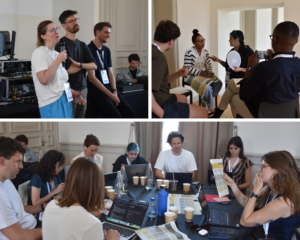
The developers working on this do not wear suits. They wear hoodies in cramped, cold rooms, fueled by instant noodles and cheap tea, debugging systems until three in the morning. They are fighting the physical geography of the subcontinent with math.
The Invisible Network
What does this look like when it actually works?
Let's look at disaster management. The rivers that rise in Nepal feed the great plains of India. When a glacial lake bursts its banks in the high Himalayas, the devastation ripples downstream into Indian villages within hours. Traditional warning systems are too slow.
Now, researchers are feeding decades of satellite imagery, weather patterns, and river sensor data into shared AI models. The machine does not care about political borders. It sees the river system as a single, living organism. When the AI detects anomalous rising water levels up north, it instantly alerts emergency services across both nations.
Minutes saved translate directly to lives saved.
This is the true face of bilateral tech cooperation. It is the invisible scaffolding keeping a bridge from collapsing or warning a community before the mudslide hits. It moves the conversation away from abstract geopolitics and drops it squarely onto the kitchen tables of ordinary citizens.
The Friction of Progress
It would be dishonest to pretend this digital alliance is frictionless.
Trust is a fragile commodity. Nepal has historically been wary of its massive neighbor’s economic dominance. There are legitimate fears about data sovereignty. Where does the data go? Who owns the models trained on Nepalese linguistic nuances? If an Indian tech conglomerate builds the infrastructure, does Nepal lose control of its own digital destiny?
These are uncomfortable, necessary questions.
True collaboration requires vulnerability. It forces India to act as a partner rather than a big brother, and it demands that Nepal scale up its regulatory protections rapidly. The fear of digital colonization is real, and the engineers on both sides are forced to build ethics into the code from day one. They are designing decentralized systems where data remains local, even if the intelligence derived from it is shared.
It is a tightrope walk over an abyss of mistrust.
The Screen in the Mountains
Back on the bus to Kathmandu, the cellular signal bars finally flicker back to life. The line of code executes. A small, localized machine-learning model completes its task, translating an agricultural report into a rare regional dialect with perfect contextual accuracy.
The West may look at the alliance between India and Nepal as a minor regional footnote. They are looking at the wrong map.
The future of technology is not just being written in pristine, air-conditioned laboratories in California or Shenzhen. It is being forged in the places where technology meets raw necessity. As these two nations weave their computational futures together, they are proving that AI does not have to be an elite, distant force.
It can be as local, as rugged, and as resilient as the people who live where the earth meets the sky.