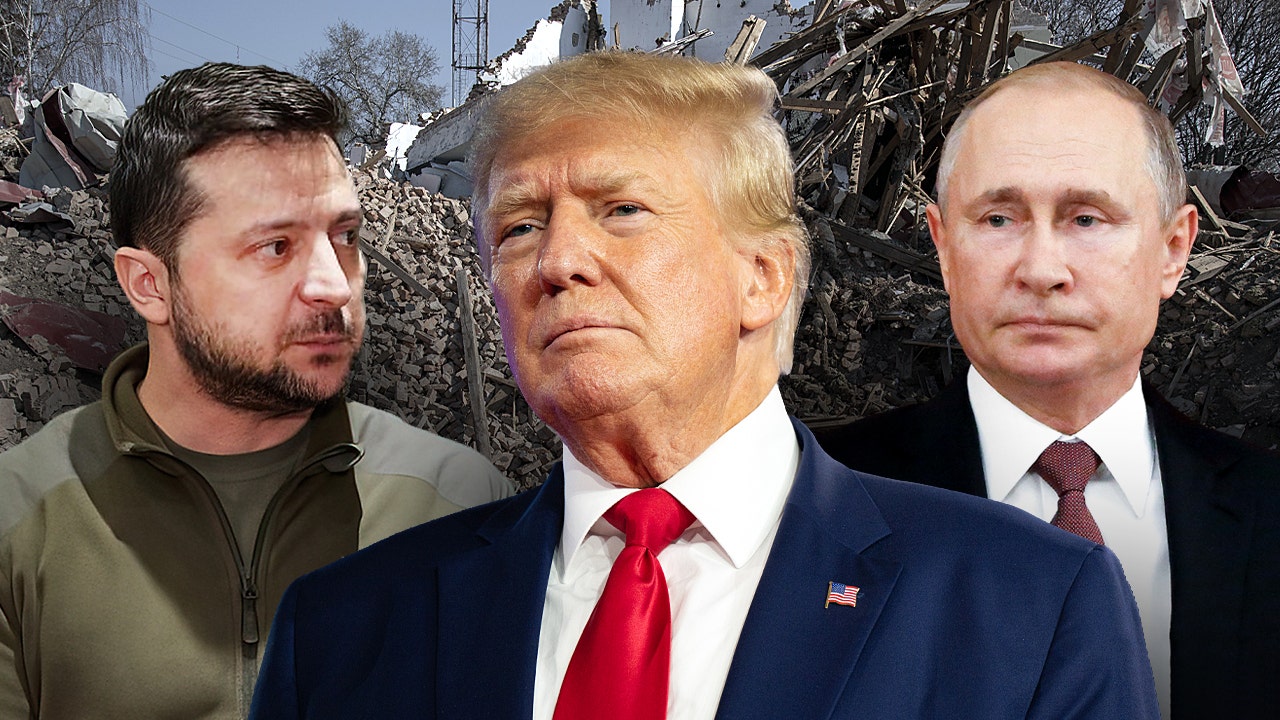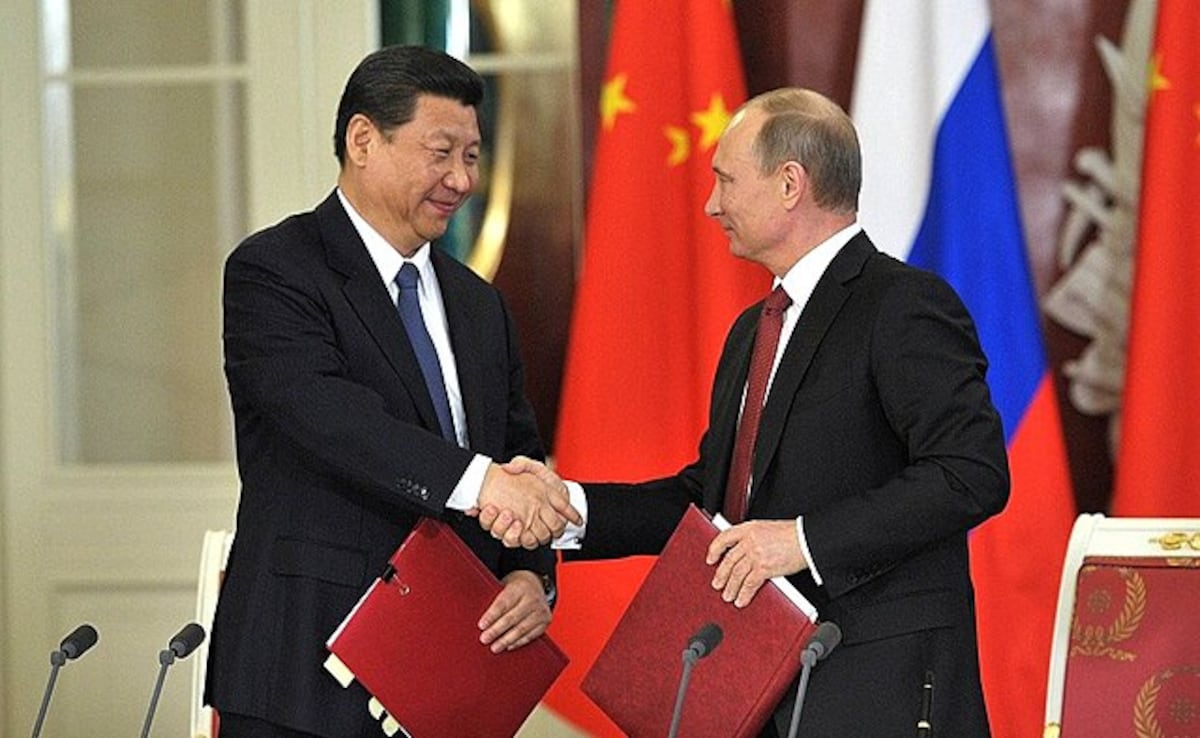
Geopolitical diplomacy acts as an optimization problem where state visits are timed to maximize leverage and neutralize opposing strategic maneuvers. The Kremlin’s announcement that Russian President Vladimir Putin will pay an official state visit to Beijing on May 19-20, 2026—arriving less than 96 hours after US President Donald Trump concluded his own high-stakes summit with Chinese President Xi Jinping—is a calculated counterweight. By sequencing these visits back-to-back, Beijing is functioning as the apex vertex of a strategic triangle, balancing its high-friction economic relationship with Washington against its deep, structurally dependent partnership with Moscow.
To analyze the implications of this diplomatic sequencing, one must discard surface-level narratives of "friendship" and examine the cold operational incentives governing all three powers. This transition occurs under the shadow of two parallel, interconnected conflicts: the four-year-old war in Ukraine and the ongoing US-Israeli military engagement with Iran that commenced on February 28, 2026. The back-to-back summits in Beijing represent a systemic effort by China to manage its exposure to both crises while maintaining its position as the primary economic engine of Eurasia.
The Strategic Triangle and Sequencing Mechanics
Diplomatic sequencing is rarely accidental. The chronological layout of these meetings reveals how Beijing manages its asymmetric relationships with Washington and Moscow. President Trump’s three-day visit, which wrapped up on Friday, May 15, was marked by transactional assertions regarding trade concessions—including unverified claims of substantial Chinese purchases of Boeing aircraft, US crude oil, and soybeans. However, the lack of a formal joint statement from Beijing indicates that structural disagreements over tariffs, technology transfers, and secondary sanctions remain unresolved.
The arrival of the Russian delegation just four days later serves two distinct systemic functions:
- Leverage Calibration: For China, hosting Putin immediately after Trump signals to Washington that attempts to isolate Beijing or impose unilateral trade mandates will inherently push China closer to Russia, deepening an alternative economic and security bloc.
- Asymmetric Reassurance: For Russia, the visit provides immediate structural reassurance. As Foreign Minister Sergey Lavrov articulated on the eve of the announcement, Moscow views its ties with Beijing as structurally distinct from traditional political or military alliances, operating instead as a foundational economic lifeline.
The visit also carries symbolic utility, explicitly timed to coincide with the 25th anniversary of the 2001 Sino-Russian Treaty of Good-Neighborliness and Friendly Cooperation. By anchoring a hyper-contemporary strategic meeting to a historical treaty, both nations reinforce the institutional continuity of their alignment, signaling to external observers that their coordination transcends short-term political cycles in Washington.
The Economic Co-Dependence Function
The economic relationship between Russia and China is driven by a precise structural complementarity: Russia requires a capitalized, non-Western market for its extracted commodities, while China requires discounted, secure overland energy inputs that are insulated from maritime chokepoints like the Malacca Strait.
Following the implementation of comprehensive Western sanctions in 2022, this logic accelerated. By 2025, bilateral trade between Beijing and Moscow surpassed $200 billion, driven primarily by Chinese purchases of Russian crude oil, liquefied natural gas (LNG), and coal.
However, this economic asymmetry introduces distinct operational constraints for both parties:
The Russian Dependence Vector
Moscow is increasingly exposed to monopsony risk. With European markets largely severed, Russia possesses limited alternative infrastructure to redirect its eastern-bound energy exports. Consequently, Beijing commands significant pricing power in negotiations over raw inputs. A primary item on the agenda for Putin’s meeting with Chinese Premier Li Qiang will be the pricing formulas for future energy tranches and the financial infrastructure required to clear these transactions outside the SWIFT network.
The Chinese Balance Sheet Constraint
While China benefits from discounted energy, its broader economic health remains tethered to the global financial system. Chinese financial institutions face a strict risk-reward calculus regarding secondary US sanctions. To mitigate the risk of being cut off from dollar-denominated clearing networks, Beijing has maintained a calculated dual policy: denying the direct provision of ready-to-use weapons systems to Moscow while sustaining the export of dual-use industrial components, microelectronics, and manufacturing machinery that support Russia’s domestic defense industrial base.
Diplomatic Deadlocks and the Twin-Crisis Context
The structural friction of these summits is compounded by the intersection of the Ukraine war and the newer, highly volatile conflict involving the US, Israel, and Iran.
Prior to Trump’s arrival in Beijing, Ukrainian President Volodymyr Zelensky explicitly requested that the US leader pressure Xi Jinping to alter China’s economic stance toward Moscow. Trump attempted to leverage this during his talks, aiming to secure a diplomatic breakthrough on both the Ukrainian and Iranian fronts. The outcome, however, was a functional stalemate.
The divergence in state incentives can be modeled across three distinct geopolitical positions:
| State Actor | Core Strategic Objective in Current Conflicts | Operational Red Line |
|---|---|---|
| United States | Force a diplomatic settlement in Ukraine to reallocate military assets to the Middle East and the Indo-Pacific. | Prevention of formal Chinese-Russian military integration. |
| Russia | Secure maximalist territorial and political concessions from Kyiv while avoiding an outright freeze that permits Ukrainian rearmament. | Rejection of any peace framework that requires a withdrawal to pre-2022 borders. |
| China | Prevent a systemic collapse of the Russian state while avoiding direct economic warfare with the West. | Escalation of conflicts to a level that disrupts vital maritime trade routes or triggers systemic secondary sanctions. |
This matrix explains why Trump departed Beijing without a concrete breakthrough. China’s Foreign Ministry noted a shared interest in an "early end" to hostilities in Ukraine, yet Beijing's operational behavior remains unchanged. The Chinese state benefits from a controlled, low-intensity conflict in Europe that consumes Western military stockpiles and distracts Washington's strategic focus away from the Indo-Pacific, provided the conflict does not escalate to a level that destabilizes global markets.
Financial Architecture and Alternative Settlement Mechanics
A critical, non-public component of the upcoming May 19-20 bilateral talks will focus on refining alternative financial architecture. As Western enforcement mechanisms grow more sophisticated, traditional cross-border payment channels face severe bottlenecks. Even Chinese regional banks have periodically delayed payments for Russian civilian goods out of an abundance of caution regarding secondary sanctions.
To preserve the $200 billion trade volume, the consultations with Premier Li Qiang will likely focus on:
- Expanding the Ruble-Yuan Settlement Matrix: Transitioning a higher percentage of bilateral transactions entirely to local currencies, utilizing the Cross-Border Interbank Payment System (CIPS) developed by China as an alternative to SWIFT.
- State-to-State Barter and Commodity Swaps: Utilizing non-monetary settlement mechanisms for sensitive industrial inputs, effectively removing the transactions from bank ledgers that are visible to Western intelligence and regulatory agencies.
- Digital Currency Integration: Exploring the intersection of the digital Yuan and Russia’s digital ruble initiatives to create a decentralized, peer-to-peer sovereign clearing mechanism that bypasses commercial correspondent banking networks entirely.
Strategic Play and Diplomatic Horizon
The immediate strategic play following this diplomatic sequence will not be a sudden, dramatic realignment, but rather a calculated retrenchment of existing positions.
Expect the joint statement signed by Putin and Xi on May 20 to emphasize the multipolar restructuring of global governance and celebrate the opening of the Russia-China Years of Education. Beneath this diplomatic prose, the real metrics of success will be operational: the volume of dual-use goods clearing Chinese customs, the stability of the alternative payment systems, and whether Beijing continues to reject Western-led peace frameworks that do not include Moscow's baseline demands.
For corporate strategists, macro analysts, and policymakers, the back-to-back summits confirm that China has no intention of abandoning its strategic alignment with Russia to appease Washington. Instead, Beijing will continue to extract cheap energy from a dependent Moscow while using the threat of a deeper alliance as diplomatic leverage to deter harsher US economic policies. The strategic triangle remains intact, with Beijing successfully occupying the position of maximum relative flexibility.