NASA is selling you a 1960s rerun and calling it progress. The current obsession with returning to the lunar surface isn't a giant leap for mankind; it is a desperate attempt to justify bloated budgets and aging infrastructure. We are treating the Moon as a final destination when it should be nothing more than a footnote in the history of deep space exploration.
The "lazy consensus" among aerospace journalists and government contractors is that we must "learn to live on the Moon" before we can go anywhere else. This is a fallacy. It is the equivalent of saying you must master living in your backyard before you can drive across the country. The physics of the Moon and the physics of Mars are fundamentally different. The logistics of a three-day trip are incomparable to a nine-month voyage. By tethering our primary space goals to the lunar South Pole, we are effectively grounding our species for another thirty years.
The Artemis Trap
The Artemis program is often framed as the "foundation for Mars." In reality, it is a diversion. I have seen programs like this before—grand missions that serve as political theater while the actual technology needed for long-term survival in the vacuum of space remains underfunded.
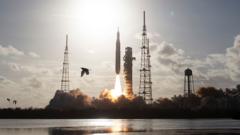
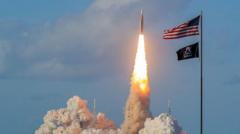
The Space Launch System (SLS) is a prime example of "legacy thinking." It uses repurposed Space Shuttle components to build a non-reusable rocket that costs over $2 billion per launch. In an era where private enterprises are landing boosters on barges, the SLS is a technological fossil. We are using 20th-century hardware to solve 21st-century problems, and we are paying a premium for the privilege.
If we were serious about Mars, we would be focusing on:
- Nuclear Thermal Propulsion (NTP): Reducing transit time to months, not years.
- Artificial Gravity: Solving the bone density and muscle atrophy issues that make long-term spaceflight a suicide mission.
- High-Volume Radiation Shielding: Moving beyond simple lead lining and into active magnetic shielding.
Instead, we are debating the placement of a "Gateway" station in lunar orbit—a toll booth in the middle of nowhere that adds complexity, risk, and cost without providing a significant delta-v advantage for deep space missions.
The Lunar Water Myth
The most common justification for the Moon-first approach is the presence of water ice in permanently shadowed regions. The narrative suggests we will mine this ice, turn it into hydrogen and oxygen, and create a "gas station in space."
Let’s look at the brutal reality of lunar mining. You are talking about operating heavy machinery in 1/6th gravity, in temperatures that swing hundreds of degrees, dealing with regolith that is essentially crushed glass. Lunar dust is electrostatic and abrasive; it destroys seals and lungs with equal efficiency.
The energy required to extract, purify, and liquefy that water on the Moon is astronomical. Imagine a scenario where the cost of the infrastructure required to "mine" fuel on the Moon far exceeds the cost of simply launching that fuel from Earth using a reusable heavy-lift vehicle. We are prioritizing a "local sourcing" ideology over the basic laws of thermodynamics and economics.
The False Promise of People Also Ask
When people ask, "Why did we stop going to the Moon?" they are asking the wrong question. The real question is: "Why did we stop innovating?"
We didn't stop going to the Moon because we lost the technology. We stopped because the Moon is a desolate, resource-poor rock that offered no immediate return on investment once the geopolitical posturing of the Cold War ended. Returning there now doesn't change that reality. It just dresses it up in a new suit.
Another common query: "How will Artemis help us get to Mars?"
The honest answer? It likely won't. The life support systems needed for a lunar base are not the same as those needed for a Martian colony. The Moon has no atmosphere; Mars has a thin one. The Moon has no carbon; Mars is covered in it. By solving the "Moon problem," we are becoming experts at a niche environment that doesn't exist anywhere else we actually want to go.
The Private Sector Delusion
There is a comforting idea that NASA will provide the "vision" while private companies provide the "efficiency." This is a misunderstanding of how the military-industrial complex works. When NASA is the only customer, "private" companies behave exactly like government bureaucracies. They optimize for "cost-plus" contracts rather than innovation.
True disruption only happens when the mission is decouple from political cycles. Every four to eight years, the American space agenda shifts. One administration wants Mars, the next wants the Moon, the next wants an asteroid. This "whiplash architecture" is why we haven't sent a human past Low Earth Orbit since 1972.
We are currently in a "Moon cycle," and everyone is nodding along because it’s the easiest path to funding. It’s "safe." It’s "achievable." But space exploration isn't supposed to be safe or easy. It’s supposed to be transformative.
The Resource Sink
Every dollar spent on a lunar habitat is a dollar not spent on:
- Deep Space Communications: We are still using 70-year-old radio technology. We should be perfecting laser-based optical communications.
- Autonomous Construction: Sending humans to stack bricks on the Moon is a waste of life. We need swarms of robots that can build infrastructure before a human ever leaves the ground.
- Closed-Loop Biotics: We still haven't mastered a 100% efficient closed-loop life support system on Earth, let alone in space.
The downside to my stance? It’s lonely. It’s easier to get excited about a "Moon Base" because it feels like science fiction coming to life. But if we keep chasing the Moon, we will look up in 2050 and realize we are still stuck in the Earth-Moon system, while the rest of the solar system remains a series of low-resolution photographs.
We don't need another flag on the Moon. We need a bridge to the stars. And you don't build a bridge by staring at the ground.
Stop romanticizing the lunar surface. It’s a dead end. If we want to be a multi-planetary species, we have to stop acting like tourists in our own neighborhood and start being explorers of the frontier. The Moon is a distraction. Mars is the mission. Everything else is just expensive nostalgia.