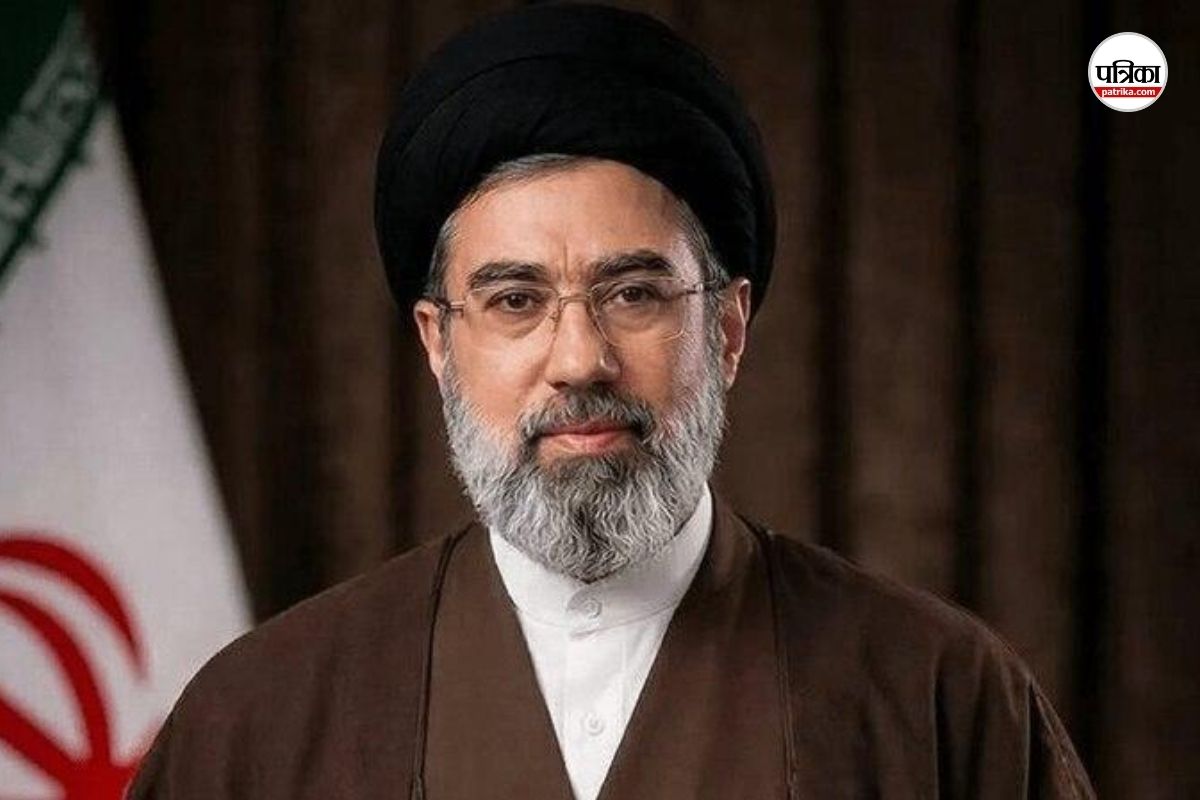
Iran's political theater just hit a fever pitch. If you've been watching the Middle East lately, you know the name Mojtba Khamenei isn't just another entry in the Rolodex of Tehran's elite. He is the son of the Supreme Leader, and his recent video messages are sending shockwaves through global intelligence circles. This isn't just a son stepping into the frame for a photo op. It's a calculated, high-stakes signal that the succession plan for the Islamic Republic is no longer a whispered theory. It's happening in real-time.
The timing couldn't be more volatile. With the shadow of war looming and internal pressures mounting, Mojtba’s sudden visibility feels like a direct answer to the question of who holds the reins when the dust settles. People are scrambling to figure out if this means a hardline shift or a desperate attempt at continuity. Honestly, it's likely both. Expanding on this idea, you can find more in: Why the Green Party Victory in Manchester is a Disaster for Keir Starmer.
The Video That Changed the Narrative
For decades, Mojtba Khamenei remained a ghost in the machine. He was the behind-the-scenes operator, the man who supposedly controlled the Basij militia and had the ear of the Islamic Revolutionary Guard Corps (IRGC). Then came the video. In a rare public address, he announced he would stop his religious teachings. On the surface, it sounds like a step back. In the cryptic world of Iranian clerical politics, it's the exact opposite.
By clearing his schedule of academic duties, Mojtba is signaling he's ready for "administrative" responsibilities. You don't quit teaching the next generation of clerics unless you're moving into the office that oversees them all. This move bypasses the usual slow-burn promotion cycle. It tells the world that the inner circle has made its choice. The "khalebali" or commotion being felt globally isn't about the video's production value. It's about the confirmation of a dynastic shift in a revolutionary system that once claimed to despise dynasties. Analysts at Reuters have also weighed in on this situation.
Why the World is Panicking Right Now
The international community isn't just worried about a name change. They're worried about the IRGC’s influence. Mojtba is viewed as the IRGC’s candidate. Unlike some of the more traditional clerics who might favor a balance of power, Mojtba is deeply entwined with the military wing.
If he takes over, the distinction between the clerical establishment and the Revolutionary Guard basically evaporates. This matters because the IRGC manages the proxy network across Lebanon, Yemen, and Iraq. A Mojtba-led Iran is an Iran that likely doubles down on its "Axis of Resistance." There’s no room for "reformist" illusions here.
We've seen this play out before in other authoritarian regimes, but Iran is different because of the dual-power structure. The Supreme Leader sits above the President. With the recent death of Ebrahim Raisi, the path was cleared of the most obvious rival. The coincidence is too loud to ignore. The "Deep State" in Tehran is tidying up the house.
Breaking Down the Internal Power Struggle
Don't think for a second this is a smooth transition. There are factions within Qom and Tehran that aren't thrilled about a hereditary succession. It smells too much like the Shah’s era, the very thing the 1979 Revolution sought to destroy.
- The Traditional Clerics: They worry that making the Supreme Leader’s position a family heirloom weakens the religious legitimacy of the office.
- The Security Apparatus: They want stability. For them, Mojtba represents a known quantity who won't slash their budgets or limit their regional ambitions.
- The Public: They're exhausted. Economic sanctions and social restrictions have pushed the youth to the brink. A dynastic handoff might be the spark that reignites street protests.
The video message served as a "soft launch." It’s a way to test the waters without committing to an official coronation just yet. By gauging the reaction—both the "khalebali" abroad and the murmurs at home—the regime can decide how fast to push the gas pedal.
The War Factor and Regional Stability
You can't talk about Mojtba without talking about the "Iran War" rhetoric. The region is a tinderbox. Israel and Iran are no longer fighting solely through proxies; the missiles are flying directly now. In this environment, a transition of power is incredibly dangerous.
If the transition happens during an active conflict, the new leader has to prove his toughness immediately. That usually means more aggression, not less. Mojtba’s messages often emphasize "steadfastness" and "resistance." These aren't just buzzwords. They're policy directions. He's telling the world that Iran won't blink, even if the leadership changes.
What This Means for Global Oil and Security
When Tehran shakes, the energy markets feel it. Any hint of instability or a shift toward a more militant leadership sends oil prices into a tailspin. Analysts at firms like Goldman Sachs and the International Energy Agency are constantly monitoring these leadership signals. A Mojtba-led Iran would likely be more defiant against Western sanctions, potentially pushing closer to a nuclear breakout to secure his position domestically.
It's a classic move: use an external threat to silence internal critics. By framing himself as the wartime leader-in-waiting, Mojtba makes it "unpatriotic" for anyone in Iran to oppose his rise.
Signs to Watch for in the Coming Months
If you want to know if the transition is accelerating, don't look at the state news agencies. Look at the appointments. Watch who gets the top jobs in the Assembly of Experts—the body officially tasked with choosing the next leader.
If Mojtba’s allies continue to fill those seats, the deal is done. Also, watch the rhetoric coming out of the IRGC commanders. Their public endorsements are the only "votes" that actually count in this process. The latest video message was just the opening act. The real drama starts when the Assembly of Experts is called for an emergency session.
The "important message" mentioned in recent reports isn't just a religious update. It's a manifesto. It outlines a vision of Iran that is more insular, more militarized, and less willing to negotiate with the West. It’s a message of defiance.
Understand that the Islamic Republic is at its most vulnerable and its most dangerous during a succession. The world is right to be on edge. We are watching the end of one era and the uncertain, potentially violent birth of another. Keep your eyes on the movements of the IRGC and the frequency of these "video messages." They are the new pulse of the regime.
Monitor the official channels for any mention of a change in the Assembly of Experts' leadership. Follow the specific movements of the IRGC's top brass in relation to the Supreme Leader's office. These are the most reliable indicators of the actual power balance.
:format(webp)/nginx/o/2017/12/18/7419267t1hbf8f.jpg)