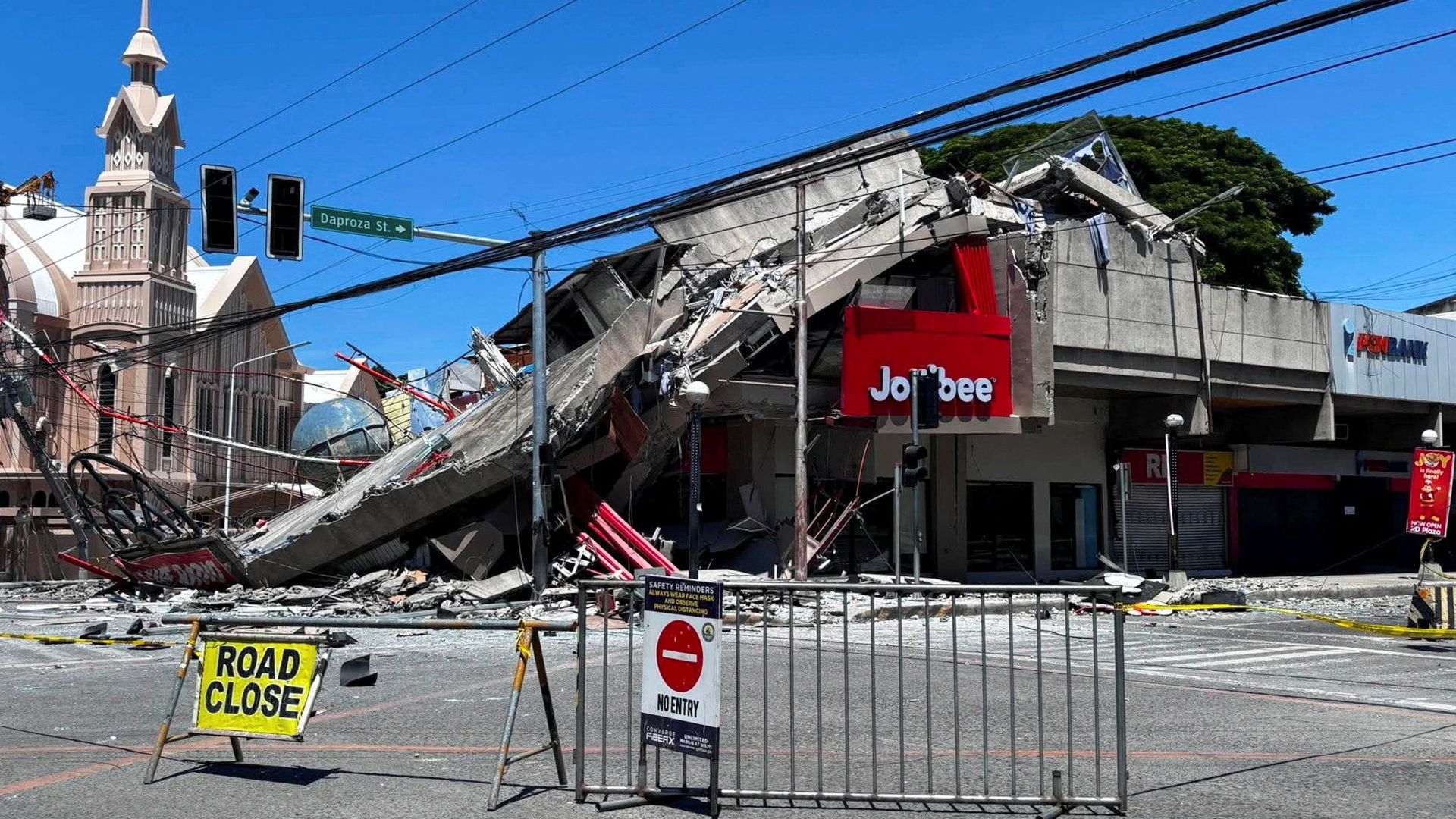
A massive 7.8-magnitude offshore earthquake violently struck the southern Philippines on Monday morning, killing at least four people, injuring over 200, and triggering regional tsunami waves that breached coastal defenses across Mindanao. The disaster exposed immediate vulnerabilities in local infrastructure as bridges cracked and commercial buildings collapsed in General Santos City. Beyond the initial body count, the true crisis lies in the profound failure of regional enforcement regarding seismic building codes and the terrifyingly brief window of time coastal populations have to react when a subduction zone ruptures just miles from the shore.
The standard disaster narrative follows a predictable script. The media reports the magnitude, counts the casualties, flashes footage of panic, and moves on. This reactive approach glosses over a grim reality. The 7:37 a.m. quake was not an unpredictable anomaly, but the inevitable consequence of structural tension building along the Cotabato Trench.
Anatomy of a Rupture
When a 7.8-magnitude earthquake strikes at a shallow depth of ten kilometers, the energy released does not merely shake the ground; it deforms the geography. In General Santos City, a vital economic hub of 700,000 people, the geological violence manifested in the immediate destruction of multi-story concrete structures and critical transport links.
The underlying mechanics involve the complex collision of tectonic plates. The dense oceanic crust of the Celebes Sea forces its way beneath the Philippine Mobile Belt. This subduction process is never smooth. The plates lock, friction holds them in place while the mantle keeps pushing, and stress accumulates over decades. When the rock finally fails, the energy release is cataclysmic.
The sudden vertical displacement of the seafloor acted as a massive piston, forcing the water column upward. This is what generated the tsunami waves that hit Sarangani and Sultan Kudarat provinces within minutes.
Early reports recorded wave heights reaching up to 4.5 feet along the Mindanao coastline, while the Pacific Tsunami Warning Center warned that localized waves could swell up to ten feet. The terrifying speed of these waves highlights the fundamental flaw in modern tsunami warning protocols. When the epicenter is mere miles offshore, deep-sea sensor buoys and centralized bureaucratic alerts are useless to the person standing on the beach. By the time the data is processed in Manila or Honolulu, the water has already arrived.
The Illusion of Structural Resilience
The most damning aspect of the Mindanao earthquake is not the strength of the planet, but the weakness of the concrete. Images emerging from General Santos City show the upper floors of commercial complexes sheared away and school shelters pancaked onto concrete courtyards.
Mindanao Seismic Rupture Profiles
====================================================================
Parameter                  Observed Data (June 2026 Event)
--------------------------------------------------------------------
Magnitude                  7.8 Mw
Epicenter Depth            10 kilometers (Shallow crustal/marine)
Primary Tectonic Engine    Cotabato Trench Subduction Zone
Peak Tsunami Inundation    1.4 meters (4.5 feet) recorded early
Fatalities Verified        4 (Expected to rise during SAR)
Injuries Logged            200+
====================================================================
The Philippines possesses strict building regulations on paper. The National Building Code of the Philippines is designed to withstand major seismic events, yet structural failures occur during moderate shaking. The disparity between legal code and physical reality points directly to local corruption, substandard materials, and a lack of municipal oversight.
Contractors often use unwashed marine sand in concrete mixes, which corrodes internal steel rebar over time. Structural engineers call this concrete cancer. When a major earthquake occurs, these weakened pillars fail immediately under lateral shear stress. The collapse of a four-story commercial building housing the DZRH radio station branch shows that structural enforcement is treated as a recommendation rather than a life-or-death requirement.
The Morning Assembly Nightmare
The timing of the quake compounded the human toll. Striking at 7:37 a.m. on a Monday, the tremors caught thousands of children gathered in open school yards for mandatory flag-raising ceremonies.
At the Mahayahay Elementary School in Malita, Davao Occidental, hundreds of students watched a heavy outdoor shelter collapse. Panic caused dozens of injuries as children stampeded to escape falling masonry. While teachers tried to enforce basic earthquake drills, theoretical preparation failed when the physical environment dissolved around them.
Hospitals in the region were forced to evacuate patients into the streets, exposing the fragile state of critical infrastructure. If a major medical facility cannot guarantee the integrity of its own walls during an emergency, the entire regional disaster response plan collapses.
The Geopolitical Ripple Effect
The consequences of the Cotabato Trench rupture extend far beyond the borders of the Philippines. Tsunami warnings immediately triggered evacuations in northeastern Indonesia and the Sabah state of Malaysia, located just a short boat ride from Mindanao.
An 83-centimeter tsunami wave hit Indonesia’s Sulawesi island shortly after the initial shock wave. This cross-border threat underscores the necessity of a unified, automated regional warning network.
Regional Tsunami Wave Distribution
--------------------------------------------------------------------
Location                      Measured Wave Height / Status
--------------------------------------------------------------------
Sarangani, Philippines        1.4 meters (Active Inundation)
Sultan Kudarat, Philippines   1.0 meters (Active Inundation)
Sulawesi, Indonesia           0.83 meters (Monitored)
Sabah, Malaysia               0.5 meters (Warning Issued)
Taiwan / Okinawa              <0.3 meters (Alert Advisory)
--------------------------------------------------------------------
The Pacific Rim is connected by these shared fault lines. Yet, communication between neighboring nations during a crisis remains fragmented. Malaysia’s Meteorological Department operates independently of Manila’s PHIVOLCS, leading to a dangerous delay in matching deep-sea telemetry with coastal evacuation orders.
Beyond the Immediate Horizon
President Ferdinand Marcos Jr. released a standard political statement, promising that the national government would not leave Mindanao behind. These empty political platitudes will not fix the fundamental flaws exposed by this disaster.
The search and rescue operations are currently hindered by the collapse of a key access bridge in General Santos City. This failure cuts off vital logistics routes into the worst-hit commercial zones. When a single bridge failure can paralyze an entire city’s emergency response, it reveals a complete lack of structural redundancy in urban planning.
The civil defense office indicated the death toll could rise as remote coastal villages are checked for tsunami damage. The true measure of this disaster is not found in the initial numbers, but in the long-term economic destruction of a region that serves as the heart of the country's tuna processing industry.
The lesson from Mindanao is clear and uncompromising. The earth will continue to rupture along the Ring of Fire. If governments continue to tolerate corrupt construction practices, prioritize political public relations over infrastructure spending, and rely on slow warning systems, the casualty lists will only grow longer.