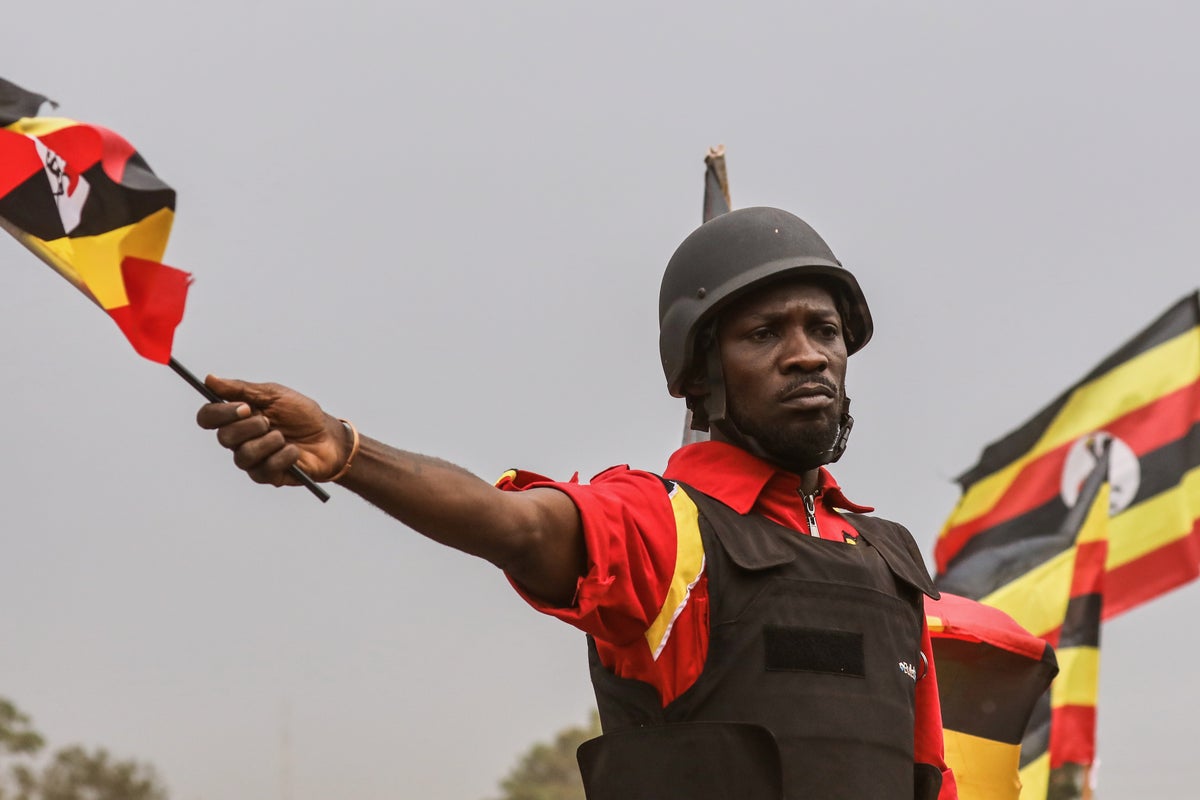
The engine of the beat-up Toyota Hilux ticked in the cooling night air, a metallic heartbeat against the vast, oppressive silence of the Ugandan bush. Inside, Robert Kyagulanyi—the man the world knows as Bobi Wine—didn't look like a revolutionary. He didn't look like the pop star who had galvanized a generation of urban youth with Afrobeat rhythms and lyrics about systemic justice. He looked like a father who hadn't slept in three days.
The transition from a stage bathed in neon lights to the back seat of a fleeing vehicle is a violent one. It is not just a change of scenery; it is a collapse of reality. One moment, you are the face of a movement, the "Ghetto President" challenging the thirty-eight-year grip of Yoweri Museveni. The next, you are a ghost, navigating the serrated edges of a country that has decided you no longer have a right to exist within its borders.
History in East Africa isn't written in ink. It is written in the dust kicked up by military boots and the frantic whispers of people who have seen too many "disruptors" disappear into the belly of the state's security apparatus.
The Anatomy of a Disputed Hope
To understand why a man with millions of followers would find himself shivering in a safe house near the Kenyan border, you have to look past the official tallies of the January election. The numbers provided by the Electoral Commission—claiming a comfortable 58 percent victory for the incumbent—are dry, sterile things. They do not account for the internet blackouts that severed the country’s nervous system just as the polls closed. They do not reflect the sight of armored personnel carriers patrolling the red-dirt streets of Kampala like prehistoric predators.
Consider the hypothetical, yet statistically grounded, experience of a voter in the Kamwokya slum. Let’s call him Joseph. Joseph woke up at 4:00 AM, standing in a line that snaked around a corrugated metal church. He wanted to believe that a piece of paper could outweigh a machine gun. But when the results were announced, and the military cordoned off Wine’s residence, Joseph didn't protest. He went inside and locked his door. He had seen this movie before.
The "military hunt" isn't a metaphor. It is a logistical reality involving the Special Forces Command and a network of intelligence officers who view dissent as a virus. When the High Court finally ordered the military to vacate Bobi Wine’s home after eleven days of house arrest, it wasn't a gesture of freedom. It was a starting gun.
The Weight of the Invisible Stakes
Moving through Uganda while being hunted by the state is like trying to walk through a room full of glass bells without making a sound. Every checkpoint is a gamble. Every flickering flashlight in the distance is a potential end to the story.
Why flee? To the outside observer, leaving might look like a retreat. To those on the ground, it is the only way to keep the message breathing. A martyr is a powerful symbol, but a living leader with an international microphone is a practical threat. The stakes aren't just about who sits in the State House in Entebbe. They are about the definition of African democracy in the 21st century. Is it a performance for foreign donors, or is it a genuine expression of a people's will?
The tension in the vehicle was thick enough to taste. Every time the driver shifted gears, the sound echoed like a gunshot. Wine knew that his inner circle was being picked off—arrested, "disappeared," or intimidated into silence. The human element of political exile is often scrubbed from the headlines. We read "Opposition leader flees," but we don't feel the sting of the cold wind on a face pressed against a window, watching the silhouettes of acacia trees disappear in the rearview mirror. We don't hear the silence of a man wondering if he will ever see his children sleep in their own beds again.
The Infrastructure of Fear
Uganda’s security state is a masterpiece of psychological engineering. It doesn't just arrest people; it makes them feel watched even when they are alone. This is the "robust" system—to use a word I despise for its clinical coldness—that Museveni has built since 1986. It is a system where the line between the army and the police has blurred into a single, olive-drab wall.
The logic of the hunt is simple: isolation. By forcing the leader out, the state hopes to sever the head from the body of the movement. They want the youth in the ghettos to feel abandoned. They want the world to see a man running away rather than a man being pushed out.
But the real problem lies elsewhere. It sits in the quiet offices of international diplomats who trade "stability" for "justice." For years, Uganda has been a key security partner for the West in the Horn of Africa. This geopolitical reality acts as a shield for the incumbent. It creates a vacuum where a disputed election can be brushed under the rug in favor of regional cooperation.
Imagine the interior of that safe house during the final hours before crossing the border. The air is stale, smelling of old wood and anxiety. There is a single candle on a table. Wine is looking at a map, or perhaps just staring at the wall. The transition from citizen to refugee is almost complete.
The Border is a Scar
Borders in colonial-mapped Africa are often arbitrary lines drawn through the hearts of ethnic groups and ecosystems. Yet, in the middle of a military hunt, that line becomes the difference between a prison cell and a press conference.
Crossing into Kenya isn't a victory lap. It is a somber admission that the domestic legal avenues have been choked shut. When the news broke that the opposition leader had successfully evaded the dragnet, the state media played it down. They called it a non-event. But the streets of Kampala knew better. The news traveled via encrypted messages and whispered conversations over vegetable stalls.
The human-centric reality of this escape is that it leaves behind a country in a state of suspended animation. The election is over, but the conflict is merely entering a more shadowed phase. Those who stayed behind—the lawyers, the activists, the students—now face the brunt of the state's frustration.
Every story of political flight is also a story of what is left behind. Wine left behind a home that was no longer a sanctuary. He left behind a constituency that had been told their voices were "statistical noise."
The Echo in the Silence
As the sun began to bleed over the horizon, painting the savannah in shades of bruised purple and gold, the vehicle crossed into a space where the Ugandan military had no jurisdiction. The immediate danger had passed, but the weight of the exile was just beginning to settle.
There is a specific kind of grief reserved for those who love their country so much they are forced to leave it to save it. It is a hollow feeling, a ringing in the ears. The pop star who sang about the "People Power" of the masses was now a man in a quiet room in a foreign land, listening to the static on the radio.
The narrative of the "fleeing leader" is usually framed as a climax. In reality, it is a grueling middle act. The invisible stakes remain the same: the soul of a nation that is tired of the same face on the evening news for four decades. The emotional core isn't the escape; it is the resilience of the people who, despite the hunt, despite the disappearances, and despite the silence, still believe that the song isn't over yet.
A thousand miles away, in a dusty alleyway in Kampala, a teenager wearing a faded red beret looks at a military patrol and doesn't look away. That flicker of defiance, unyielding and quiet, is the only fact that truly matters.
The Hilux is gone. The border is closed. The silence of the savannah remains, waiting for the next sound to break it.