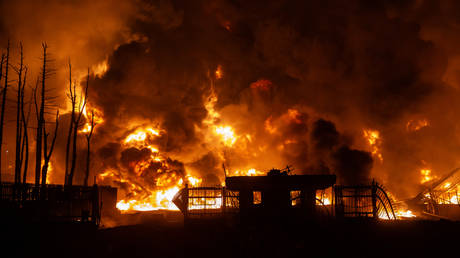
The map of the Middle East is currently being redrawn with fire. If you’ve been watching the headlines lately, you’ve likely seen the rapid escalation between Israel, Iran, and a host of regional players. It’s not just another cycle of violence. We’re witnessing a fundamental shift in how power is projected in the Gulf and across the Levant. When Israel chooses to strike deep into sovereign territory or decapitate the leadership of regional proxies, it isn't just a tactical move. It's a massive stone thrown into a very still, very volatile pond.
The ripples from these actions are already hitting the shores of the Gulf. For decades, a fragile balance of power kept a lid on a total regional explosion. That lid is melting. You see it in the way the "Axis of Resistance" is coordinating and how Gulf monarchies are scrambling to figure out if their defense pacts are worth the paper they're printed on. It’s a messy, dangerous time, and the old rules of engagement have been tossed out the window. Discover more on a related subject: this related article.
The End of Strategic Ambiguity
For years, the shadow war between Israel and Iran stayed in the shadows. There were cyberattacks. There were mysterious explosions at nuclear facilities. Occasionally, a scientist would meet a grim end on a Tehran street. But it was contained. That’s over now. By moving to direct, overt kinetic action, the parties have entered a phase where "saving face" requires more than just rhetoric. It requires a visible response.
This shift puts the Gulf states—Saudi Arabia, the UAE, Qatar—in a terrifying position. They’ve spent the last few years trying to diversify their economies and move away from constant conflict. The Vision 2030 projects and the shiny skyscrapers of Dubai don't do well when ballistic missiles are flying overhead. When Israel pushes the envelope, it forces Iran to look for leverage. Often, that leverage involves threatening the oil infrastructure or the maritime routes that the entire world depends on. More reporting by Al Jazeera highlights comparable views on this issue.
Why the Gulf is the Real Target
You might wonder why a fight in Gaza or Lebanon would set the Gulf on fire. It’s about the geography of pain. Iran knows it can’t win a conventional one-on-one war against Israel’s high-tech military, especially with the US hovering in the background. So, they use their reach. They use the Houthi rebels in Yemen to choke off the Red Sea. They use militias in Iraq to pressure US bases.
If Israel continues to dismantle the leadership of groups like Hezbollah, Iran feels backed into a corner. A cornered regional power with a sophisticated missile arsenal is a nightmare for neighbors. The Gulf monarchies have spent billions on Western defense systems like the Patriot and THAAD. But as we saw with the 2019 Abqaiq–Khurais attack on Saudi oil facilities, even the best tech has blind spots. One lucky drone can cause billions in damage and sent oil prices into a tailspin.
The Houthi Wildcard
Don’t underestimate the Houthis. They’ve become the most effective tool in this chain reaction. By targeting shipping in the Bab al-Mandab Strait, they aren’t just hitting Israel; they’re hitting global trade. This forces a massive naval response from the West, which only adds more dry tinder to the pile.
When Israel retaliates against Houthi-controlled ports, it isn't just a message to Yemen. It’s a message to the Gulf states that the "protective umbrella" they thought they had is actually a lightning rod. The Houthis have proven they can hit Riyadh. They’ve proven they can hit Abu Dhabi. If the regional war goes hot, these cities become front lines. It’s a reality that makes the Abraham Accords look incredibly fragile.
The Failure of Traditional Diplomacy
The West keeps trying to use 20th-century diplomacy for a 21st-century religious and geopolitical firestorm. It doesn't work. The red lines are gone. Every time a ceasefire seems close, a new escalation resets the clock. This isn't just bad luck. It’s a deliberate strategy by various actors to ensure that their version of the "New Middle East" is the one that survives.
We have to be honest about the limitations of international pressure. The UN is sidelined. The US is distracted by internal politics and other global theaters. This leaves the local players to settle scores that go back decades. When Israel strikes, it isn't thinking about the global economy or the price of gas in London. It’s thinking about survival. When Iran reacts, it’s thinking about its revolutionary identity. These are two immovable objects, and the Gulf is the space where they’re going to collide.
The Economic Cost of Conflict
War is expensive, but the threat of war is what kills growth. The Gulf states have been trying to brand themselves as global hubs for tourism, tech, and finance. That brand relies on the perception of safety. You don’t invest $500 billion in a futuristic city like NEOM if you think it’s going to be in the flight path of a cruise missile.
The chain reaction Israel set off isn't just about explosions. It’s about the sudden surge in insurance premiums for tankers. It’s about the flight of capital to safer havens in Singapore or New York. If the Gulf "catches fire," it won't just be literal flames; it will be an economic cooling that could last a generation. The region is at a crossroads where one side leads to integrated prosperity and the other leads back to the dark ages of proxy wars.
Watch the Maritime Chokepoints
If you want to know how bad things are getting, stop looking at the border fences and start looking at the water. The Strait of Hormuz and the Bab al-Mandab are the jugular veins of the global economy. Iran has threatened to shut down Hormuz many times. They’ve rarely tried because it would hurt them as much as anyone else. But in a total war scenario? All bets are off.
A "chain reaction" means that an event in the Mediterranean triggers an event in the Persian Gulf which triggers a global energy crisis. We’re closer to that than we’ve been since the 1970s. The military hardware is more precise now, but the political will to de-escalate is much lower.
Practical Reality for the Coming Months
The situation is fluid, but the trend line is clear. Expect more "high-value target" strikes that ignore traditional borders. This will be met with asymmetric responses that target the most vulnerable parts of the global supply chain.
If you're watching this as an observer or an investor, you need to look past the immediate headlines. The real story isn't the single strike; it's the permanent erosion of the status quo. There is no "going back" to the way things were before this current cycle began.
To stay ahead of this, you should monitor the moving parts that actually matter. Watch the deployment of US carrier strike groups—not just where they are, but what they’re signaling. Follow the back-channel communications between Tehran and Riyadh, which often tell a very different story than the public shouting matches. Finally, keep an eye on the volume of commercial traffic through the Suez Canal. It's the most honest barometer of regional stability we have. The fire is already lit; the only question left is how much of the neighborhood it takes with it.