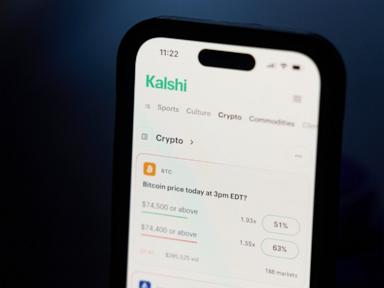
The convergence of sports wagering applications and prediction markets is not a casual trend driven by shifting consumer preferences; it is a deliberate engineering feat designed to lower cognitive friction and maximize the lifetime value (LTV) of digital-native users. By stripping away the dense, intimidating interfaces of traditional bookmaking and replacing them with the UI/UX conventions of mobile gaming and social media, platforms have successfully transformed speculative risk into a highly repeatable consumer habit.
The traditional barriers to entry for gambling—complex fractional or moneyline odds, capital-intensive minimum deposits, and siloed, solitary execution windows—have been systematically dismantled. In their place sits a frictionless ecosystem fueled by continuous feedback loops, algorithmic content feeds, and social validation mechanics. To understand how contemporary prediction platforms capture and monetize the attention of young cohorts, we must analyze the structural mechanics of their design, the cultural feedback loops they exploit, and the economic frameworks that sustain their customer acquisition strategies.
The Tri-Pillar Architecture of Modern Wagering UX
The transition from transactional wagering to continuous digital engagement relies on three structural design choices that mimic non-monetized mobile applications. This architecture actively obscures the financial risk of a transaction by emphasizing the mechanics of play, progression, and social integration.
1. Habituation Loops via Pseudo-Progression
Traditional sportsbooks operate on a binary transactional model: a user places a wager, the event occurs, and the wager is settled. Modern digital wagering platforms break this linear sequence into a continuous loop by introducing pseudo-progression metrics. These include experience points (XP), daily login streaks, unlockable tier badges, and progress bars that fill up regardless of whether a user wins or loses a bet.
This UI design shifts the user’s cognitive focus from capital preservation to status optimization. The psychological cost of losing a bet is mitigated by the structural reward of leveling up an account or maintaining a 10-day active streak. The platform ceases to be a financial tool and becomes a digital playground where activity itself is framed as an achievement.
2. The Abstraction of Capital
Friction is the enemy of transaction volume. To maximize the velocity of capital within an app, platforms utilize dual-currency systems or visual abstractions that separate the act of wagering from real-world monetary value.
- Tokenization: Converting fiat currency into platform-specific "points," "chips," or "credits" diminishes the pain of paying—a well-documented behavioral economic phenomenon where the psychological discomfort of spending money is reduced when the currency does not look like real cash.
- Micro-Wagering and Fractional Markets: Instead of forcing a user to risk a meaningful sum on a game's final outcome, platforms slice events into micro-moments (e.g., "Will the next pitch be a strike?" or "Will a politician tweet a specific word in the next ten minutes?"). Users can wager pennies on these hyper-isolated outcomes. This high-frequency, low-stakes environment normalizes constant financial exposure, transforming risk into a background activity.
3. Integrated Social Proof and Group Mechanics
Wagering apps have evolved from isolated utility tools into insular social networks. By integrating features such as public bet slips, "tailing" mechanics (where a user can copy a peer’s or influencer's exact portfolio with a single tap), and collaborative group pools, platforms leverage peer validation to drive volume.
This social infrastructure exploits the psychological mechanism of social proof. When a young user sees a peer group or a trusted digital creator posting a specific wager, the perceived risk of that asset drops precipitously. The transaction is no longer evaluated on its structural probability or expected value ($EV$); it is evaluated on its utility as a social currency to gain entry into a community discussion.
Meme Culture as a Low-Cost Customer Acquisition Vehicle
The customer acquisition cost (CAC) for traditional sports gambling platforms is notoriously high, often requiring hundreds of dollars in direct marketing spend and free-bet incentives to secure a single active user. Prediction markets and next-generation sportsbooks have bypassed these traditional capital drains by positioning their brands within the organic lifecycle of internet meme culture.
The Financialization of Digital Irony
Memes are the primary communicative units of digital-native cohorts. They operate on layers of irony, shared cultural context, and rapid iteration. When wagering platforms integrate meme assets directly into their marketing funnels—or when prediction markets create trading pairs based explicitly on internet phenomena—they alter how risk is perceived.
A wager placed on an ironic outcome (e.g., the performance of a meme stock, the survival of a viral trend, or a hyper-specific pop-culture dispute) is not viewed by the consumer as a serious financial calculation. It is treated as an act of self-expression or cultural participation. The capital deployed is not expected to yield a traditional return; it is spent to buy a stake in the cultural narrative. This allows platforms to capture market share without relying on dry, analytical promotional materials that fail to resonate with younger demographics.
Algorithmic Distribution and Organic Amplification
Traditional advertising channels face strict regulatory hurdles regarding the promotion of gambling products to minors or young adults. Meme marketing cleanly evades these structural barriers. Because memes are shared organically via peer-to-peer networks and algorithmic discovery feeds (such as TikTok, X, and Instagram Reels), the platform's promotional content is distributed voluntarily by the target audience.
The mechanics of this organic amplification follow a distinct causal chain:
[Flowchart: Platform creates culturally relevant asset -> Influencer/User customizes asset via irony -> Algorithmic feed prioritizes high engagement -> Distribution to younger demographics bypasses traditional ad blockers]
This decentralized distribution model ensures that the platform remains top-of-mind for the consumer, embedded natively within their daily content consumption habits rather than partitioned off inside explicit commercial breaks.
The Economic Mechanics of Prediction Markets vs. Traditional Sportsbooks
While sportsbooks rely on actuary-style oddsmakers to set lines that guarantee a house edge (the vig), prediction markets function as peer-to-peer binary option exchanges. This structural difference fundamentally changes the user experience, moving it away from pure chance and toward something resembling financial day trading.
Contract Structuring and Pricing Dynamic
In a standard prediction market, contracts are structured to settle at either 100 cents (if the event occurs) or 0 cents (if the event does not occur). The current market price of the contract reflects the aggregate market-implied probability of the event happening.
For example, if a contract for "Company X announces a new AI tool before Friday" is trading at 64 cents, the market is pricing in a 64% probability of success. A user purchasing this contract stands to make a 36-cent profit if the event occurs, or lose the full 64 cents if it fails.
This structure mimics the exact mechanics of equity option trading, using the formula for expected value:
$$EV = (P_{\text{success}} \times \text{Profit}) - (P_{\text{failure}} \times \text{Loss})$$
Where:
- $P_{\text{success}}$ is the true probability of the outcome.
- $P_{\text{failure}}$ is the true probability of the alternative outcome ($1 - P_{\text{success}}$).
- $\text{Profit}$ is the payout if the contract hits 100 cents minus the purchase price.
- $\text{Loss}$ is the initial purchase price of the contract.
Because these markets fluctuate in real-time based on incoming data, news cycles, and social media sentiment, users do not simply place a bet and wait for settlement. They active-trade these positions, entering and exiting contracts within minutes to capture micro-spreads. This continuous liquidity transforms the wagering app into an informational equity market, appealing directly to a generation raised on commission-free stock trading apps and highly volatile cryptocurrency assets.
Structural Vulnerabilities and Behavioral Externalities
The optimizations that make these platforms commercially successful also create significant structural vulnerabilities for users, particularly those with underdeveloped cognitive frameworks for managing long-term financial risk.
Cognitive Distortions in High-Frequency Environments
The integration of gamified rewards and hyper-fast market settlement periods accelerates the onset of specific cognitive biases:
- The Illusion of Control: In prediction markets, users believe that their personal research, internet savvy, or mastery of meme trends gives them an informational edge over the market. This blurs the line between games of skill (like chess or equity analysis) and games of chance, leading to overconfidence and larger position sizes.
- The Availability Heuristic: Social feeds within wagering apps naturally elevate and celebrate outlier wins while burying routine losses. Users are bombarded with media showcasing peers turning small sums into massive payouts, leading them to overestimate the baseline probability of rare, high-yielding events.
- Escalation of Commitment (Loss Chasing): In-app features like "one-tap re-betting" make it mechanically effortless to deploy capital immediately after a loss. When this action is paired with gamified notifications offering XP boosts or "insurance safety nets" for subsequent transactions, the user is systematically guided away from pausing to re-evaluate their risk parameters.
Structural Asymmetry of Information
While prediction markets are marketed as democratic, decentralized arbiters of truth, they remain highly susceptible to information asymmetry and manipulation. Large-capital actors (whales) can deliberately inject liquidity into low-volume contracts to artificially distort the implied probability of an event. This distortion can be used to manufacture a narrative on social media, draw in retail capital from unsuspecting young users, and then dump the contracts before settlement. The retail user, operating under the assumption that the market price represents an unbiased collective intelligence, is left holding worthless contracts.
Strategic Reconfiguration of the Digital Wagering Landscape
To survive intensifying regulatory scrutiny and unavoidable consumer backlash, the digital wagering and prediction market sectors must evolve beyond primitive behavioral exploitation. The current model of maximizing short-term transaction velocity at the expense of user capital retention is a unsustainable long-term strategy that invites heavy-handed legislative intervention. Operators aiming for institutional permanence must proactively re-engineer their platforms around sustainable engagement architectures.
Transition to Value-Based Retention Metrics
Platforms must pivot their internal key performance indicators (KPIs) away from raw transaction frequency and toward net user equity lifespan. Instead of deploying push notifications that trigger impulsive, low-intent wagers during moments of high emotional volatility (e.g., immediately following a sports loss or a sudden market swing), systems should introduce friction-by-design mechanisms.
Implementing mandatory cool-down windows after a predetermined number of rapid-fire transactions or capping the velocity of micro-wagers within a rolling 60-minute window protects the user from cognitive burnout. By preserving the consumer's capital over a longer horizon, platforms reduce churn rates and stabilize their long-term fee collection models without relying on predatory acquisition cycles.
Institutionalization of Decentralized Information Pools
For prediction markets specifically, long-term viability requires moving away from trivial pop-culture assets and toward hedging mechanisms for real-world risk. Platforms must establish rigorous, verifiable data-oracle networks to settle contracts objectively, eliminating the ambiguity that often plagues meme-based markets.
By framing these markets as valid tools for hedging corporate risk—such as supply chain disruptions, localized weather anomalies, or micro-regulatory shifts—operators can attract institutional liquidity. This transition deepens market order books, dampens artificial volatility caused by social media manipulation, and elevates the platform from an online casino into an essential financial utility. The future market leaders will not be the apps that design the loudest dopamine loops, but those that successfully convert speculative energy into structured, macroeconomic predictive utility.