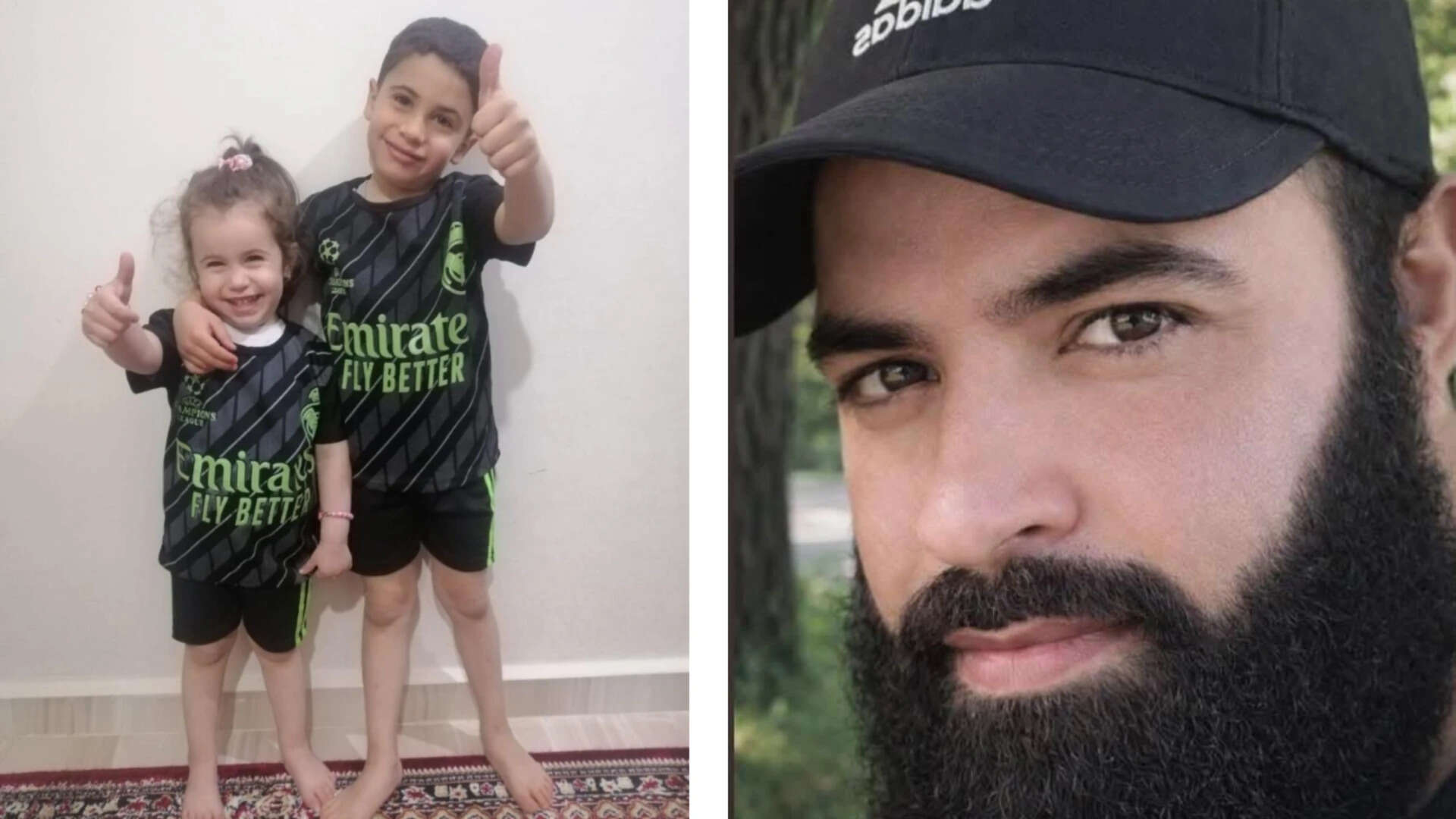
The cycle of violence isn't just happening on the ground in the Middle East anymore. It's vibrating through the screens of young men in the American Midwest with devastating consequences. When a gunman opened fire at a Michigan synagogue, the immediate search for a "why" led straight to a social media trail of blood and mourning. Investigators found that the shooter spent his final hours posting photos of his own relatives killed in Israeli strikes. This wasn't just a random act of hate. It was a targeted explosion of personal grief that had been weaponized by a digital echo chamber.
It’s easy to dismiss these acts as "lone wolf" attacks, but that’s a lazy way to look at it. Nobody is a lone wolf when they’re plugged into a 24-hour feed of high-definition trauma. In the Michigan case, the shooter’s digital footprint showed a rapid descent into a specific kind of radicalization. He wasn't just consuming propaganda from a distance. He was living it through the loss of his own family members halfway across the world. Expanding on this theme, you can find more in: Why the Green Party Victory in Manchester is a Disaster for Keir Starmer.
Why the Michigan synagogue attack changed the conversation on domestic terror
We've seen political radicalization before. We've seen white supremacy and religious extremism. But this specific attack in Michigan highlights a newer, more volatile trigger. It’s the intersection of personal loss and digital amplification. The shooter didn't just see a news report. He saw his own cousins, his own uncles, dead on a screen.
When you take a person already on the edge and feed them a constant stream of their own family’s tragedy, the results are explosive. The Michigan shooter's social media accounts were a gallery of his dead relatives. He posted their faces. He posted their names. He posted the rubble of the buildings where they died. By the time he walked into that synagogue, he wasn't just attacking a religious institution. In his mind, he was balancing a ledger. Experts at TIME have provided expertise on this situation.
This isn't an excuse for the horror he committed. It’s a roadmap of how we got here. The Jewish community in Michigan is now grappling with the reality that events thousands of miles away can bring a gunman to their doorstep in a matter of days.
The role of social media in fast tracking the path to violence
If you look at the timeline of the Michigan shooter, the speed of his radicalization is terrifying. He didn't spend years in an underground cell. He spent weeks on mainstream platforms. These sites are designed to keep you engaged, and nothing keeps a person engaged like rage and sorrow.
The algorithms don't care if the content you’re seeing is making you a threat to your neighbors. They only care that you’re clicking. For the shooter, every "like" on a photo of his dead relatives was a validation of his anger. Every comment from a stranger across the globe fueled the fire. We've reached a point where the distance between a tragedy in Gaza or Lebanon and a shooting in a Michigan suburb is zero.
Tracking the shooter’s digital footprint
Authorities found that the shooter’s activity spiked significantly in the 72 hours before the attack. He stopped posting general political commentary and started focusing exclusively on his family’s loss. This shift is a massive red flag that law enforcement is still struggling to catch in real-time.
- Direct personal connection: The shooter wasn't just a sympathizer. He was a relative.
- Visual evidence: High-resolution photos of the strikes were shared repeatedly.
- The "duty" narrative: He began posting about the necessity of "eye for an eye" justice.
When someone starts posting photos of their own dead family members alongside threats, the clock is already ticking. In this case, nobody stopped the clock.
What law enforcement is missing about modern radicalization
The old ways of tracking extremists don't work for this. You can’t just watch for specific keywords or memberships in known groups. The Michigan shooter wasn't a member of a terror cell in the traditional sense. He was a grieving man with an internet connection and a gun.
Local police and federal agencies are often looking for organized plots. They want to find the "commander" or the "cell leader." But in 2026, the commander is an algorithm. The cell leader is a trending hashtag. Law enforcement needs to understand that personal trauma is now the primary fuel for domestic attacks.
If you’re only looking for people who hate a specific group, you’re missing the people who are motivated by a warped sense of "defense" for their own family. The shooter saw himself as a soldier, not a murderer. That’s a distinction that makes these individuals much harder to deter through traditional policing.
The impact on Michigan’s Jewish and Muslim communities
The fallout of the Michigan synagogue shooting goes beyond the immediate tragedy. It has created a climate of suspicion and fear that threatens to tear local communities apart. Michigan has some of the largest Arab and Jewish populations in the country. They live in the same towns, shop at the same stores, and their kids go to the same schools.
Now, that proximity feels dangerous to some. The fact that the shooter was driven by photos of his family in Israeli strikes has put a target on the backs of innocent people who have nothing to do with the conflict. It’s a cycle of collective punishment that starts in a war zone and ends in a Michigan parking lot.
We need to be honest about the tension. You can’t ignore the fact that international conflicts are now local issues. When a bomb drops in the Middle East, the pressure rises in Michigan. If we don’t find a way to de-escalate that pressure through community outreach and better mental health support, this won't be the last time we see this headline.
Practical steps for community safety
Waiting for the government to solve this isn't a strategy. If you're a leader in a religious or community organization, the burden of safety has shifted.
- Audit your physical security: It sounds basic, but many institutions have lax protocols. Electronic locks, trained security personnel, and clear exit plans are non-negotiable now.
- Monitor local digital sentiment: You don't need to be a spy. Just pay attention to what's being said in local community groups. High-tension rhetoric often surfaces online long before it manifests in person.
- Cross-community dialogue: It’s harder to shoot someone when you know their name. Building real relationships between Jewish and Muslim community leaders in Michigan is the only long-term defense against this kind of radicalization.
The Michigan synagogue shooter showed us that the world is smaller than we thought. His grief was real, his loss was real, and his response was evil. We have to be able to hold both of those truths at the same time if we want to stop the next person from following his path.
Don't wait for the next "breaking news" alert to start talking to your neighbors. Check your security, stay informed about the digital landscape, and recognize that the screen in your pocket is a direct line to the most volatile conflicts on earth.