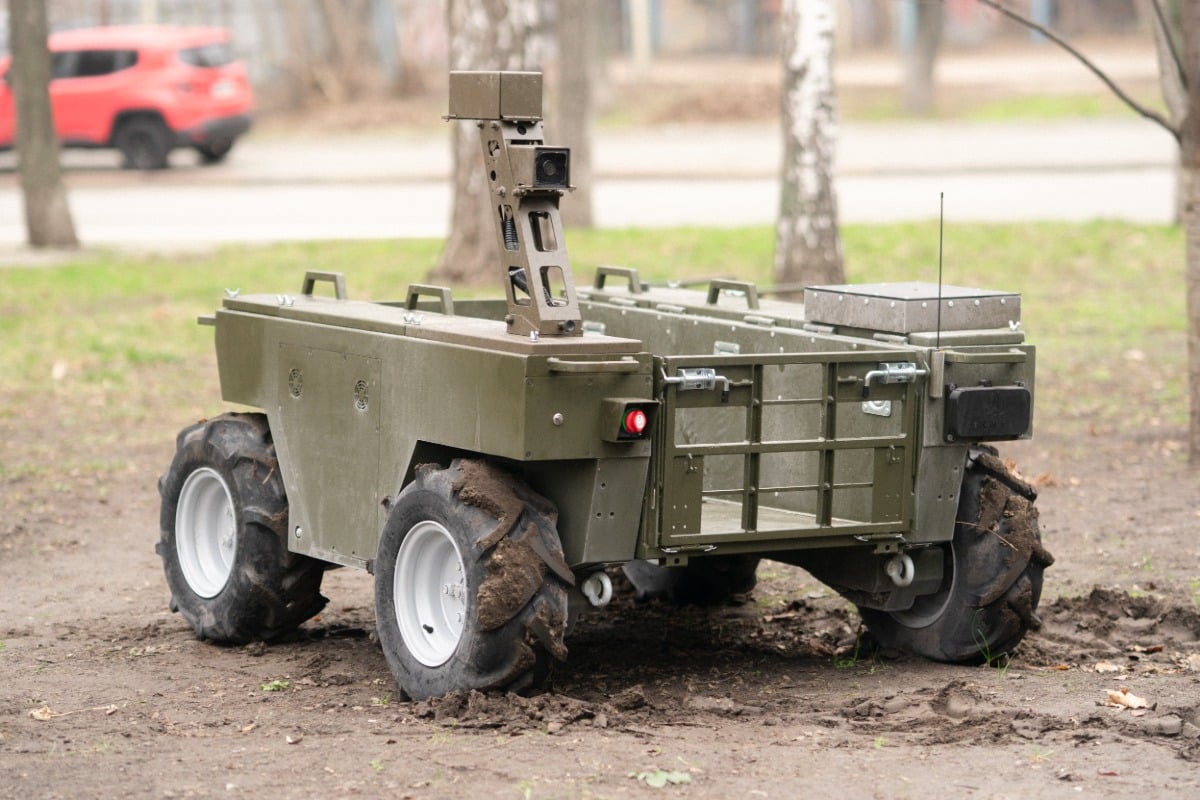
The basement in Kyiv smells of scorched solder, damp concrete, and the bitter tang of cheap instant coffee. Outside, the low rumble of air sirens begins its familiar, mournful wail. Nobody in the room looks up. A technician named Artem—his fingers stained black with grease—tightens a bolt on a four-wheeled steel chassis. It looks less like a sci-fi android and more like a rugged, militarized lawnmower. But to the men holding a muddy trench line three hundred kilometers east, this crude assembly of metal and code is the difference between a letter home and a body bag.
This is the reality of Ukrainian robotics. It is not born in pristine Silicon Valley labs funded by casual venture capital over oat milk lattes. It is forged in the shadows of an existential war, where a bad line of code does not mean a dropped app user—it means a casualty. For an alternative view, consider: this related article.
For months, Ukraine’s defense tech startups have operated on pure adrenaline, scavenging parts, rewriting software on the fly, and testing prototypes directly on the front lines. But adrenaline does not scale. To move from workshop hobbyists to a structured industry capable of pushing back a massive invading force, these innovators needed something just as rare as courage: institutional capital that understands the stakes.
Enter Stockholm. Similar reporting regarding this has been published by Engadget.
Sweden has quietly stepped into the breach, with a group of Swedish investors pouring vital funding into Ukrainian robotic manufacturers. It is an alliance born of geographic anxiety and cold strategic calculation. The Nordic nations understand that the geopolitical line holding the frontier of Europe intact is currently being drawn by these very machines in the mud of the Donbas.
Consider what happens when a military unit needs to mine a field or, conversely, clear a path through one. Traditionally, this required human sappers to crawl on their bellies, sweeping the earth with metal detectors while exposed to drone views and artillery fire. Life expectancy was measured in days.
Now, look at the robotic alternative. A remote operator sits in a bunker two kilometers away, holding a modified gaming controller. On their screen, the world is a pixelated feed from a ruggedized camera. The robot rolls forward, heavy, low to the ground, carrying out the hazardous work. If an artillery shell lands nearby, the robot shatters. Metal bends. Circuits fry.
But the operator goes home to his family.
The Swedish funding is specifically targeting this exact transition: scaling up the production of Unmanned Ground Vehicles (UGVs). While the world has spent the last few years fixated on aerial drones filling the skies, the ground war has quietly demanded its own automated revolution. Ukraine has become a living laboratory for this technology, iterating faster than any traditional defense contractor in the West could dream of. A design cycle that takes five years in Washington or Paris takes five weeks in Kyiv.
But scaling requires a shift from artisan assembly to automated manufacturing. You cannot fight a industrial-scale war with hand-built prototypes. The injection of Swedish capital allows these small, agile Ukrainian firms to purchase specialized CNC machinery, secure long-term component supply chains that bypass global bottlenecks, and hire full-time engineering talent.
The partnership is not charity. It is a glimpse into the future of global defense. European investors are realizing that the old paradigms of military procurement—multi-billion-dollar projects that take a decade to deliver a single platform—are obsolete. The future belongs to cheap, expendable, autonomous systems produced by the thousands. By investing in Ukrainian robotics today, Stockholm is purchasing a front-row seat to the most advanced operational data on the planet. They are learning how electronic warfare jams signals, how mud clogs treads, and how artificial intelligence can navigate when GPS is completely wiped out.
Back in the Kyiv basement, Artem powers on the chassis. The machine blinks to life, its status lights casting a dull blue glow against the damp brick wall. It hums, a low, steady vibration that resonates through the floorboards. In a few days, this machine will be loaded into the back of an unmarked van, driven east, and set loose into the gray zone of the front line. It carries no flags, feels no fear, and expects no medals. It simply rolls forward into the dark, keeping the men who built it a few steps further from the grave.