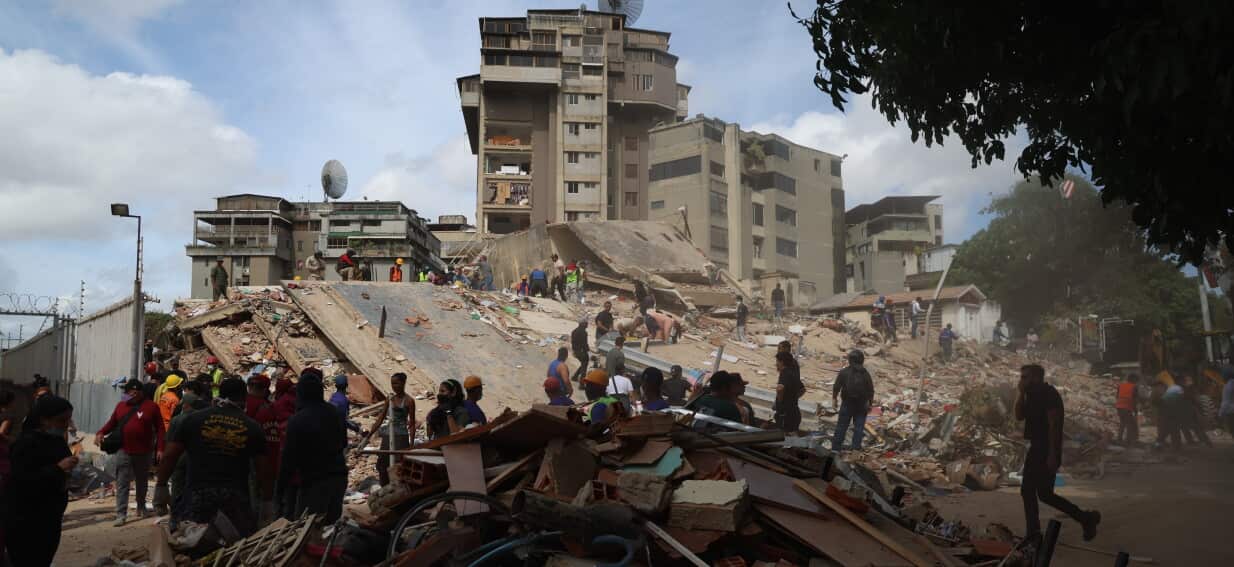
The ground in north-central Venezuela stopped shaking days ago, but the psychological tremors are just getting started. When back-to-back earthquakes measuring 7.2 and 7.5 on the Richter scale ripped through Yaracuy state, Caracas, and La Guaira on June 24, 2026, they did more than just tear down apartment blocks and fracture highways. They shattered the fragile coping mechanisms of a population already pushed to the brink by years of economic stagnation.
We often measure the severity of a natural disaster by its immediate, visible toll. We count the bodies. We list the number of collapsed buildings. We tally up the billions needed for infrastructure repair. But organizations working on the frontlines right now, including Plan International, are sounding an alarm about a much quieter, far more insidious crisis. The mental trauma left behind by these twin quakes is going to wreck lives for years, if not decades.
If you think a community just bounces back once the rubble is cleared, you're wrong. When an earthquake hits an already vulnerable nation, the psychological damage embeds itself deep within the social fabric. Understanding this reality is the only way to build a response plan that actually works.
The Twin Shocks of June 24 and an Already Broken Baseline
The sheer physical violence of the June 24 disaster is hard to overstate. Two massive tectonic ruptures occurred less than a minute apart. That is a nightmare scenario for any structural engineer, and an absolute psychological horror for anyone caught in the middle. The first shock weakens a building; the second one drops it. Over 16 million people felt that violent shaking. The official death toll has already climbed past 188, with thousands injured and hundreds still feared trapped under pancaked concrete structures in Caracas and coastal towns.
But to truly understand why this event is a psychological catastrophe, you have to look at what Venezuela looked like on June 23, the day before the disaster.
Before the plates shifted, nearly eight million Venezuelans were already living in a state of chronic humanitarian need. Hyperinflation, collapsed public utilities, a lack of dependable medical supplies, and massive food insecurity had already turned daily survival into a high-stress endurance sport. People were already exhausted. Their emotional reserves were entirely spent.
When you throw a double earthquake into that mix, you aren't just dealing with post-traumatic stress. You are dealing with compound trauma. The physical environment that people relied on for whatever tiny shred of stability they had left has been completely obliterated.
Why Kids and Adolescent Girls Bear the Heaviest Burden
In any major disaster, children suffer differently than adults. Adults worry about the mortgage, rebuilding costs, and finding clean water. Young kids don't have the cognitive architecture to process why the very earth beneath their feet suddenly turned hostile.
When a child experiences an event where their home collapses or they see their parents panic in terror, their sense of basic safety vanishes. Frontline humanitarian workers frequently document severe regressions in children after major seismic events. We see kids who had been fully toilet-trained start wetting the bed again. We see severe separation anxiety, where a child will scream if their mother steps into another room for ten seconds. Mutism, where a child completely stops talking, is shockingly common.
For adolescent girls, the situation gets even uglier. When homes are destroyed, families end up in crowded, chaotic temporary shelters or makeshift tent settlements. These environments are notorious breeding grounds for exploitation and gender-based violence.
Without safe, segregated spaces, girls lose their privacy and their security. Plan International has repeatedly pointed out that when crises disrupt education, adolescent girls are often the last to return to the classroom. Instead, they get pulled into domestic labor, forced into early marriages to relieve financial pressure on families, or targeted by abusers. The psychological weight of losing your future path while constantly fearing for your physical safety is a heavy burden to carry.
The Long Lifespan of Chronic Hypervigilance
A major misconception about disaster trauma is that it goes away once you provide people with food and a tent. It doesn't.
An earthquake leaves behind an invisible legacy called chronic hypervigilance. Because the earth shook without warning, the brain's threat-detection system gets stuck in the "on" position. Every loud noise—a truck rumbling down the street, a door slamming, a sudden gust of wind—triggers a massive spike of adrenaline. The body reacts as if another 7.5 magnitude quake is happening right that second.
Imagine living in that state of physiological panic twenty-four hours a day. It ruins sleep. It destroys the ability to concentrate. It causes severe chronic headaches, stomach ulcers, and extreme emotional volatility.
In a stable country with a functioning health system, you manage this with widespread psychological first aid, long-term counseling, and community-based support networks. But Venezuela's healthcare system was already starved of resources before June 24. There are not enough psychologists, psychiatrists, or social workers left in the country to handle a mental health crisis affecting millions of people. If we don't aggressively fund and integrate mental health services into the primary relief effort right now, we are going to look at a generation of youth defined by untreated post-traumatic stress disorder.
What Needs to Happen Right Now
To minimize the long-term psychological wreckage of this disaster, international aid cannot just be about distributing tarps and bottled water. The global community, through coalitions like Canada's Humanitarian Coalition and local Venezuelan civil society groups, must pivot toward a dual-track response that treats mental health with the exact same urgency as physical injuries.
First, emergency responders must set up dedicated safe zones for children, often called Child-Friendly Spaces, inside evacuation areas. These aren't just places for kids to play; they are structured environments where trained facilitators can help children process their terror through art, storytelling, and play, while re-establishing a predictable daily routine.
Second, we need to completely strip away the administrative and legal barriers that block local human rights groups and non-governmental organizations from operating freely on the ground. A restrictive regulatory environment only slows down the deployment of mobile psychosocial teams who need to reach isolated communities outside Caracas.
Third, clean water and mental support must be packaged together. When a mobile health clinic rolls into a damaged neighborhood in Yaracuy, it shouldn't just hand out water purification tablets and bandage wounds. Every single team needs a trained psychological first-aid worker who can identify families experiencing severe acute distress and give them immediate coping strategies.
The physical rebuilding of Caracas and its surrounding states will take years and cost billions of dollars. But buildings can be rebuilt with concrete and rebar. Reconstructing a shattered psyche takes far more time, deliberate effort, and sustained funding. If the international community walks away once the major news networks stop covering the physical damage, the true tragedy of the Venezuelan earthquakes will play out silently in dark rooms and crowded shelters for decades to come.