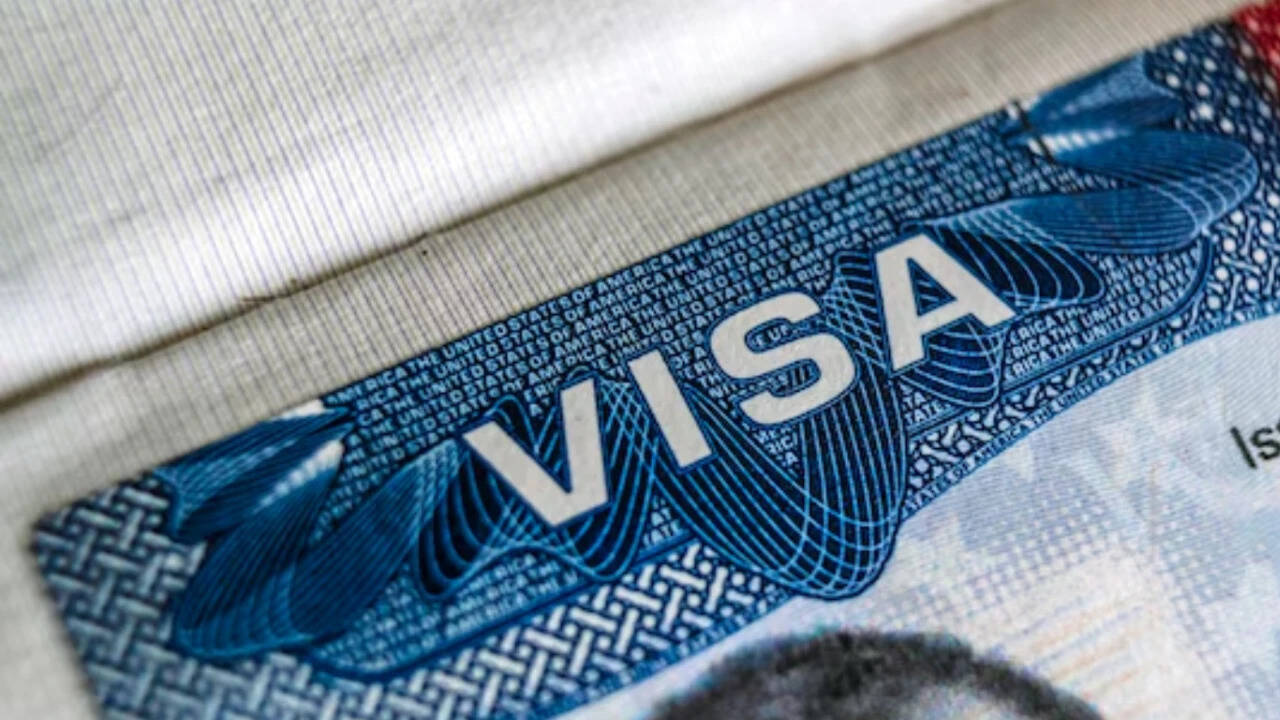
The exploitation of the U.S. employment-based immigration system relies on a specific structural vulnerability: the gap between administrative processing speed and the verification of corporate legitimacy. In the recent federal indictment of two individuals in Texas, this gap was weaponized over a seven-year period to facilitate an illicit "bench and switch" operation. This was not a simple case of document forgery; it was a sophisticated exercise in administrative arbitrage that utilized shell companies to bypass the H-1B lottery’s supply-side constraints.
Understanding this scheme requires a breakdown of the three primary vectors used to deceive U.S. Citizenship and Immigration Services (USCIS): corporate identity fabrication, the creation of non-existent job roles, and the illicit monetization of the Green Card queue.
The Architecture of the Shell Entity Loop
The H-1B visa is designed for "specialty occupations" that require the theoretical and practical application of a body of highly specialized knowledge. The statutory limit, or "cap," is currently set at 65,000 for the general pool and an additional 20,000 for advanced degree holders. Because demand consistently outstrips this supply, the system uses a random selection process.
The Texas operation circumvented this scarcity by establishing multiple shell companies. These entities existed solely on paper, possessing no physical operations, revenue-generating clients, or legitimate payroll. By filing applications through different corporate EINs for the same set of individuals, the operators statistically increased their "hits" in the H-1B lottery. This is a direct violation of the "one-employer, one-beneficiary" rule, yet it remains difficult to detect in real-time due to the siloed nature of corporate registration data and immigration filings.
The economic model of the scheme functioned through a "bench" system. In a legitimate H-1B scenario, an employer pays the prevailing wage to a worker engaged in a specific project. In this fraudulent variant, the shell companies acted as illicit talent brokers. Once a visa was secured, the worker was "benched"—left without pay or assigned to third-party contracts that were never disclosed to USCIS. The operators then skimmed a significant percentage of the worker’s hourly rate, effectively taxing the individual for the right to remain in the country.
Strategic Failure of Labor Condition Applications
A critical component of this fraud is the manipulation of the Labor Condition Application (LCA). Before an H-1B petition can be filed, the employer must attest to the Department of Labor (DOL) that they will pay the prevailing wage and that the employment will not adversely affect the working conditions of similarly employed U.S. workers.
The Texas defendants utilized "phantom" worksites. By listing remote or non-existent office locations in high-wage areas but paying the workers significantly less—or not at all during gaps between projects—they bypassed the floor of the American labor market. This creates a dual-threat economic distortion:
- It suppresses wages in the specialized tech sector by introducing sub-market-rate labor.
- It displaces legitimate applicants who are tied to actual, revenue-positive firms that comply with DOL regulations.
The failure here is systemic. The DOL’s "certify first, verify later" approach provides a window of several months to years before an audit might occur. During this period, the fraudulent actors can move funds, dissolve entities, or shift beneficiaries to new shell companies, staying one step ahead of the regulatory lag.
The Green Card Monetization Layer
Beyond the H-1B, the scheme extended into the Permanent Resident (Green Card) application process, specifically the EB-2 and EB-3 categories. These categories require a Permanent Labor Certification (PERM). This process is even more rigorous than the H-1B, requiring an employer to prove there are no qualified, willing, and available U.S. workers for the position.
The Texas operation engaged in "Permit Forgery," where they submitted applications for permanent residency based on jobs that did not exist. For the beneficiaries, the incentive was the "Priority Date"—the specific place in the multi-year (and for some nationalities, multi-decade) line for a Green Card.
By filing these fraudulent applications, the defendants were selling a commodity: time. Beneficiaries paid thousands of dollars in "fees" that are legally required to be covered by the employer. This creates a debt-bondage scenario where the immigrant is legally tethered to a fraudulent entity, making them unlikely to report the crime for fear of immediate deportation and the permanent loss of their legal standing.
Quantifying the Damage to System Integrity
The impact of a seven-year fraud cycle is not limited to the specific cases identified in the Texas indictment. The externalities are widespread and quantifiable through a lens of system degradation.
- Lottery Dilution: Each fraudulent entry reduces the probability of selection for legitimate companies by a factor proportional to the total volume of "shell" applications. If 10% of the 780,884 registrations in a recent cycle were fraudulent, it represents roughly 78,000 instances where a legitimate business was denied the talent required for growth.
- Administrative Sunk Costs: USCIS and DOL resources are finite. Every hour spent processing a fraudulent Texas-based shell application is an hour diverted from clearing the massive backlogs affecting legal immigrants.
- Tax Base Erosion: By "benching" employees and operating through shell companies, these schemes often involve off-books payments and the misclassification of employees as independent contractors, resulting in significant losses to Social Security and Medicare tax pools.
The Limit of Current Enforcement Frameworks
The discovery of the Texas scheme highlights the limitations of the "site visit" program. USCIS Fraud Detection and National Security (FDNS) officers conduct unannounced visits to workplaces to verify the existence of the business and the duties of the H-1B holder. However, the rise of remote work and "virtual offices" has provided a veil for fraudulent entities.
The defendants in this case utilized professional-sounding business names and leased minimal office space to pass superficial inspections. The reliance on physical verification is a 20th-century solution for a 21st-century digital fraud problem. To truly insulate the system, the verification must shift toward financial forensics—linking payroll data (Form 941) directly to visa status in a real-time, automated feedback loop.
The Strategic Path Forward for Corporate Compliance
For legitimate enterprises, the existence of these "fraud factories" increases the risk of "guilt by association" during government audits. Companies must move beyond basic compliance and adopt a proactive defense posture.
- Vetting Downstream Vendors: Many legitimate firms unknowingly hire H-1B workers through "middleman" staffing agencies that may be using the same shell-company tactics seen in the Texas case. If your vendor cannot provide a clear chain of custody for the H-1B approval and the LCA, your firm is exposed to co-employment liability.
- LCA Localization Audits: Ensure that the actual work location of every H-1B employee matches the LCA filing to the mile. The Texas indictment centered heavily on the mismatch between reported and actual work locations.
- Transparent Fee Structures: Legally, the employer must pay all costs associated with the H-1B petition and the PERM process. If an employee offers to "reimburse" the company or pay the legal fees, this is a massive red flag. Accepting such payments can trigger a federal investigation into the company’s entire immigration program.
The Texas indictment serves as a blueprint for the structural weaknesses in the U.S. immigration system. The defendants capitalized on the high demand for legal status and the slow pace of administrative verification. While the individuals have been charged, the "administrative arbitrage" opportunity remains open until the loop between corporate tax filings and immigration status is closed.
To mitigate future risk, firms must treat immigration compliance not as a HR clerical task, but as a critical component of their financial and legal risk management framework. The most effective defense against systemic fraud is a granular, data-driven internal audit that mirrors the forensic techniques used by federal investigators.
Would you like me to develop a comprehensive internal audit checklist for your firm's H-1B and PERM compliance programs to identify potential vendor risks?