Diplomacy is the art of telling a structural lie with a straight face.
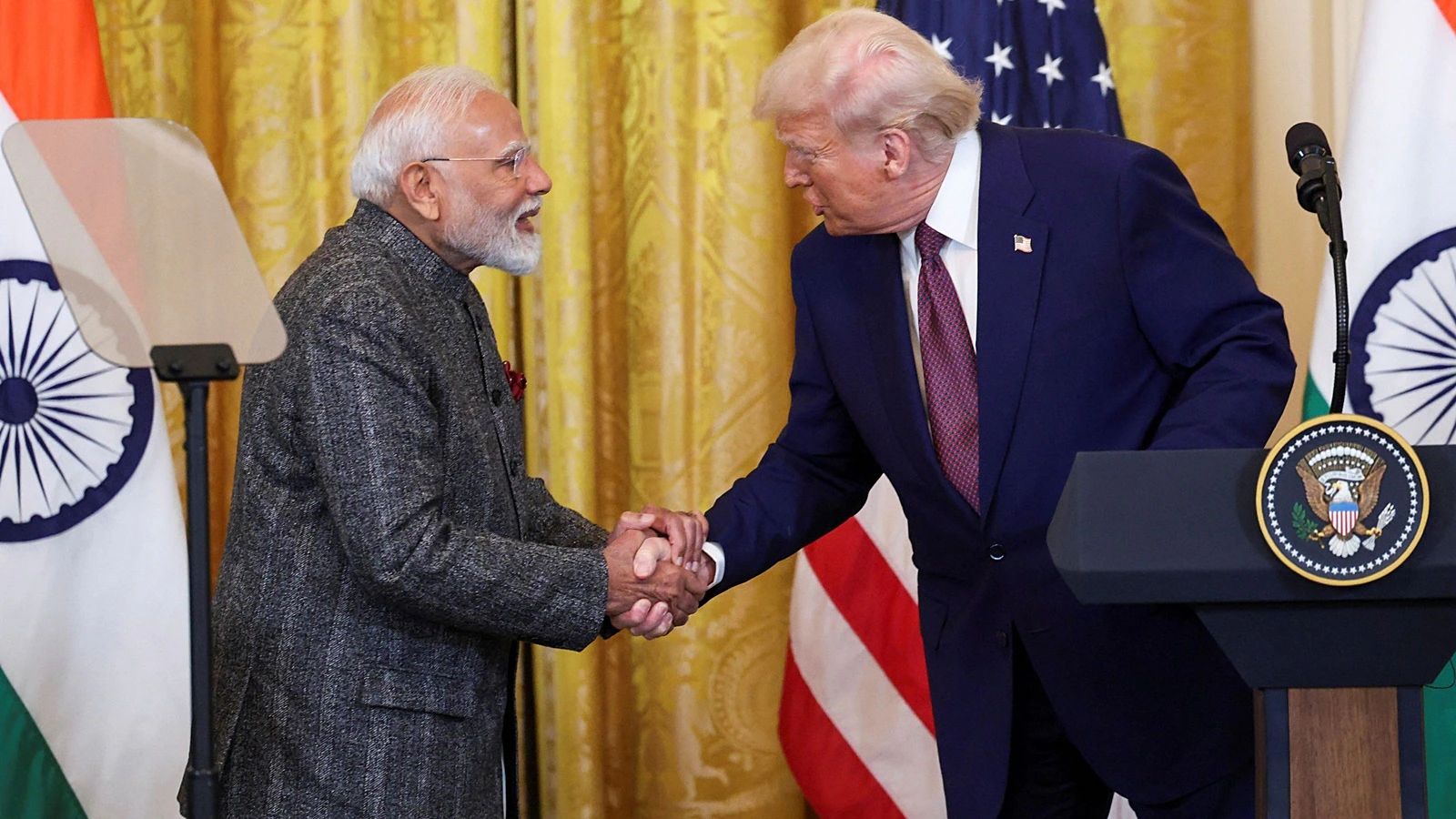
When US Ambassador Sergio Gor stepped up to the microphone at the Freedom 250 event in Hyderabad, he handed the public a comforting, diplomatic sedative. The Trump administration’s sweeping immigration overhaul, he insisted, is "not targeted at India." He spun a cozy narrative of shared interests between Washington and New Delhi, pointing out that Prime Minister Narendra Modi also opposes illegal migration. He assured anxious onlookers that because the United States is reviewing every visa category globally, India is merely a bystander caught in a wider net. If you enjoyed this post, you might want to read: this related article.
It is a beautiful piece of fiction. It is also mathematically impossible.
To claim that an H-1B overhaul is not directed at Indian professionals is like throwing a net over a cricket pitch and claiming you were just trying to catch random athletes. When one country fills roughly 70 percent of the slots in a highly specialized program, any change to that program is, by definition, a policy directed at that country. For another perspective on this event, refer to the latest coverage from The Motley Fool.
The corporate world and the tech sector are comforting themselves with the wrong questions. They are asking whether the administration harbors specific animus toward New Delhi. They are tracking the legal gymnastics of the proposed $100,000 application fee, celebrating its temporary defeat in a federal court as if the storm has passed.
They are missing the entire plot.
The real disruption here is not diplomatic bias. It is an intentional, structural pricing mechanism designed to break the offshore outsourcing labor model entirely.
The Statistical Fiction of "Global Reforms"
Let us look at the actual math that the embassy public relations team wants everyone to ignore. According to the US Department of Homeland Security’s own data, 70 percent of all approved H-1B petitions in recent years belong to individuals born in India. The runner-up, China, sits at a distant 12 percent.
When you possess a near-monopoly on a labor pipeline, a "global review" is a semantic fig leaf.
If a government decides to restructure a system where seven out of ten participants come from a single geography, the geography is the target. The administration knows this. Corporate boards know this. The only people pretending otherwise are diplomats trying to smooth over a multi-billion-dollar trade negotiation.
I have spent years watching multinational tech corporations manage their human capital allocations. Whenever a policy shift like this occurs, the response from executive leadership is predictable: panic, followed by heavy lobbying, followed by public statements mimicking the reassuring language of the state department. They want to keep their engineering pipelines cheap, and they want to keep their stock prices stable.
But the era of the cheap offshore body-shop model operating on US soil is ending, regardless of whether a federal judge pauses a specific fee hike.
The proposed $100,000 fee was never meant to be a tax to collect revenue. It was designed to be a pricing floor. By making the entry ticket for an H-1B worker astronomically expensive, the policy forces an immediate structural shift. Even with the fee tied up in court appeals, the policy intent remains clear: the administration is moving toward a system that favors the highest salaries and the most advanced degrees.
Why Silicon Valley and Bengaluru Are Asking the Wrong Questions
The mainstream business press loves to frame this as an immigration crisis or a talent shortage. They ask: "How will Silicon Valley survive without foreign engineers?"
This is the wrong question. The real question is: "Why did American tech companies build a business architecture that requires importing thousands of mid-level engineers under market rates?"
For three decades, the H-1B program has functioned less as a specialized talent scout and more as a corporate subsidy for labor arbitrage. Large IT services firms built massive fulfillment machineries designed to flood the lottery system. They applied for tens of thousands of visas, secured a predictable percentage, and deployed those workers to corporate clients at costs that undercut domestic tech talent.
The conventional wisdom says that this process brought the world's best minds to America. The reality is more transactional. It brought highly capable, compliant workers who were tied to a single employer, reducing their wage-bargaining power and giving large corporations an immense operational advantage.
Imagine a scenario where an enterprise software company needs 500 QA engineers. Under the old system, they contracted an external vendor to bring them in via the H-1B lottery. Under the new, high-scrutiny model, that operational playbook breaks down.
If the administration successfully shifts the selection criteria away from a random lottery to a strict wage-ranking system, entry-level and mid-level foreign engineers are priced out completely. The visas will go exclusively to top-tier executives, niche artificial intelligence researchers, and specialized specialists commanding top-percentile compensation.
This does not kill the talent pipeline; it kills the corporate arbitrage loop.
The Unintended Beneficiary: The Domestic Indian Ecosystem
Here is the ultimate irony that the standard commentary fails to see. The tightening of the US visa framework is not a tragedy for the Indian tech economy. Long-term, it is the best thing that could happen to it.
For a generation, the "brain drain" has been an accepted cost of doing business in India. The country's premier engineering institutions would educate the finest mathematical minds in the world, only for those minds to immediately board flights to California, Seattle, or Texas to build equity for American technology giants.
When you cut off that escape hatch, that talent does not vanish. It stays home.
We are already seeing the initial signs of this migration reversal. The massive capital pooling in Bengaluru, Mumbai, and Gurgaon is no longer just funding localized versions of Western apps. It is funding deep-tech enterprises, domestic software infrastructure, and regional engineering centers that serve the global market remotely.
Consider the operational shift for a major Indian IT provider. If sending 5,000 engineers to a client site in Ohio becomes cost-prohibitive due to heightened scrutiny and administrative friction, the provider does not surrender the contract. They change the delivery model. They build out sophisticated remote delivery units inside India, utilizing local talent at local cost structures, while retaining a far higher share of the profit margins within the domestic economy.
The downsides to this contrarian reality are immediate and painful for individual workers. Families are disrupted. Young graduates who spent years preparing for a specific corporate path find the doors slammed shut. The personal toll is genuine, and pretending otherwise is cold-hearted. But from a macroeconomic perspective, the tightening of American borders is a massive, forced injection of elite talent back into the Indian domestic ecosystem.
Dismantling the Myth of a Tech Talent Shortage
Let us confront the most deceptive argument used by tech lobbyists: the claim that Western innovation will collapse without a wide-open H-1B gate.
The tech sector does not have a talent shortage; it has a compensation and training recalibration problem. For years, major corporations preferred the turnkey solution of importing pre-trained, mid-career professionals over investing heavily in domestic training programs or paying the premium required to attract domestic workers from other analytical sectors.
When an executive says they "cannot find qualified talent," what they usually mean is they cannot find qualified talent at the specific price point they have budgeted based on twenty years of global labor arbitrage.
The policy shift underway forces a return to localized talent cultivation. It compels companies to either automate lower-tier engineering tasks or pay top dollar for local talent, while reserving their limited, highly scrutinized foreign visas for true outliers.
The diplomatic dance performed by officials like Sergio Gor is designed to prevent trade friction while this systemic re-engineering takes place. They want the public to look at the global nature of the visa review so that no individual trading partner retaliates with immediate tariffs or restricted market access. But anyone looking at the underlying data can see through the rhetoric.
The old system is not coming back. Relying on diplomatic reassurances or short-term court victories to protect outdated labor models is an executive strategy built on sand. The smart operators are already restructuring their businesses around the reality that moving physical bodies across borders for routine technical work is a relic of the past.
For a broader perspective on the diplomatic efforts surrounding these policy changes, you can watch this report on US visa modifications and bilateral relations, which outlines the official stance provided by the administration regarding global migration updates.