The olive harvest used to be measured in liters of oil, in the laughter of children staining their fingers purple, and in the steady, rhythmic thwack of wooden sticks against ancient branches. Today, it is measured in minutes. Minutes stolen before the next drone hums overhead. Minutes counted before a pickup truck without license plates kicks up dust on the horizon, carrying men with rifles who claim the soil by divine right and enforce it with lead.
Consider a man named Mahmoud. His name is a placeholder for a thousand names, but his calloused palms and the key in his pocket are entirely real. He stands on a terraced hillside in the West Bank, watching a bulldozer bite into a terrace his grandfather built during the Ottoman Empire. The machine does not just move dirt. It erases memory. It redefines geography in real-time, turning a contiguous homeland into an archipelago of isolated enclaves.
This is not a traditional war of artillery barrages and clashing armies. It is a war of bureaucracy, gravel, and quiet coercion. A global human rights organization, Amnesty International, recently stripped away the sanitized diplomatic language to call this reality by its precise legal name: state-sponsored ethnic cleansing.
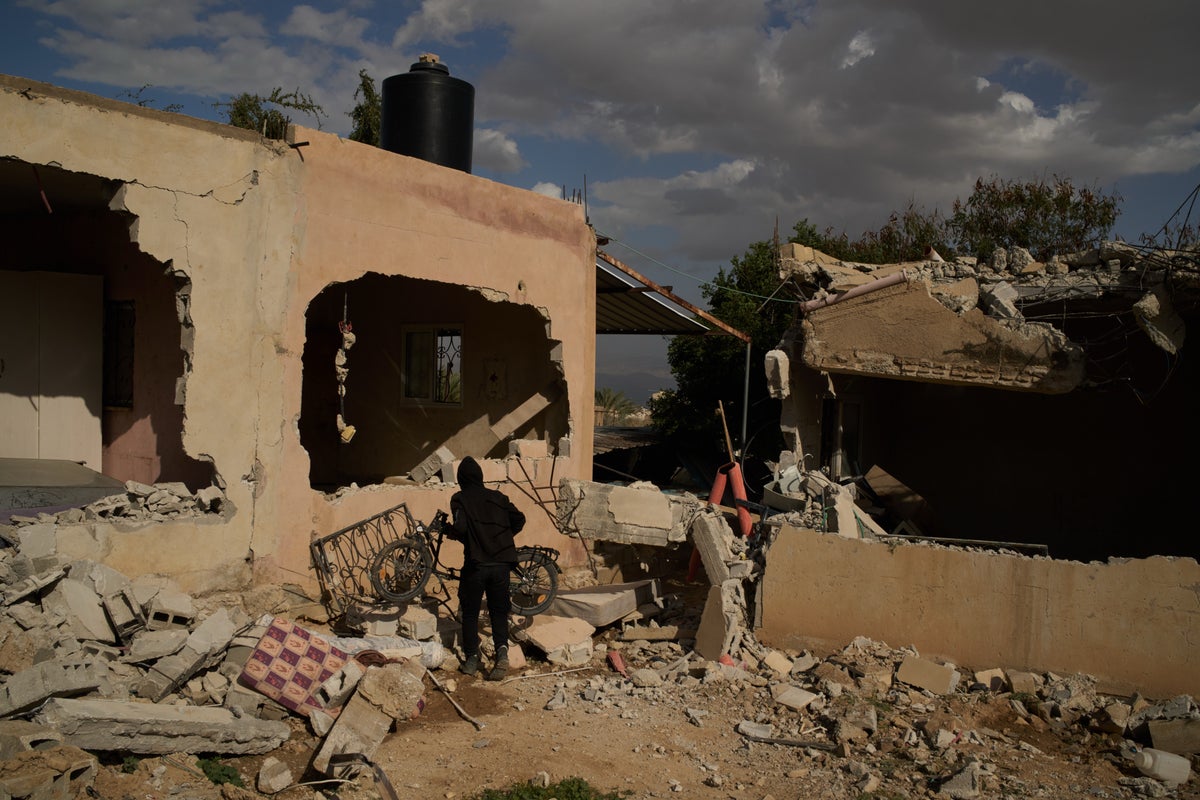
The numbers are stark, cold, and devastating. According to human rights monitoring, since October 2023, state-backed settler violence and systemic military displacement have forced at least 15 distinct Palestinian communities entirely off their ancestral lands in the West Bank. Over 1,600 people—entire clans, schools of children, generations of shepherds—have been uprooted. They did not pack suitcases for a planned move. They fled into the night because their water tanks were punctured by bullets, their solar panels smashed, and their homes torched.
But numbers are bloodless. They fail to capture the sensory terror of a midnight raid.
The process follows a predictable, terrifying choreography. It begins with the establishment of an illegal outpost—a couple of shipping containers and a generator placed on a hilltop by radical settlers. Then comes the creeping perimeter. Palestinian shepherds suddenly find their traditional grazing lands blocked by barbed wire. If they cross, they are met with violence.
The state does not merely look away; it actively participates. Amnesty’s investigation documented how Israeli soldiers frequently stand guard during these settler attacks, providing tactical cover. In many cases, the line between soldier and settler has dissolved completely, as thousands of settlers were integrated into regional defense battalions, handed military uniforms, and gifted state-issued assault rifles.
Imagine waking up to find that the local police force is now comprised of the very people who have spent years trying to drive you from your home.
The strategy is spatial asphyxiation. It relies on three distinct levers of power that work in tandem to hollow out the Palestinian presence in Area C, the 60 percent of the West Bank under full Israeli administrative and security control.
First, there is the weaponization of infrastructure. While Israeli settlements enjoy paved highways, reliable water grids, and robust electrical connections, neighboring Palestinian villages are systematically denied building permits. A staggering 99 percent of Palestinian permit applications in Area C are rejected by the military administration. When a community builds a school or a cistern without a permit because their children need an education and their livestock need water, the military issues a demolition order. The law becomes a scalpel used to excise a population.
Second, the economic spine of the rural West Bank is being systematically broken. Shepherding and agriculture are not just jobs; they are the bedrock of cultural identity. By restricting access to water springs and grazing lands, the state forces communities into financial ruin. When you cannot feed your sheep, you must sell them. When you sell your herd, you lose your livelihood. When your livelihood is gone, you can no longer afford to stay.
Third, there is the psychological siege. The constant threat of violence creates a ambient trauma that erodes the will to endure. It is the fear that a brick will fly through the window while your toddlers are asleep. It is the knowledge that if you call the authorities for help, the men who arrive might be wearing the same uniforms as the attackers.
The defense offered by authorities often centers on security, arguing that these measures are necessary to prevent terrorism and protect Israeli citizens living in the West Bank. They point to deep-seated regional tensions and a history of conflict to justify the tightening grip. But international legal frameworks do not recognize the right of an occupying power to permanently alter the demographic makeup of a territory or to transfer its own civilian population into occupied land. Under the Fourth Geneva Convention, these actions constitute grave breaches of international law.
The real tragedy lies in the permanence of the silence that follows. When a village is emptied, the silence is deafening. The sheep pens sit empty. The stone ovens grow cold. Within weeks, the outpost on the hill expands down the slope, absorbing the vacated terraces, planting new vines over old graves.
The map of the West Bank is being rewritten daily, not by grand treaties, but by the slow, agonizing displacement of people who have nowhere else to go. It is a landscape transformed into a cage, where the stakes are nothing less than the right to exist in the place you were born.
Mahmoud still holds his grandfather’s key, its iron surface worn smooth by decades of anxious thumbs. The lock it once turned is gone, crushed beneath the treads of a yellow excavator, but the weight of the metal remains. It is a heavy, cold reminder that while concrete can be poured and borders can be drawn by force, the dirt itself remembers the hands that tended it.


