Malaysia has a dirty little secret, and it's humming right inside the shiny new server farms of Johor and the Klang Valley.
The country wants to be Southeast Asia’s digital capital. It's winning that race. Tech giants are dumping billions into the country, building massive complexes to power the region’s artificial intelligence apps and cloud storage. But there’s a massive problem. These facilities possess an insatiable appetite for electricity, and Malaysia's grid isn't ready to feed them with sunshine.
Instead, the government is leaning hard on natural gas to keep the servers cool. This sudden pivot toward fossil fuels completely undermines the nation’s celebrated goal of hitting net-zero emissions by 2050. You can't claim you're cleaning up your act when you're actively building out gigawatts of gas-fired power to back up tech companies. It's a blatant contradiction, and the cracks are starting to show.
The Scale of the Digital Appetite
Let's look at the numbers because they're staggering. Data centers aren't just normal commercial buildings. They consume vast amounts of power. Think of a single hyperscale facility as a small city that never sleeps, never turns off the lights, and demands constant air conditioning.
According to data from energy think tank Ember, Malaysia’s data center power consumption will skyrocket sevenfold by 2030. We're talking about a leap from 8.5 terawatt-hours in 2024 to a projected 68 terawatt-hours in 2030. To put that in perspective, that increase is roughly equal to the entire annual electricity consumption of Singapore.
By the end of the decade, these server farms will swallow up nearly 30% of Malaysia’s entire national power demand.
State utility giant Tenaga Nasional Berhad (TNB) has been signing Electricity Supply Agreements like crazy. They’ve already locked in over 7 gigawatts of future demand from data center developers. Deputy Prime Minister Fadillah Yusof even noted that by 2035, the sector could require up to 19.5 gigawatts. That's more than half of Peninsular Malaysia’s current total system capacity.
The economic growth looks great on a spreadsheet. The climate reality? Terrifying.
The Gas Lock-In Trap
To prevent the grid from collapsing under this sudden weight, Malaysia is turning to the fastest, most scalable power source it has. Natural gas.
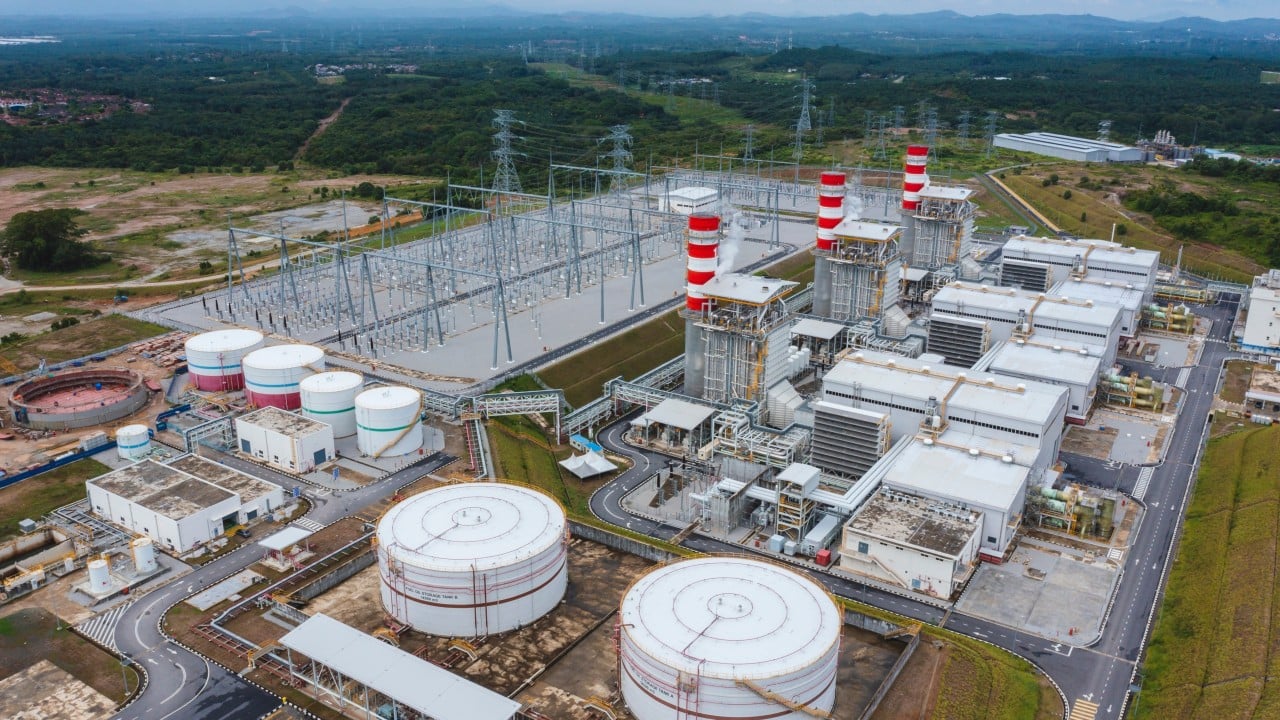
TNB plans to add between 6 and 8 gigawatts of new gas-fired power generation by 2030. That represents a massive 50% increase over the country's existing gas capacity. The utility company is also extending the lifespans of aging, inefficient gas plants in places like Gelugor and Putrajaya. They're even constructing a massive 1.4-gigawatt gas turbine plant in Paka, Terengganu.
The official narrative frames this as a responsible transition. The logic goes like this: we're phasing out coal, so gas is the next best bridge fuel.
But it's a trap. A modern combined-cycle gas plant isn't temporary. It has an operational lifespan of 25 to 30 years. Building them now guarantees Malaysia will be burning fossil fuels deep into the 2050s. This completely blows past the 2035 interim goals where TNB promised to slash its carbon emission intensity by 35%.
Projected Data Center Power Consumption in Malaysia (TWh)
2024: ■■■ 8.5 TWh
2030: ■■■■■■■■■■■■■■■■■■■■■■■■■■■■■■■ 68 TWh
Worse, Malaysia’s domestic gas reserves are drying up. The country used to be a pure exporter of liquefied natural gas (LNG). Now, state energy firm Petronas warns that skyrocketing domestic demand will turn Malaysia into a net importer of super-chilled gas within the next few years.
So, to power American and Chinese tech infrastructure, Malaysia will import expensive, volatile foreign gas. It's bad environmental policy, and it's terrible economics.
Why Solar Alone Won't Save the Grid
Tech companies love to talk about their green credentials. Google, Microsoft, and Amazon all have corporate mandates to run on 100% renewable energy. They sign nominal agreements in Malaysia, point to solar panels, and claim their hands are clean.
Don't buy the hype.
Solar energy in Malaysia faces a brutal physical limitation. It only works when the sun shines. Data centers require uninterrupted power 24 hours a day, 365 days a year. A single second of downtime costs millions.
Because Malaysia has zero utility-scale battery storage infrastructure, the grid must step in the moment clouds roll over a solar farm. What spins up to fill that gap? Gas turbines.
Ember's analysis shows that without massive investments in energy storage, solar and wind can only realistically cover about 30% of a data center’s hourly electricity needs. The remaining 70% comes straight from the carbon-heavy grid.
RimbaWatch, a local environmental watchdog, ran the math on the current pipeline of data centers under construction. They found that 1.7 gigawatts of planned capacity has no concrete renewable energy backing whatsoever. They estimate this will dump an extra 9.9 million tonnes of carbon dioxide into the atmosphere every year. That's equivalent to the annual emissions of entire developing countries.
The Greenwashing Safeguards
Right now, Malaysia’s regulatory framework is too soft. It rewards optimization metrics that look good on paper but do nothing to reduce absolute emissions.
Take Power Usage Effectiveness (PUE). It measures how efficiently a data center uses electricity, specifically how much power goes to the actual servers versus cooling and lighting. Malaysia encourages low PUE scores.
But a low PUE just means the building is efficient at consuming dirty power. If a massive 100-megawatt facility achieves a perfect PUE score while drawing electricity from a grid that's 88% powered by coal and gas, it's still an environmental disaster. It's efficiency without decarbonization.
Local authorities are finally starting to freak out. The Johor state government recently rejected nearly 30% of new data center applications. Why? Because the local infrastructure couldn't handle the load, and officials started realizing these projects bring tons of pollution but very few high-skilled local jobs.
Moving Past the Rhetoric
If Malaysia wants to stop its digital boom from wrecking its climate targets, the government needs to change the rules of the game immediately. It can't keep handing out subsidized power connections to hyperscalers without demanding real accountability.
First, the country must stop approving facilities that rely blindly on the national grid. Tech giants want to build here? Force them to co-invest in the underlying grid infrastructure. They need to fund the utility-scale battery storage networks required to make solar power viable around the clock.
Second, the Ministry of Energy Transition and Water Transformation needs to implement strict, legally binding carbon-intensity caps for data centers, rather than relying on weak PUE metrics. If a facility exceeds its carbon allocation, it should face heavy financial penalties or forced curtailment during peak demand hours.
Finally, the Corporate Green Power Programme needs an aggressive expansion. Third-party access to the grid must be simplified so developers can buy clean energy directly from independent solar producers without bureaucratic delays.
The digital economy shouldn't be built on a foundation of imported gas and broken climate promises. It's time to force big tech to pay the true environmental cost of its processing power.