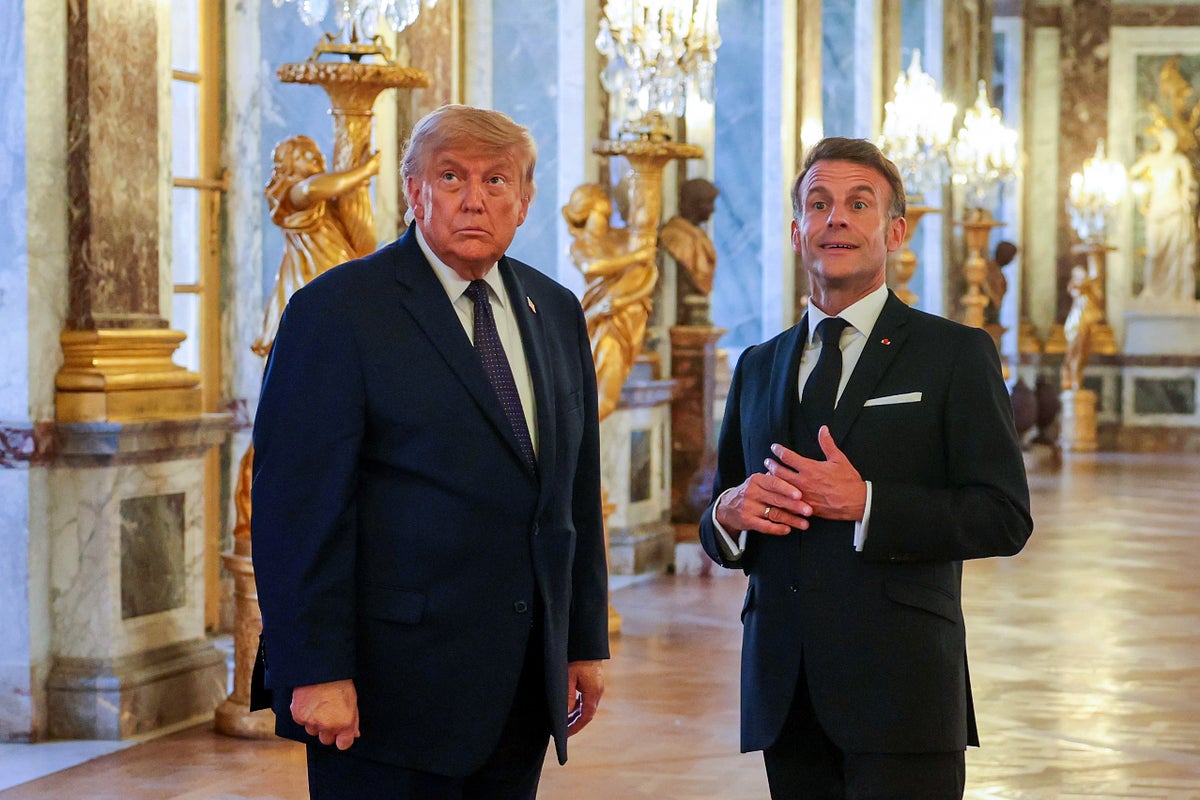
The political commentariat loves a narrative about psychological dominance. When headlines broke claiming Donald Trump admitted Emmanuel Macron recognized his weakness, the mainstream media threw a party. They spun a comfortable, lazy tale: the sophisticated French institutionalist successfully psychoanalyzed the brash American populist, found the chink in his armor, and neutralized him.
It is a beautiful story for people who view international relations as a West Wing episode. It is also entirely wrong.
What the conventional analysis misses is the basic mechanics of high-stakes negotiation. In the theater of global power, broadcasting a vulnerability is rarely an accident. It is a tactical concession designed to anchor the other party’s strategy to a false premise. Macron did not expose a weakness; he walked straight into a classic perception trap that seasoned negotiators use to make their opponents overplay their hand.
The Flaw of the Sophisticated Subtext
Mainstream pundits operate under the assumption that diplomacy is an intellectual chess match where the most articulate player wins. When Macron hosted Trump at the Eiffel Tower or held his hand in an aggressively long handshake, the press labeled it a masterclass in managing an unpredictable leader.
They misread the scoreboard.
While Macron focused on the aesthetics of engagement, the structural realities of trade, defense spending, and multilateral agreements shifted. The assumption that recognizing a leader's ego or perceived insecurity gives you leverage is a fundamental misunderstanding of power. True leverage is structural, not psychological.
Consider the numbers. France and the broader European bloc spent years trying to charm the US administration into maintaining status quo agreements on carbon emissions and Iranian sanctions. The result? The US walked away anyway. The European strategy relied on the belief that personal rapport could override hard national interest. It failed because it prioritized the optics of influence over actual economic or military chips.
Weaponized Vulnerability as a Negotiating Asset
In classic game theory, appearing predictable or even slightly vulnerable can be an effective way to extract concessions. When a leader signals that they are susceptible to specific types of flattery or peer pressure, they set up an easy, low-cost win for the opponent.
Imagine a scenario where a corporate raider lets a target CEO believe that personal vanity drives the acquisition strategy. The CEO spends all their energy managing the raider's ego while completely ignoring the quiet accumulation of voting shares. By the time the CEO realizes the vanity was a sideshow, the company is gone.
This is exactly what happened on the international stage. While European leaders convinced themselves they had cracked the code to managing Washington by playing to the cameras, systemic shifts were occurring. NATO spending targets—long ignored by European capitals—suddenly became non-negotiable. Trade terms were rewritten. The illusion of dominance blinded the continent to the reality that they were conceding tangible policy points in exchange for symbolic victories.
Dismantling the PAA Fallacies
The internet is filled with predictable questions whenever these diplomatic summits occur. The premises of these questions deserve a brutal reality check.
Did Macron actually outmaneuver the US administration?
No. Outmaneuvering requires a measurable shift in policy outcomes that favors your nation at the expense of the other. If you examine the tariff structures, the defense outlays, and the alignment on global supply chains between 2017 and 2021, Europe consistently played defense. Macron secured great press coverage, but press clips do not change trade deficits.
Why do leaders admit to weaknesses publicly?
They don't—unless the admission serves a current narrative purpose. Lowering your guard in retrospect is a powerful way to disarm current critics and frame past conflicts as collaborative rather than adversarial. It creates an illusion of transparency that builds trust for the next round of confrontations.
The Cost of the Intellectual High Ground
I have spent years watching corporate boards and political organizations fall into the same trap: the intellectual superiority complex. Teams of highly educated advisors convince themselves that their opponent is a blunt instrument who can be managed through sophisticated psychological framing.
It is an expensive delusion.
The downside of this contrarian reality is bleak for institutional diplomacy. It means that traditional diplomatic protocols—the dinners, the communiqués, the strategic leaks—are largely useless when dealing with a counterparty that does not value institutional norms. Macron’s approach assumed that the system itself would hold if the personal relationship was managed. The system did not hold.
The hard truth is that in a multipolar world, relying on your ability to read an opponent’s psychology is a substitute for hard power. If your defense depends on the personality quirks of an allied leader, you do not have a defense strategy. You have a hope strategy.
Stop looking at the handshakes. Stop analyzing the body language experts' take on who gripped harder or who looked away first. Look at the balance sheets, the troop deployments, and the tariff lines. Everything else is just entertainment for the politically obsessed.