The coffee in the paper cup has gone cold, but the man holding it doesn't seem to notice. He is standing at the edge of a wind-whipped parking lot in Windsor, Ontario, watching the steady, rhythmic pulse of transport trucks rolling toward the Ambassador Bridge. For him, those trucks aren't just logistics. They are the circulatory system of his life. If those trucks stop, the grocery store shelves in his neighborhood start to look like skeletons within forty-eight hours. If the tariffs currently being threatened in Washington become a reality, the cost of the engine parts crossing that bridge rises by twenty-five percent instantly.
He is a hypothetical composite of the millions of Canadians whose dinner tables are currently being discussed as bargaining chips in a high-stakes game of geopolitical poker.
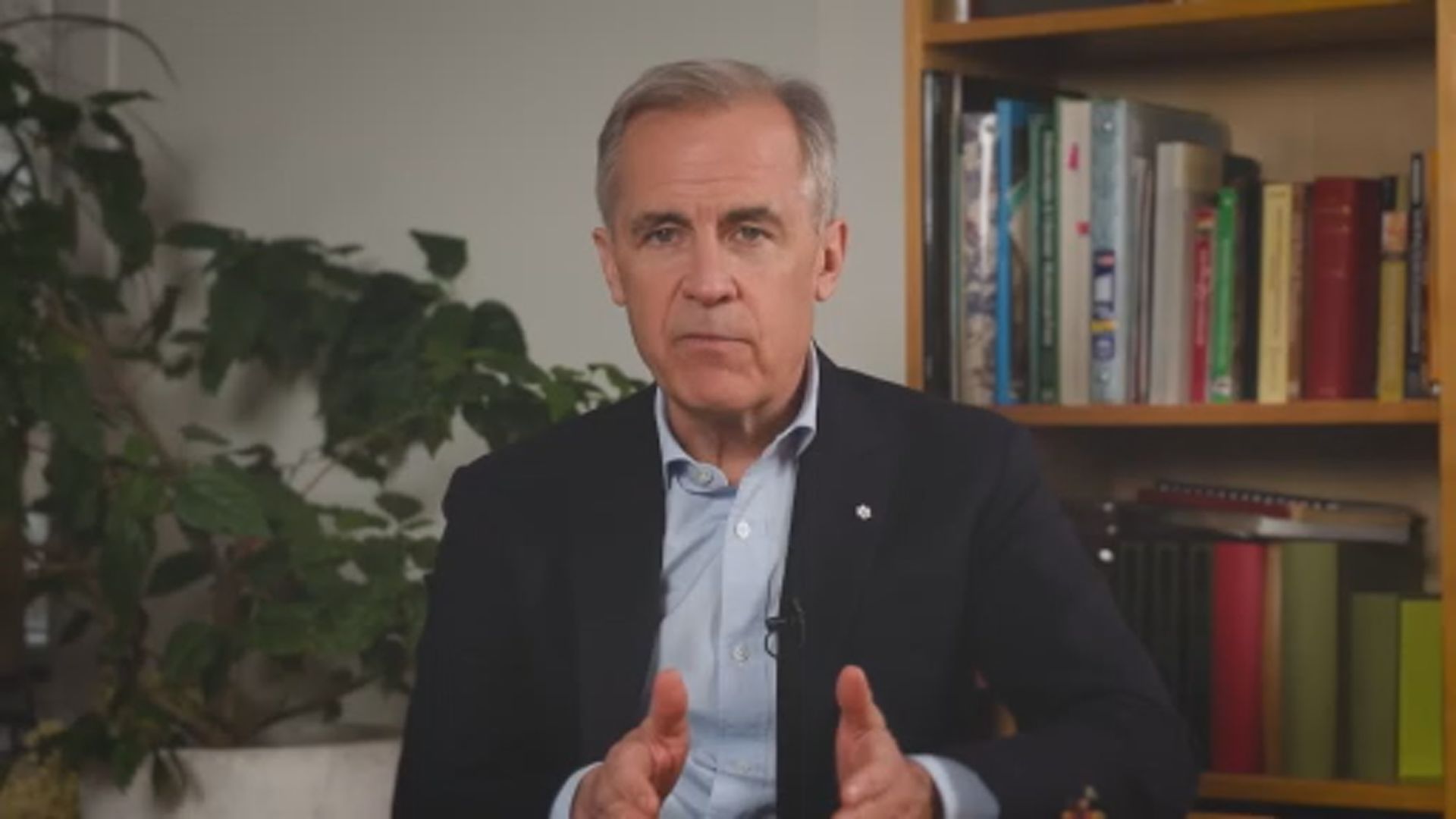
The air in Canada has grown heavy with a familiar kind of tension. It is the feeling of a smaller house guest realizing the homeowner is in a foul mood and starts eyeing the door. Mark Carney, the man who once steered the Bank of England and the Bank of Canada through global storms, recently stepped into the light to remind his fellow citizens of a singular, gritty truth: we have been here before. He didn't use the panicked tones of a cable news pundit. He spoke with the measured cadence of a navigator who knows that while the waves are twenty feet high, the hull of the ship has held against worse.
The Ghost of 1988
To understand why a trade war feels like an existential threat, you have to look past the spreadsheets. You have to look at the psychology of a nation that defines itself by its openness. Canada is built on the idea that if you make a good product, the world—specifically the massive, hungry engine to the south—will buy it.
When Carney points to history, he isn't just reciting dates. He is invoking the ghost of the original Free Trade Agreement debates. In the late eighties, the country was torn apart by the fear that opening the borders would swallow Canadian identity whole. Families argued over turkey dinners about whether we were selling our soul for cheaper washing machines. We didn't. Instead, we leaned into the friction. We grew.
Now, the friction is back, but the direction has flipped. The threat isn't that we will be swallowed, but that we will be shut out.
Imagine a greenhouse owner in Leamington. She has spent twenty years perfecting a hydroponic system that feeds the Eastern Seaboard. Her margins are thin—razor thin. A ten percent tariff on her tomatoes doesn't just mean she makes less money. It means the bank calls her in for a meeting she can't win. It means the three local kids she hires for the summer don't have jobs. This is the "threat" Carney is talking about. It isn't an abstract percentage on a government memo; it is the quiet, terrifying math of a family business realizing the border has suddenly become a wall.
The Architecture of Resilience
Carney’s argument isn't built on blind optimism. It is built on the cold reality of integration. The United States and Canada don't just trade with each other; we make things together.
Consider a single car seat. It might cross the border six times before it is finally bolted into a chassis. The leather comes from one side, the foam from another, the electronic sensors from a third. To slap a tariff on that car seat is to punch yourself in the face to spite your neighbor. It is a fundamental misunderstanding of how the modern world works.
But logic is a weak shield against populism.
The strategy Carney advocates for is one of "principled pragmatism." It sounds like a textbook term, but in practice, it’s more like a veteran boxer who knows how to clinch. You don't scream. You don't panic. You remind the other guy that if he hits you, he breaks his own hand. Canada’s strength has always been its ability to be the most essential partner in the room. We aren't just the "nice guys" anymore. We are the people who keep the lights on in California and the heating running in Chicago.
The stakes are invisible until they aren't. We take for granted that the lights flick on and the gasoline is affordable. But the energy relationship between the two nations is so deeply woven that untangling it would be like trying to remove the flour from a baked cake. Carney's message is a call to remember that leverage. We are not a helpless observer in this drama. We are the quiet backbone of a continental economy that cannot function without our stability.
The Human Cost of Uncertainty
The real poison of a trade war isn't the tax itself; it's the uncertainty.
Business owners hate a vacuum. When they don't know what the rules will be in six months, they stop. They stop hiring. They stop investing. They stop dreaming. This "wait and see" period is a slow-motion recession of the spirit.
I remember talking to a tool-and-die maker during the last round of NAFTA renegotiations. He was a man who measured his life in thousandths of an inch. He told me he’d stopped buying new equipment because he didn't know if his biggest client in Michigan would still be his client by Christmas. He looked tired. Not the tired that comes from a long day at the lathe, but the tired that comes from realizing your life’s work is subject to a tweet sent at three in the morning.
This is the human element that gets lost in the talk of "macroeconomic headwinds." It is the erosion of confidence. Carney’s intervention is designed to cauterize that wound. By reminding the public—and the markets—that Canada has navigated the 2008 financial crisis, the original free trade wars, and the collapse of oil prices, he is trying to restore the one thing a trade war destroys: the belief that there is a path forward.
Standing Your Ground Without Closing Your Heart
There is a temptation, when threatened, to retreat. To put up our own walls. To become small and defensive. But that is exactly what would seal our fate.
The "Carney doctrine," if we can call it that, suggests the opposite. We double down on our strengths. We find new partners while maintaining the old ones. We prove, through every shipment of lumber and every kilowatt of power, that a trade war with Canada is a trade war with reality itself.
The man in Windsor finally tosses his empty cup into the bin. He watches a truck with a Michigan plate roar past, its tires singing on the asphalt. He knows the next few years will be hard. He knows the headlines will be loud and the rhetoric will be sharp. But he also knows that the bridge is still there.
Canada is not a country that breaks easily. We are a nation of people who have learned how to thrive in a climate that wants to freeze us out. We know how to build houses that keep the warmth in and how to wait for the thaw. This isn't the first winter we’ve faced, and it won't be the last.
We don't need a miracle to survive a trade war. We just need to remember who we are when the wind starts to howl. We are the ones who keep the gates open, even when the world outside is screaming for them to be shut. That isn't just a policy position. It is the only way we know how to live.
The trucks keep rolling. For now, the rhythm remains. And in that steady beat of tires on pavement, there is a quiet, defiant hope that sanity—and the sheer necessity of our partnership—will eventually win the day.