The rain in Mbandaka does not just fall. It suffocates. It turns the red earth of the Democratic Republic of Congo into a thick, clutching clay that swallows boots and stalls motorbikes. In the humid air, every breath feels heavy, like inhaling damp wool.
Dr. Matshidiso Moeti knows this climate well. As the World Health Organization’s Regional Director for Africa, her job is to watch the map for sparks before they become infernos. And right now, the map is whispering a warning that the rest of the world is too distracted to hear.
We like to think of epidemics as sudden, cinematic explosions. We wait for the dramatic breaking news banner, the panicked broadcast, the sudden lockdown. But that is a dangerous misunderstanding of how a killer moves. Ebola does not always announce itself with a roar. More often, it slips through the backdoor of a forgotten village while the world is looking the other way.
To underestimate this virus is to sign a death warrant for someone you will never meet.
The Invisible Thread
Consider a woman named Marie. She is a fictional composite, but her reality is lived by thousands along the Congo River.
Marie feels a dull ache in her joints on a Tuesday morning. By Wednesday, a fever sets in that makes her teeth chatter despite the equatorial heat. She does not think of Ebola. Why would she? The last outbreak in her province was declared over months ago. The response trucks packed up their plastic tarps, the international experts flew back to Geneva and Washington, and the local radio stopped broadcasting the warning jingles.
Marie assumes it is malaria. Or perhaps just the exhaustion of carrying cassava sacks to the market. She stays home. Her sister comes to bathe her, wiping the sweat from her forehead with a damp cloth. Her children sit at the edge of her mat, touching her hands.
This is how the trap springs.
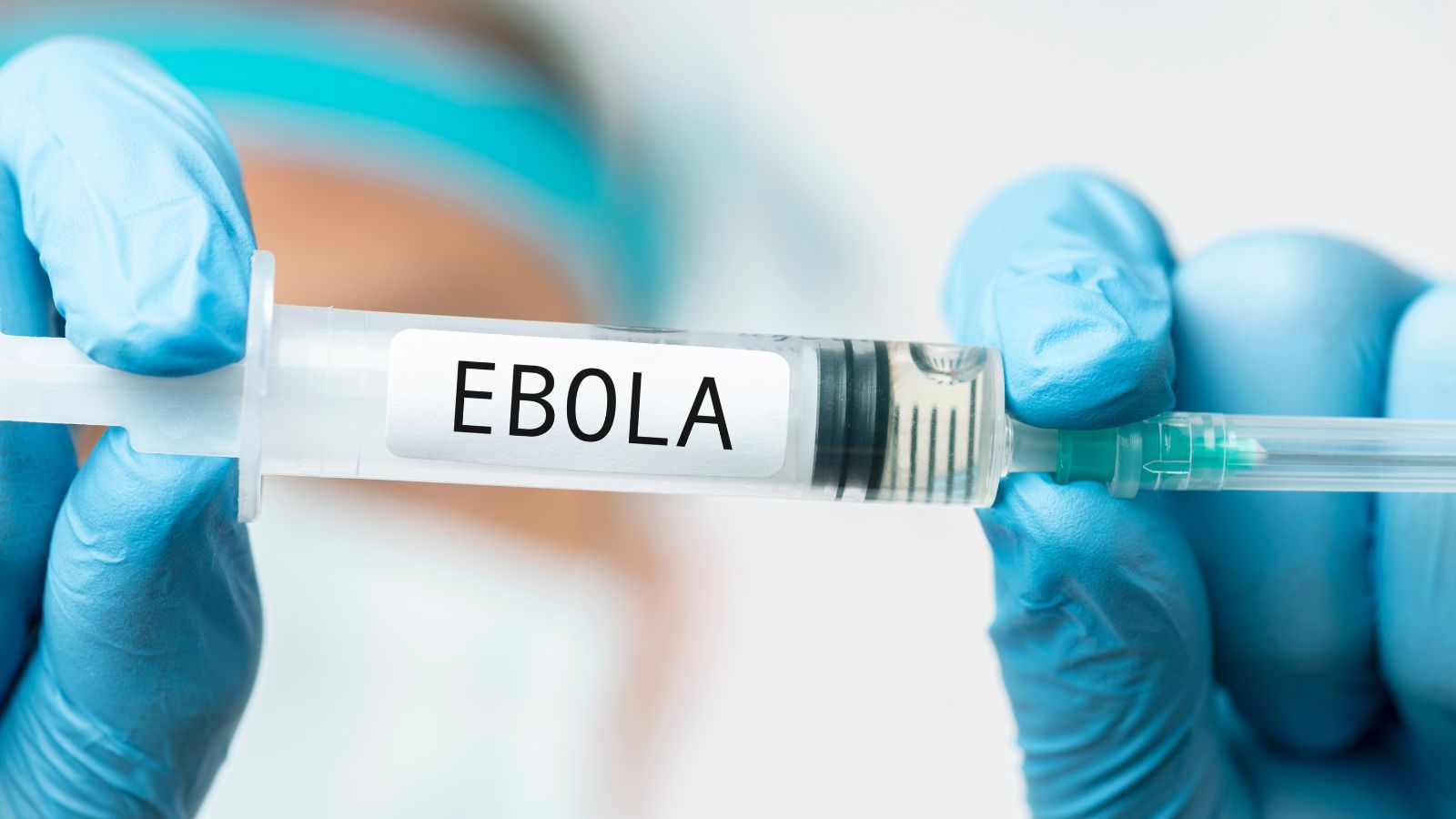
Ebola is a filovirus. Under an electron microscope, it looks like a delicate, twisted piece of thread, looping back on itself like a shepherd's crook. It is beautiful in a terrifying way. But inside the human body, that little thread acts like a master key, unlocking cells and forcing them to replicate the virus until they burst.
http://googleusercontent.com/image_content/198
The real danger, however, is not just biological. It is sociological. The virus exploits the very things that make us human: our love, our duty to the sick, our desire to comfort the dying. When we reach out to hold a feverish hand, Ebola uses that bridge of flesh to find its next home.
When health officials warn against complacency, they are not talking about spreadsheets or funding gaps. They are talking about Marie’s sister. They are talking about the terrifyingly brief window between a single isolated fever and a localized catastrophe.
The Illusion of Safety
The human brain is poorly wired for statistical risk. Once a crisis fades from the headlines, our perception of that danger plummets to zero. We crave a clean ending to every story. We want to believe that when an outbreak is declared over, the virus vanishes into thin air.
It does not.
It retreats. It hides in animal reservoirs—most likely fruit bats—deep in the canopy of the rainforest. It waits for a hunter to handle bushmeat, or for a child to eat fruit contaminated by bat saliva. The border between the human world and the viral world is not a brick wall; it is a porous, shifting line.
The World Health Organization’s warnings are often met with a collective shrug by global onlookers. We suffer from crisis fatigue. We have survived a global respiratory pandemic; we have watched economic tremors shake our shores. A few cases of hemorrhagic fever in an African province sound distant, like a storm on another planet.
But look at the transport networks. Mbandaka is not an isolated island. It is a bustling port city sitting directly on the Congo River, a massive aquatic highway. Barges packed with passengers and goods drift downriver from Mbandaka straight toward Kinshasa, a mega-city of more than fifteen million people.
If the virus hitches a ride on one of those boats, the math changes instantly.
A localized health emergency becomes a regional threat. If it reaches an international airport, it becomes a global conversation. This is the arithmetic of infectious disease. Distance is a fiction created by maps; in the modern world, we are all connected by a web of flights, roads, and rivers.
The Anatomy of a Response
Beating this virus requires an exhausting, meticulous choreography. It is not just about deploying experimental vaccines, though the development of those shots is a triumph of modern science. The real work is done on foot.
Contact tracing is the unsung hero of epidemiology. It is tedious, frustrating, and deeply human work. Imagine walking through a neighborhood in the pouring rain, trying to convince a suspicious, grieving family to tell you everyone who visited their home over the past two days.
"Who sat by the bed?"
"Who helped prepare the food?"
"Did anyone hug him before he died?"
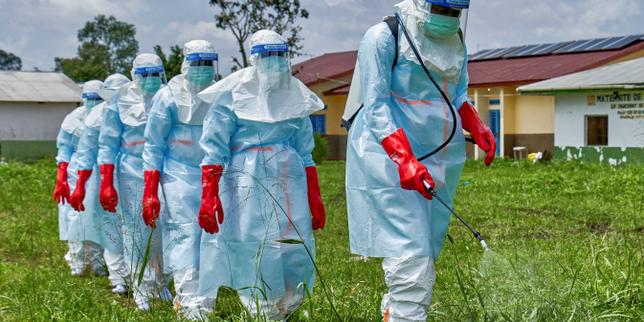
You are asking people to remember the mundane details of their worst days. You are asking them to trust strangers in biohazard suits who look like astronauts and speak with foreign accents. If you miss just one person—one cousin who left early to catch a bus to the next town—the chain remains unbroken. The ghost virus keeps walking.
Furthermore, the infrastructure in these regions is already stretched to a breaking point. A road that looks like a highway on a map can turn into a river of mud after a single storm. Delivering vaccines that must be kept at ultra-cold temperatures requires a logistical miracle involving solar-powered freezers, motorbikes, and sometimes canoes.
When regional health leaders sound the alarm, they are trying to mobilize these resources before the chain grows too long to hold. They know that a dollar spent on surveillance today saves ten dollars—and a hundred lives—next month.
The Cost of Looking Away
There is a quiet horror in watching history repeat itself. We saw it in West Africa in 2014, when a slow response turned a localized spillover into a tragedy that claimed over eleven thousand lives. We saw the panic, the collapse of local health systems, the economic devastation that outlasted the virus itself.
We swore we would never let it happen again. We promised to build better surveillance, to fund local healthcare workers, to listen when the experts on the ground raised their voices.
Yet, here we are. The warnings are issued, and they are buried beneath corporate earnings reports and political theater.
The risk of Ebola spreading is not high because the virus has changed. The risk is high because we have. We have grown tired of being vigilant. We have mistaken our boredom for safety.
Somewhere along the Congo River, a health worker is putting on a heavy, suffocating protective suit in the midday heat. They are checking temperatures, tracing contacts, and talking to terrified families. They are doing the hard, invisible work of keeping the rest of the world safe.
They are not asking for pity. They are asking for us to pay attention.
The virus is waiting in the shadow of the canopy. It does not sleep, it does not get tired of the news cycle, and it never underestimates us. We cannot afford to underestimate it.