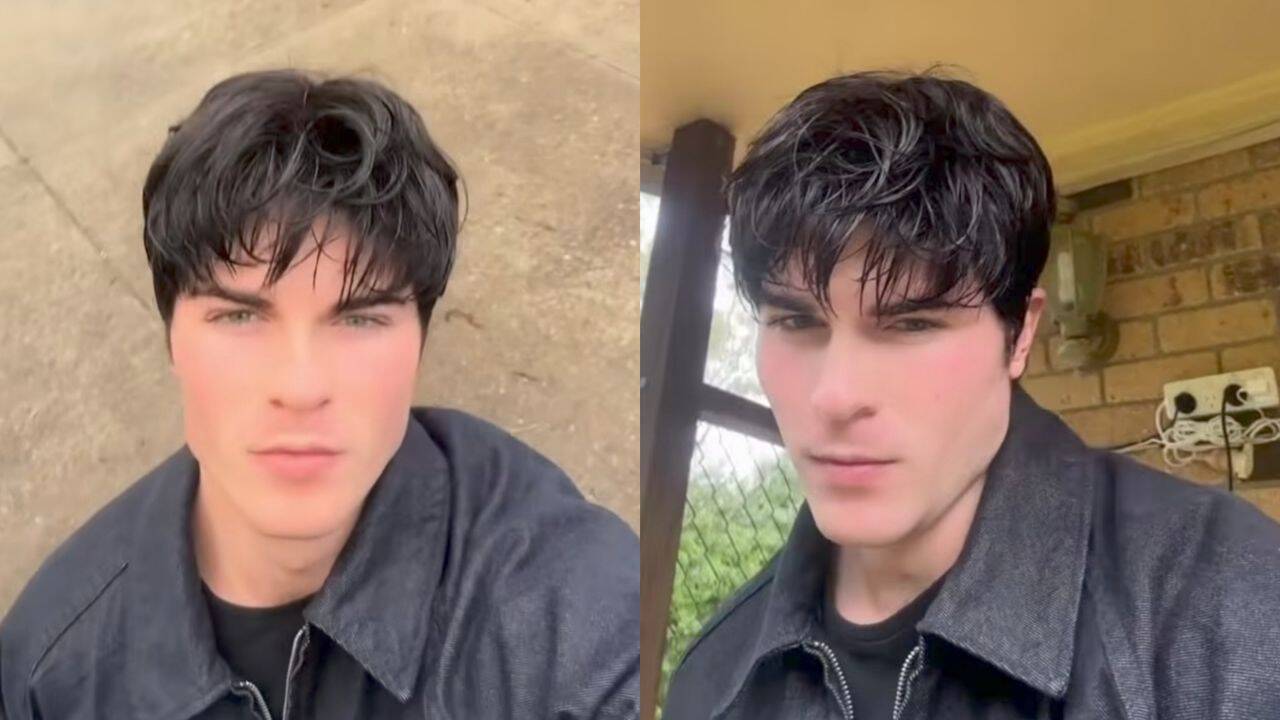
The path to the Academy Awards usually starts in a prestigious conservatory, a grueling series of unpaid internships, or through the genetic lottery of a Hollywood dynasty. It rarely begins in a fluorescent-lit classroom in public education. Yet, the emergence of a retired high school English teacher as a first-time Oscar nominee has disrupted the industry’s rigid obsession with "paying dues" in the traditional sense. This isn't just a heartwarming human interest story. It is a fundamental challenge to the way the film industry scouts talent and a testament to the fact that thirty years of analyzing Shakespeare, Fences, and The Great Gatsby is perhaps the most rigorous acting laboratory on the planet.
The Classroom as a Performance Space
Most people view teaching as a service profession. They see a person standing at the front of a room, delivering information to distracted teenagers. Actors and directors, however, see something entirely different. They see a daily, high-stakes performance where the "audience" is notoriously difficult to please and the "script" must be adapted in real-time to prevent a total loss of engagement.
A veteran English teacher spends decades embodying different voices. One moment they are the booming, tragic figure of King Lear; the next, they are the quiet, simmering resentment of a character in a Lorraine Hansberry play. They have to modulate their tone to command a room, use their physicality to explain subtext, and read the emotional temperature of twenty-five different people simultaneously. By the time this nominee stepped onto a professional film set, they hadn't just studied the craft. They had practiced it for seven hours a day, five days a week, for thirty years.
The Myth of Late Blooming
The entertainment press loves the narrative of the "overnight success," even when that success took sixty years to arrive. We call these individuals late bloomers, a term that implies they were dormant until the moment the camera started rolling. This is a factual error.
The skills required for world-class acting—empathy, observation, and the ability to find the truth in a written line—are often sharpened more effectively in the "real world" than in the insular bubble of the Los Angeles casting circuit. When a retired teacher delivers a monologue about grief or longing, they aren't reaching for a theoretical emotion they learned in a workshop. They are reaching for the memory of the thousands of students they’ve mentored, the parents they’ve consoled, and the colleagues they’ve seen struggle.
The industry is currently facing a "relatability crisis." Audiences are growing weary of the polished, often hollow performances of actors who have known nothing but the industry since their teens. There is a hunger for faces that look lived-in and voices that carry the weight of a life actually spent living. This nomination is a signal that the gatekeepers are finally looking beyond the usual talent pools.
Why the Industry Ignored This Talent for Decades
If the talent was always there, why did it take a retirement to bring it to light? The answer lies in the systemic barriers of the "audition economy."
To be a working actor in the traditional sense, you must be available. You must be able to drop everything for a 10:00 AM casting call in a mid-city office park. You must have the financial flexibility to survive on three-figure residuals and part-time shifts. A dedicated teacher cannot do this. They have a contract. They have a responsibility to their students. They have a pension to secure.
The Shift in Casting Dynamics
- Self-Taping Revolution: The move toward digital auditions allowed people outside the geographical hubs of LA and New York to submit work on their own schedule.
- The Hunger for Authenticity: Directors like Sean Baker or Chloe Zhao have popularized the use of non-professional or "second-act" actors to ground their films in reality.
- Streaming Content Demand: The sheer volume of content being produced has forced casting directors to look into community theaters and non-traditional backgrounds to fill roles that require specific, mature energy.
The Economics of a Second Act Career
There is a pragmatic brilliance to starting a film career after retiring from a stable profession. Most young actors are motivated by a desperate need for a "break" to pay their rent. This desperation can be smelled in an audition room; it leads to over-acting and a lack of creative risk-taking.
A retired teacher with a pension and healthcare is in a position of ultimate power. They don't need the job. This financial independence allows for a level of artistic "chill" that is incredibly rare and highly attractive to directors. They can approach a role with the same intellectual curiosity they used to grade an essay—dissecting the themes and the character's motivations without the paralyzing fear of failure.
The Shakespeare Connection
We cannot overlook the specific discipline of the English teacher. This nominee spent decades teaching students how to deconstruct text. They understand the "why" behind a comma and the significance of a repeated vowel sound. In a modern film environment where scripts are often thin and dialogue is sparse, an actor who can bring a classical understanding of subtext to the table is an invaluable asset.
They know that a character isn't just what they say, but what they refuse to say. They have spent a career pointing this out to sixteen-year-olds who didn't want to hear it. On a film set, where everyone is eager to listen, that skill set becomes a superpower.
Deconstructing the Performance
When you watch the footage of this nominee's performance, look closely at the eyes. There is a stillness there. It is the stillness of someone who has stood at the front of a room while a fire drill went off, or while a student had an emotional breakdown, or while a principal delivered bad news. It is the stillness of a veteran who knows that they are the anchor of the room.
This isn't "acting" in the sense of putting on a mask. It is "reacting" in the sense of being fully present in the moment. The camera catches every flicker of doubt and every spark of joy. A teacher's life is a series of micro-reactions.
The Lesson for the Industry
The success of this first-time nominee should serve as a wake-up call for production houses. The next great dramatic lead isn't necessarily in a boutique acting class in West Hollywood. They might be in a social security office, a hardware store, or a public library.
The rigid adherence to "experience" as defined by an IMDb page is a failing metric. True experience is the accumulation of human interaction over time. The film industry has spent too long treating acting as a technical skill that can only be cultivated within its own walls. By doing so, it has closed itself off from the very thing that makes cinema great: the messy, complicated, unpolished reality of the human experience.
Beyond the Human Interest Angle
- The Training Ground: We need to recognize public service roles as legitimate training for the performing arts.
- The Ageist Wall: This nomination cracks the glass ceiling for older performers who haven't spent their lives in the "system."
- The Narrative Shift: It moves the conversation from "isn't this cute" to "why aren't we doing this more often?"
This isn't a fluke. It is a proof of concept. The retired teacher didn't win a lottery; they applied a lifetime of high-level communication and emotional labor to a new medium. The Academy didn't do them a favor by nominating them. The nominee did the Academy a favor by bringing a level of gravity and truth to the screen that is becoming increasingly rare in the age of the franchise blockbuster.
Watch the performance again. Notice the way the actor holds the silence. That is the silence of a teacher waiting for the class to settle down before delivering the most important line of the day.
Ask yourself how many other masters of the craft are currently sitting in faculty lounges, waiting for their own retirement to finally begin their real work.