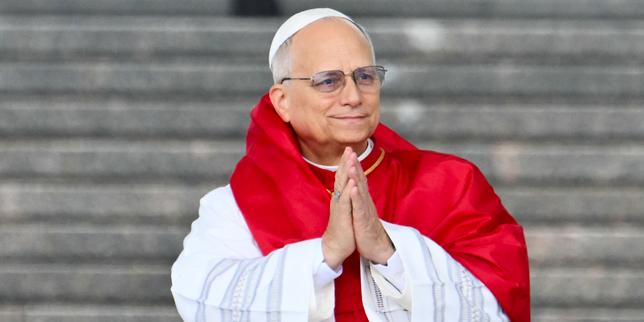
History isn't a museum piece you look at through glass. It's a living, breathing weight that people carry in their pockets every single day. When Léon XIV stood on Algerian soil and declared that we can't keep adding resentment to resentment, he wasn't just making a diplomatic gesture. He was trying to stop a leak that’s been draining the spirit of two nations for over half a century. You've heard the speeches before, but this feels different because the stakes have changed. We're no longer talking about grandparents who remember the war. We're talking about their grandkids who feel the echoes of it in the streets of Paris, Algiers, and Marseille.
The core of the issue is simple yet brutal. How do you move forward when everyone’s got a different version of the truth? For decades, the relationship between France and Algeria has been stuck in a loop. One side demands an apology. The other side offers "gestures." It's a dance that hasn't led anywhere. Léon XIV’s approach suggests a pivot away from the constant litany of grievances toward a shared future, but that’s a lot easier to say than to actually do.
The Weight of Generations
When we talk about resentment, we're talking about a very specific kind of ghost. In Algeria, the memory of colonial rule is a pillar of national identity. In France, the "loss" of Algeria remains a sore spot for certain political factions and the families of the Pieds-Noirs. It's a mess.
Léon XIV’s recent statements highlight a fundamental truth. If you raise a child on a diet of historical bitterness, you shouldn't be surprised when they grow up looking for a fight. He's pushing for a "normalization" of memory. This doesn't mean forgetting. It means looking at the scars without trying to reopen the wounds. You can acknowledge that a bone was broken without feeling the need to break it again in retaliation.
The problem is that memory is political. In Algeria, the FLN-led government has long used the history of the revolution to justify its own grip on power. In France, the far right uses the history of North African migration to fuel modern anxieties. Both sides find the resentment useful. That’s the real barrier. It's not that the people can't move on—it's that the people in charge often don't want them to.
Breaking the Cycle of Shared Trauma
I've talked to historians who argue that the Mediterranean shouldn't be a border, but a bridge. Right now, it feels like a trench. To bridge that, you need more than a handshake in Algiers. You need a massive shift in how history is taught in schools on both sides of the water.
France has made steps. Acknowledging the murder of Maurice Audin or the 1961 massacre in Paris were massive milestones. But these are often seen as "too little, too late" by the Algerian public. Meanwhile, many in France feel they're being asked to apologize for things they didn't do.
It’s about the "concurrence des mémoires"—the competition of memories. Everyone wants their pain to be the most important. Léon XIV is basically saying that the competition needs to end. If we keep score forever, the game never finishes. We're just playing in the dark.
Economic Reality vs Historical Narrative
If you want to know what actually heals a relationship, look at the bank accounts, not the history books. Resentment thrives in poverty and stagnation. When young Algerians see no future at home and young French-Algerians feel like second-class citizens in the banlieues, the historical narrative becomes a weapon for their frustration.
Léon XIV knows this. His trip wasn't just about wreaths and speeches. It was about gas, tech, and security. Algeria is a massive energy provider for Europe. France is a major trade partner. If the two countries can build a powerhouse economic axis, the historical baggage starts to feel a lot lighter. It’s hard to stay mad at someone when you’re both getting rich together.
We've seen this work. Look at France and Germany. They spent centuries killing each other. Now, they're the engine of the EU. Why? Because they decided that coal, steel, and a shared market were more valuable than old grudges. Algeria and France aren't there yet. Not even close. But the roadmap is the same.
The Youth Factor
Something like 70% of the Algerian population is under the age of 30. They didn't live through the war. They didn't see the 1962 exodus. They care about visas, jobs, and the internet. They want to be part of the world.
The same goes for the youth in France. For a kid in Lyon with an Algerian surname, "resentment" is an abstract concept until it hits them in the form of a job rejection or a police check. Léon XIV is betting that this generation is tired of the old scripts. He’s gambling on the idea that they’d rather have a work permit than a formal apology.
It's a risky bet. Identity is a powerful drug. Even if you didn't live through the trauma, you can "inherit" it. It becomes part of who you are. To ask people to let go of that resentment is to ask them to change their identity. That takes more than one presidential term.
What Actually Needs to Happen
If we're serious about not adding resentment to resentment, the "gestures" have to become "habits."
First, the visa issue. You can't talk about a shared future while making it impossible for students and professionals to move between the two countries. The current restrictions are a constant source of friction. It feels like a slap in the face to a country France claims to want a "special relationship" with.
Second, the archives. Open them. All of them. Both sides. Transparency is the only cure for conspiracy theories. When the facts are out in the open, they lose their power to haunt us.
Third, stop using the past as a political football. This applies to both the French Élysée and the El Mouradia palace in Algiers. Every time a politician brings up the war to distract from a domestic scandal, they're poisoning the well for the next generation.
Léon XIV’s visit was a start, but we’ve had starts before. The real test is what happens when the cameras leave. If the policies don't change, the words are just wind.
Don't wait for a government to tell you how to feel about history. Read multiple sources. Talk to people who lived it. If you're in France, visit the Museum of the History of Immigration. If you're in Algeria, engage with the global community. The goal isn't to reach a perfect agreement on what happened—that’s impossible. The goal is to reach a point where what happened doesn't stop us from what's happening next. Look at your own biases and ask yourself if they're yours or if they were handed down to you like an old, heavy coat you don't really need anymore.