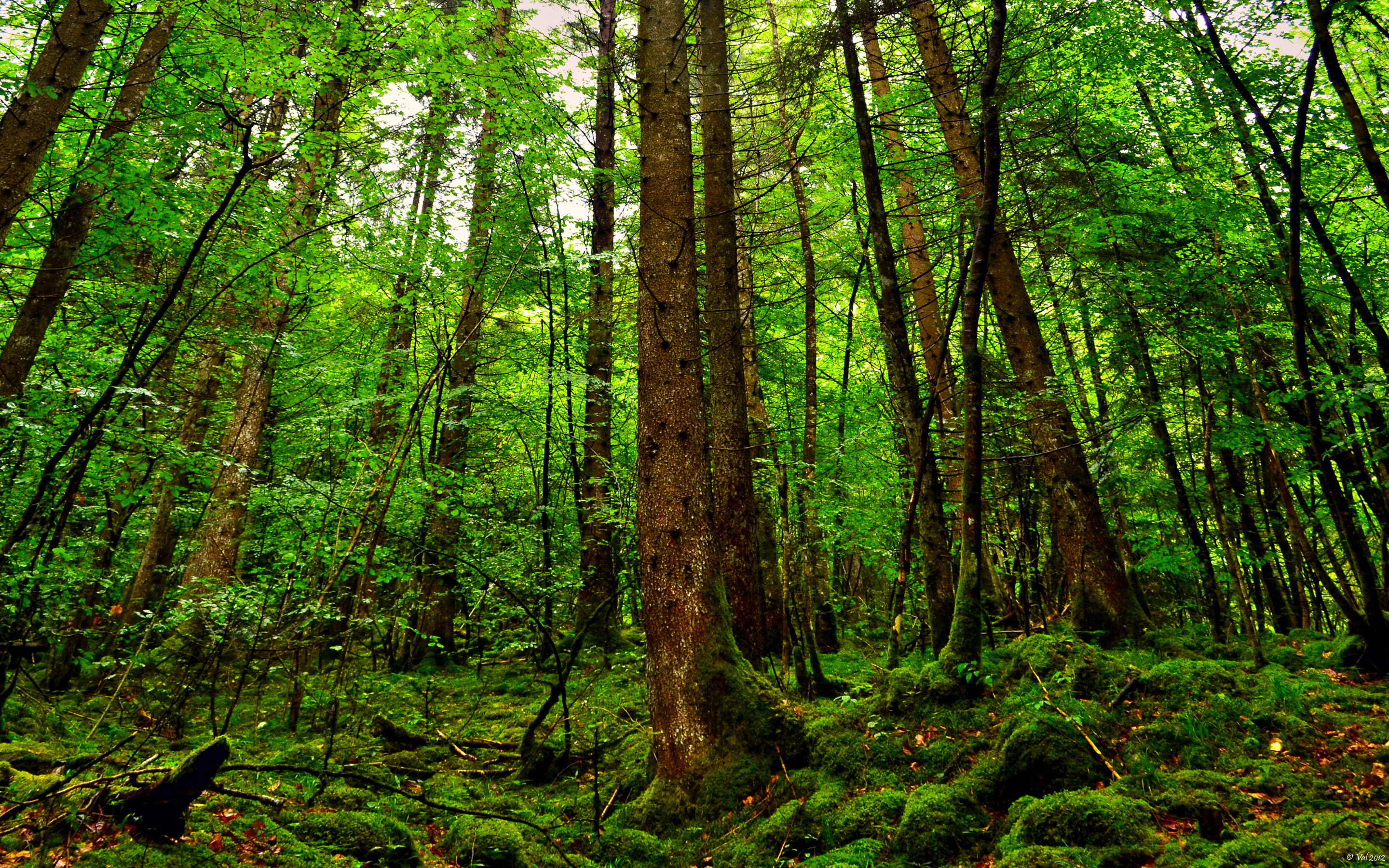
The mud in the cloud forest does not just stick to your boots; it pulls at them, a heavy, wet suction that feels like the mountain itself trying to slow you down. Up here, where the canopy thickens and the mist blurs the line between earth and sky, the air tastes like moss and old rain. Your lungs burn. Your knuckles are scraped raw from grabbing slick roots on the vertical scramble.
Then you see it. Or rather, you see what is left of it.
It stands alone on a crumbling, wind-scoured ridge. To an untrained eye, it might just look like another tree struggling against the elements. But to the botanists who tracked it via satellite coordinates, it is a living monument. It is one of the very last of its kind on Earth. If this tree dies before it drops its seeds, an entire evolutionary lineage—perfected over millions of years to thrive in this exact, punishing microclimate—evaporates forever.
We live in an era of loud extinctions. We watch heartbreaking footage of starving polar bears and read urgent reports about the decline of majestic rhinos. Those losses are tragic, obvious, and deeply visual. But there is a quieter, stealthier erasure happening just out of sight. Plants are vanishing at a rate that vastly outpaces animal extinctions, yet their departure rarely makes the nightly news. They disappear in silence, slipping away from remote ridges and isolated valleys without a whisper.
When a plant species dies, it does not just take its leaves and bark with it. It drags down a whole web of life—the specialized insects that pollinate it, the fungi that live in its roots, the birds that nest in its branches.
The scramble on this ridge is not a leisurely academic exercise. It is a high-stakes, breathless rescue mission.
The Weight of a Single Grain
Consider what happens when a species drops below a critical threshold. Biologists call it the "extinction vortex." Once a population becomes too small, it loses its genetic safety net. Inbreeding kicks in. Disease spreads more easily. A single bad storm or an unseasonal drought can wipe out the remaining survivors in an afternoon.
For the team of field researchers clinging to the steep slope, the enemy is time. The tree above them is heavy with seed pods, but they are not ready yet. Come too early, and the seeds are immature, useless for preservation. Come a week too late, and a gust of wind will have scattered them into the deep, inaccessible ravines below, where they will rot in the damp leaf litter or be eaten by rodents.
Timing is everything. It requires monitoring the tree’s cycle with agonizing precision, often checking the site day after day, week after week, waiting for the exact moment the pods begin to crack.
This is where modern conservation shifts from old-school naturalism into something resembling a medical emergency room. The tools are no longer just notebooks and magnifying glasses. Today, botanists rely on an intricate blend of satellite tracking, drone reconnaissance, and advanced cryogenics.
Drones are flew through the dense canopy to inspect the upper branches, mapping the ripening process without disturbing the fragile bark. Every seed collected is treated like a fragile organ destined for transplant. They are packed in specialized, moisture-controlled pouches and rushed down the mountain to a laboratory where the real preservation begins.
But why spend thousands of dollars, risk broken bones, and dedicate years of research to save a tree most people have never heard of?
The answer lies in the concept of genetic resilience. Every plant contains a unique library of chemical compounds, developed over millennia to fight off specific pests, endure extreme heat, or survive prolonged frost. When we allow a species to go extinct, we are burning a book we haven't even read yet. The cure for a future crop blight, a breakthrough compound for medicine, or the secret to breeding drought-resistant forests might be locked inside the DNA of that single, dying tree on the ridge.
Inside the Vault of Tomorrow
Once the seeds are brought down from the cloud forest, they enter a world that feels completely disconnected from the wild, muddy slopes where they grew.
They arrive at a seed bank—a fortress of cold storage designed to outlast civilization. The process of preparing them is meticulous. First, they are cleaned under microscopes to remove any hitchhiking insects or fungal spores. Next, they are slowly dried in specialized chambers, bringing their moisture content down to around five percent. This step is vital; if too much water remains inside the seed when it is frozen, the water will expand into ice crystals, piercing the cell walls and killing the embryo inside.
After drying, the seeds are sealed in airtight foil packets and placed in vaults kept at a constant, bone-chilling temperature of minus twenty degrees Celsius.
In this deep freeze, time slows to a crawl. The metabolic processes of the seeds drop to a near-total standstill. They enter a state of suspended animation that can last for decades, sometimes even centuries. It is a biological insurance policy against the apocalypse.
Yet, any scientist working in these vaults will tell you that a seed bank is not a permanent solution. It is a triage unit.
"Keeping seeds in a freezer is a confession of failure," a veteran conservationist once told me, her fingers stained with the dirt of a dozen different field expeditions. "It means we couldn't protect them in their own homes. It’s a holding action, nothing more."
The ultimate goal of saving these seeds is not to keep them locked away in a high-tech freezer forever. The goal is to eventually put them back into the earth. But reintroduction is a notoriously fickle business. You cannot simply scatter rare seeds back into the wild and hope for the best. The ecosystem they left behind is often fundamentally altered. The climate may have shifted, the soil may have degraded, or the specific animals needed to disperse the seeds may have vanished as well.
The Invisible Stakes of a Changing World
The crisis facing this solitary tree is a microcosm of a much larger, systemic upheaval. As global temperatures climb, the climatic zones that plants have relied on for thousands of years are shifting rapidly.
For mountain species, this creates a phenomenon known as the "escalator to extinction." As the lowlands warm up, plants and trees gradually migrate higher up the slopes to find the cooler temperatures they need to survive. But mountains are cones; as you go higher, there is less land area available. Eventually, you run out of mountain. The species reaches the summit, and there is nowhere left to go.
This is why the race on the ridge is so urgent. We are not just witnessing the natural passing of an old species; we are watching a bottleneck created by human activity.
It is easy to feel a sense of detachment when looking at data points and distribution maps. It is harder to remain indifferent when you look at a tree that has survived fires, storms, and pests for two centuries, only to be pushed to the brink because the air around it has grown just a fraction of a degree too warm, or because a new, invasive pathogen has hitched a ride on human boots.
The work is grueling, unglamorous, and frequently disappointing. For every successful collection trip, there are days spent wading through torrential downpours only to find that the seed crop has been ruined by insects, or that a sudden frost has killed the blossoms before they could set fruit. The researchers who do this work are fueled by a quiet, stubborn refusal to let these species vanish on their watch.
The Legacy of the Final Handful
The afternoon light is beginning to fade on the ridge. The mist is rolling in thick and white, swallowing the valleys below and turning the distant peaks into faint, gray silhouettes.
The field team is packing up their gear. Their hands are cold, their shoulders ache from hours of climbing, and their clothes are soaked through with condensation. But inside one of the packs, safely cushioned and shielded from the elements, sits a small canvas bag. Inside that bag are a few hundred small, brown seeds.
They look insignificant. They look like pebbles. But they are carrying the entire future of their species.
If the team has done their job right, those seeds will survive the journey down the mountain. They will survive the drying rooms, the sealing machines, and the deep, silent freeze of the vault. Decades from now, perhaps when the habitat has stabilized or when restoration techniques have advanced, someone will take those packets out of the cold. They will thaw them gently, place them in rich, warm soil, and watch the first green shoots push their way toward the light.
The tree on the ridge will eventually fall. Its wood will rot, its bark will peel, and it will return to the soil that fed it for so long. That is the natural cycle of things. But because a few human beings refused to let it go without a fight, its story does not have to end there. The line remains unbroken. The quiet green world holds on for one more generation, saved by a handful of seeds carried down a muddy mountain path in the dark.