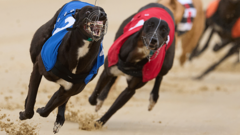
The air at the track always smells of the same three things: fried onions, cheap beer, and the metallic tang of adrenaline. For decades, this was the sensory map of a Friday night. You’d stand by the rail, feeling the vibration in the soles of your shoes before you actually saw the blur of fur and muscle. Then, the rush. A pack of greyhounds, lean as switchblades, tearing through the air at forty miles per hour. It was a spectacle of pure, inherited instinct.
But the vibration has stopped. In other developments, read about: The Sabotage of the Sultans.
The High Court recently delivered the final blow to an industry that had been gasping for air for years. By rejecting a legal challenge against the ban on greyhound racing, the judiciary didn’t just sign a piece of paper. They shuttered a subculture. They took the "Gone Fishing" sign and nailed it permanently to the gates of an era.
To understand why this feels like a funeral for some and a liberation for others, you have to look past the legal jargon of judicial reviews and legislative overreach. You have to look at the people holding the leashes and the people holding the protest signs. NBC News has also covered this critical issue in extensive detail.
The Weight of the Ledger
Consider a man like Arthur. He isn't real, but he is the composite of a thousand men I’ve met in the betting rings. Arthur is seventy-two. His father kept dogs. His grandfather kept dogs. To Arthur, a greyhound isn’t a "unit of sporting entertainment." It is a living connection to a version of the world where a working-class man could own a piece of lightning.
When the ban was first proposed, Arthur didn't see it as an animal welfare victory. He saw it as an eviction notice from his own life. The legal challenge—the one the court just dismantled—was the last desperate attempt by owners and trainers to argue that their way of life had a right to exist. They argued that the government’s decision was flawed, that the evidence of cruelty was skewed, and that the economic impact would be devastating.
The court, however, looked at the cold, hard numbers.
Data doesn't have a heart, but it has a very long memory. The statistics regarding "wastage"—the industry term for dogs that are no longer fast enough to justify their kennel space—became a mountain that the racing lobbyists couldn't climb. When you see a spreadsheet that lists thousands of injuries and "surplus" animals, the nostalgia of the Friday night lights begins to dim. The court's rejection of the appeal was a recognition that the moral baseline of society has shifted. What was once "tradition" is now, in the eyes of the law and the public, "unacceptable risk."
The Anatomy of the Chase
If you’ve ever watched a greyhound in slow motion, you understand the obsession. Their spines act like springs. They spend more time in the air than they do touching the dirt. It is a biological masterpiece.
The tragedy of the industry’s collapse lies in the paradox of the dog itself. Greyhounds are "45mph couch potatoes." They are built for the most intense bursts of speed in the canine kingdom, yet they are some of the gentlest, most sedentary creatures you will ever meet. This duality is what fueled the fire of the abolitionists. They didn't see a sport; they saw a high-speed collision waiting to happen.
The legal battle wasn't just about whether racing was "cruel." It was a fight over the definition of necessity. Is the thrill of the chase worth the fracture of a hock? Is the survival of a betting industry worth the "culling" of dogs that don't make the grade? The court decided that the state has the right to say "no."
The Silence After the Roar
When a stadium closes, the silence is heavy. It isn't just the absence of noise; it's the presence of a vacuum.
For the trainers, the trainers’ assistants, the groundskeepers, and the bookies, this ruling is a career-ending injury. You can’t simply pivot from forty years of breeding elite sprinters to working in a fulfillment center. There is a specific kind of grief that comes with being told your expertise is no longer required by modern morality.
I remember walking through a kennel block just as the whispers of the ban began to turn into a roar. The dogs don't know they are controversial. They don't know they are the subject of a High Court ruling. They just want their ears scratched and their bowls filled. The irony is that the ban, designed to save them, creates a sudden, massive logistical nightmare: where do they all go?
The "rehoming crisis" is the shadow following the victory. Animal rescues are already bursting at the seams. While the racing industry was often criticized for its treatment of dogs, it provided a structured—if flawed—system for their care. With the ban upheld, the responsibility shifts. The "invisible stakes" are now sitting on the sofas of thousands of foster families.
The Verdict of the Clock
We often think of laws as static things, but they are actually mirrors. They reflect who we are at a specific point in time. Fifty years ago, the idea of banning greyhound racing would have been laughed out of any room. It was the "sport of the common man." It was woven into the fabric of the weekend.
But the clock ticked.
The public started asking questions about what happened behind the scenes. They started watching grainy footage of back-alley kennels. They started seeing the dogs not as athletes, but as victims. The legal challenge failed because it was trying to argue against a tide that had already reached the shore.
The judges didn't have to be experts in canine physiology. They only had to determine if the government had the legal authority to listen to the changing heartbeat of the nation. They concluded that it did.
The New Dawn
The betting shops will find other things for people to put their money on. Virtual racing, perhaps—pixels on a screen that never need to be fed and never break a leg. The stadiums will likely be torn down to make way for luxury apartments or shopping centers. The metallic tang of adrenaline will be replaced by the smell of fresh paint and espresso.
For Arthur, and those like him, the world has become smaller, quieter, and less recognizable. He will sit in his garden with his retired racer—the one he couldn't bear to let go—and remember the way the light hit the track on a summer evening.
For the dogs, the future is a different kind of sprint. It is a race toward a life where their value isn't measured in seconds, but in the weight of a head resting on a human knee. The chase is over. The lure has been switched off.
In the end, the law didn't just stop a race. It changed the definition of what we are allowed to do for our own amusement. It decided that some traditions are better left in the dust of the track they used to run on.
The gates are locked. The lights are out. The dogs are finally going home.