The metal legs of a kitchen chair scrape against linoleum with a sound that feels louder than it should in the dead of night. It is a specific kind of silence that haunts a home when the bank balance is a single digit and the cupboards are down to the architectural essentials—a box of salt, a half-empty bag of flour, and the lingering scent of better days.
Maya sits there, illuminated only by the blue-white glare of a smartphone screen. She is thirty-four, works forty hours a week at a logistics firm, and is currently performing the most stressful math known to the modern world. It is the arithmetic of survival. She is calculating how to stretch twenty pounds across four days for herself and her seven-year-old son, Leo.
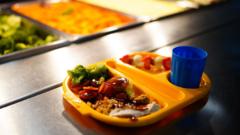
In a few days, a group of people in suits will sit in a brightly lit council chamber and debate the "Household Support Fund." They will use words like allocation, viability, and discretionary spending. They will look at spreadsheets where human lives are compressed into cells and columns. But for Maya, the "Household Support Fund" isn't a line item. It is the difference between Leo having a warm sandwich in his lunchbox or a handful of crackers and an apology.
The Invisible Architecture of the Safety Net
Most people think of poverty as a static state, a permanent condition of "having nothing." The reality is far more fluid and frightening. It is a series of narrow escapes. For thousands of families, the local council’s food voucher scheme acts as the final barrier between a difficult month and a total collapse.
When the news breaks that the council is "considering" an extension of these vouchers, the headlines read like a dry bureaucratic update. In reality, it is a stay of execution.
The vouchers are often worth about £15 per child, per week, during school holidays. To a high-earner, fifteen pounds is a fancy salad or a couple of coffees. To Maya, it is a strategic asset. It represents three gallons of milk, a large bag of pasta, two tins of tuna, a bag of apples, and the dignity of not having to explain to a child why there is no dinner.
The council members are currently weighing the "fiscal pressure" of continuing this support. They are looking at a budget gap that has been widening for years, driven by inflation and the rising cost of social care. They are, in their own way, doing the same math as Maya, but on a scale of millions. They have to decide if the "temporary" nature of the central government’s funding can be sustained by local coffers that are already bone-dry.
The Myth of the Temporary Crisis
There is a persistent narrative that these schemes are "emergency measures," designed to bridge a gap caused by a global pandemic or a sudden spike in energy prices. This framing suggests that eventually, the "emergency" will end, and everyone will return to a state of self-sufficiency.
But the data tells a different story.
Low wages have been decoupled from the cost of living for over a decade. When the price of a loaf of bread rises by 20%, it doesn't just "squeeze" a low-income budget; it obliterates it. We are not living through a temporary storm. We are living in a new climate.
Consider the "poverty premium." This is the documented phenomenon where being poor actually costs more money. Maya pays for her electricity via a prepayment meter, which carries a higher standing charge than the direct debit options available to those with healthy credit scores. She buys food in smaller quantities because she cannot afford the upfront cost of bulk buying, meaning her price-per-gram is higher than that of a middle-class shopper.
The vouchers don't just "feed" people. They provide a momentary reprieve from the relentless tax of being poor.
The Psychological Weight of the "Consideration"
When a council says they are "considering" an extension, they create a vacuum of anxiety. For those who rely on this support, the uncertainty is a form of secondary trauma.
Maya checks the local news every morning. She searches for keywords: vouchers, half-term, funding. Each day without a "yes" is a day spent mentally rehearsing a darker reality. She thinks about the local food bank, but the queue there has grown so long it wraps around the church parking lot before they even open the doors. She thinks about skipping her own meals again, a habit that has left her dizzy at her desk more than once this month.
The debate in the chamber often focuses on "dependency." There is a fear among some policymakers that if you provide a safety net for too long, people will lose the incentive to provide for themselves.
This argument ignores the biology of stress.
When the human brain is under the constant threat of hunger or eviction, it enters a state of "scarcity mindset." The prefrontal cortex—the part of the brain responsible for long-term planning, decision-making, and impulse control—is effectively hijacked by the amygdala. You cannot plan a career pivot or a budget for next year when you are vibrating with the fear of how to survive Tuesday.
By extending the voucher scheme, the council isn't "fostering dependency." They are providing the cognitive space required for a human being to function. They are buying Maya the mental bandwidth to be a better employee and a more present mother.
The Ripple Effect of a "No"
If the council decides the budget is too tight—if they decide the "fiscal responsibility" outweighs the "social cost"—the fallout won't stay confined to the kitchen tables of the "vulnerable."
Hungry children don't learn. A child who arrives at school on a Monday morning after a weekend of "stretched" meals is a child whose brain is focused on survival, not phonics. This leads to increased pressure on teachers, more behavioral issues in classrooms, and a widening of the attainment gap that we claim to care so much about.
Then there is the health impact. Malnutrition in a developed nation rarely looks like the hollow-cheeked images from a famine. It looks like obesity and chronic illness. It looks like families buying the cheapest, most calorie-dense, ultra-processed foods because fresh produce is a luxury. The cost of treating the fallout of food insecurity—diabetes, heart disease, and mental health crises—far exceeds the cost of a few million pounds in grocery vouchers.
The math is simple, yet we often pretend it’s a mystery. We are trading long-term social health for a short-term budget balance.
The Choice We Make
The council's debate will happen behind closed doors and in sterile meeting rooms. They will talk about the "sustainable" path. They will talk about "taxpayer value."
But they will also have to think about the "Maya" in their own ward. They will have to consider the child in the second row of the local primary school, who knows that a "holiday" isn't a trip to the seaside, but a period of time where his stomach feels a little lighter and the house feels a little colder.
We are told that we are living in a "cost-of-living crisis," as if it were a natural disaster—an act of God that we must weather together. But it is not a hurricane. It is a set of policy choices.
When the council decides whether or not to extend the food voucher scheme, they are not just balancing a budget. They are deciding what kind of community they want to lead. They are deciding if a child's right to eat is "discretionary" or "fundamental."
The metal legs of a kitchen chair scrape again as Maya finally stands up. She hasn't found the ten pounds she needs, but she has found a way to make eight pounds look like twelve. She closes her eyes and imagines the sound of the council's gavel. She imagines the "yes" that would mean she could sleep tonight.
The decision is pending. The silence in the kitchen remains.