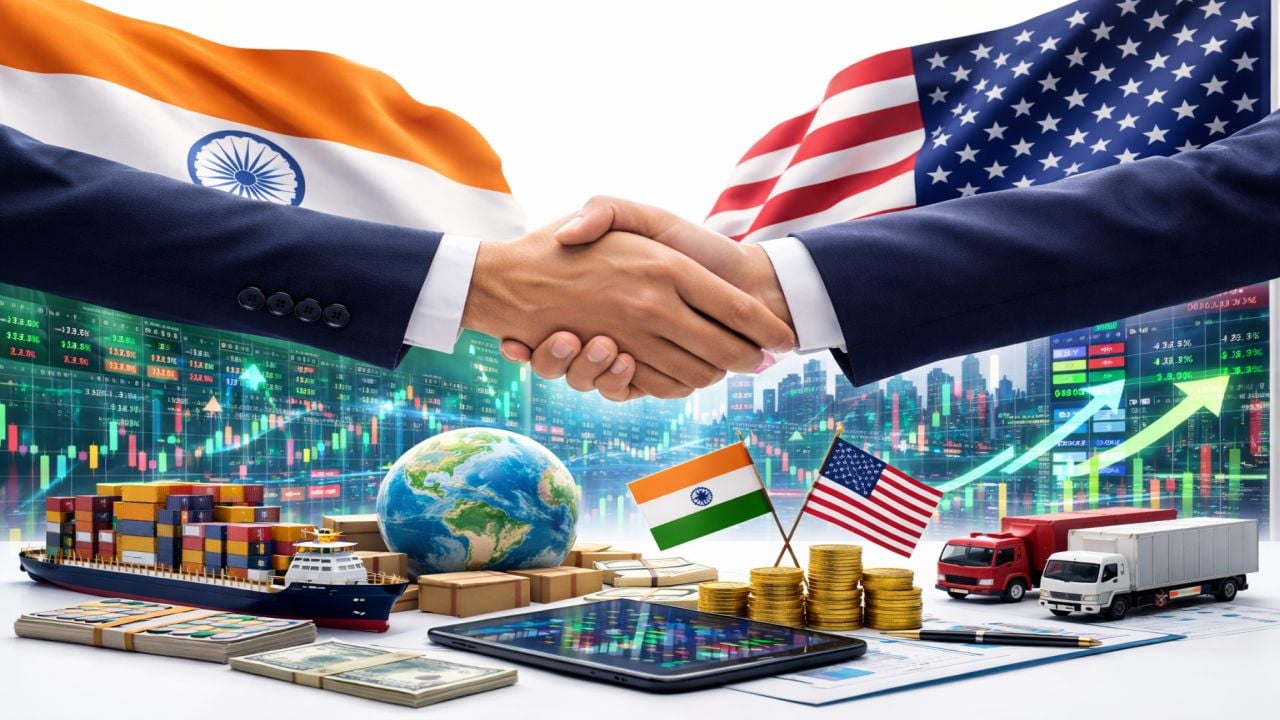
Don't believe the hype about effortless global diplomacy. When US Ambassador to India Sergio Gor announced that negotiations for the long-awaited interim trade agreement were 99% complete, he wasn't just dropping a cheerful statistic. He was pointing directly at a massive political and bureaucratic wall.
That final one percent isn't just a matter of cleaning up typos or adjusting legal commas. It's where the real pain lives.
The two economic giants have been pushing to lock down a transitional trade deal since talks were kicked off by US President Donald Trump and Indian Prime Minister Narendra Modi. After a brutal stretch of tariff fights and geopolitical friction, both Washington and New Delhi are desperate for a win. Yet, as United States Trade Representative Jamieson Greer lands in New Delhi for high-stakes meetings with Indian Commerce Minister Piyush Goyal, the remaining details are exposing deep structural disagreements.
The Myth of the Win Win Deal
Politicians love to throw around phrases like "win-win situation." Ambassador Gor used it himself while pitching the deal at an investor conference in Mumbai. But real trade negotiations are an aggressive game of give and take, and right now, India is demanding a specific concession that Washington is resisting.
Indian Commerce Minister Piyush Goyal made India's stance clear when he dropped a reality check on the negotiations. India won't implement the framework until it secures a distinct tariff advantage over its direct global competitors in the US market.
Basically, New Delhi wants preferential duties that give Indian exporters an edge over rivals selling similar goods to American buyers. Without that competitive advantage, India views the current agreement as a bad bargain.
The timing got complicated after a US Supreme Court ruling on tariff authority dropped right after the initial framework agreement was sketched out. That legal shift gave Washington less wiggle room and forced both sides back to the drawing board on specific product duties.
What is Actually on the Table
To understand why this is a grinding battle, look at what this interim trade agreement covers. It isn't a full free trade agreement. It is a targeted, tactical bridge meant to secure supply chains while a broader pact is hammered out over the coming years.
The current trade reality between the two nations is massive. Bilateral trade has exploded from $20 billion to $220 billion in goods and services over the last two decades. The interim pact targets a few hyper-sensitive areas.
- Critical Minerals: Securing supply lines to bypass Chinese export controls on the raw materials needed for electric vehicles and defense technology.
- Pharmaceuticals: Protecting the pipeline for generic medications, given that over 40% of generics used in the United States come directly from Indian manufacturers.
- Advanced Manufacturing and AI: Coordinating export controls and tech sharing under the bilateral TRUST initiative.
For the US, the goal is securing reliable supply chains outside of China's sphere of influence. For India, it is about gaining unmatched access to the world’s largest consumer market. But the friction lies in the execution. Washington wants reciprocal market access for American agricultural goods and digital services, areas where India traditionally maintains steep regulatory barriers to protect its domestic players.
The Personality Premium
If this deal gets across the finish line during Greer's visit, it won't be because the economics are simple. It will be because of the personal connection between Modi and Trump.
Ambassador Gor has repeatedly credited the rapid pace of the talks—which took roughly 1.5 years compared to the grueling, multi-year saga of India's trade negotiations with the European Union—to the direct relationship between the two leaders. During their recent meeting on the sidelines of the G7 summit in Evian, France, both leaders explicitly instructed their teams to finalize the deal immediately.
But relying on leader-to-leader chemistry is a risky strategy. While the White House can demand speed, the USTR must still answer to domestic industrial lobbies, labor unions, and a skeptical Congress. On the flip side, Goyal faces intense pressure from domestic Indian industrial groups who fear getting flooded by American imports.
Your Next Strategic Moves
If you are managing a business that relies on transatlantic supply chains, cross-border digital services, or generic drug manufacturing, you can't afford to treat this as abstract news. The transition from a 99% finished deal to a signed pact will change market dynamics fast.
First, audit your current tariff exposure. If your supply chain relies on components routed through third-party nations in Southeast Asia, look into the feasibility of shifting operations directly to Indian manufacturing hubs to capture the upcoming preferential tariff structures.
Second, monitor the regulatory text regarding digital trade and data localization. The US delegation is fighting hard for concessions on digital market access. If India blinks on some of its data storage mandates, it will open immediate opportunities for mid-tier tech firms and SaaS providers looking to expand their footprint in the subcontinent.
The talks in New Delhi this week will either break the deadlock or prove that the last one percent is an insurmountable gap for now. Watch the tariff announcements closely. The real story isn't the handshake; it is the specific duty percentages written in the text.
For a deeper dive into the geopolitical shifts behind these trade negotiations, check out this detailed look at the US-India strategic partnership which breaks down the comments made by Ambassador Gor regarding the final stages of the deal.