The rain in Greater Manchester does not care about political realignment. It falls in a steady, grey drizzle over Makerfield, slicking the tarmac of old mining towns and pooling outside social clubs where the wallpaper still smells faintly of stale tobacco and lost industries. Inside one of these rooms, a handful of volunteers sit around a laminate table. They are counting leaflets. On the front of the glossy paper is a face every voter in Britain recognizes. On the back is a promise to burn the system down.
For years, Nigel Farage possessed the monopoly on this particular brand of political lightning. He was the maestro of the disenfranchised, the man who could convert working-class anger into electoral earthquakes with little more than a pint of bitter and a well-timed grin. But politics, like nature, abhors a vacuum. It also abhors a monopoly.
A single tweet from an office in Austin, Texas, changed everything.
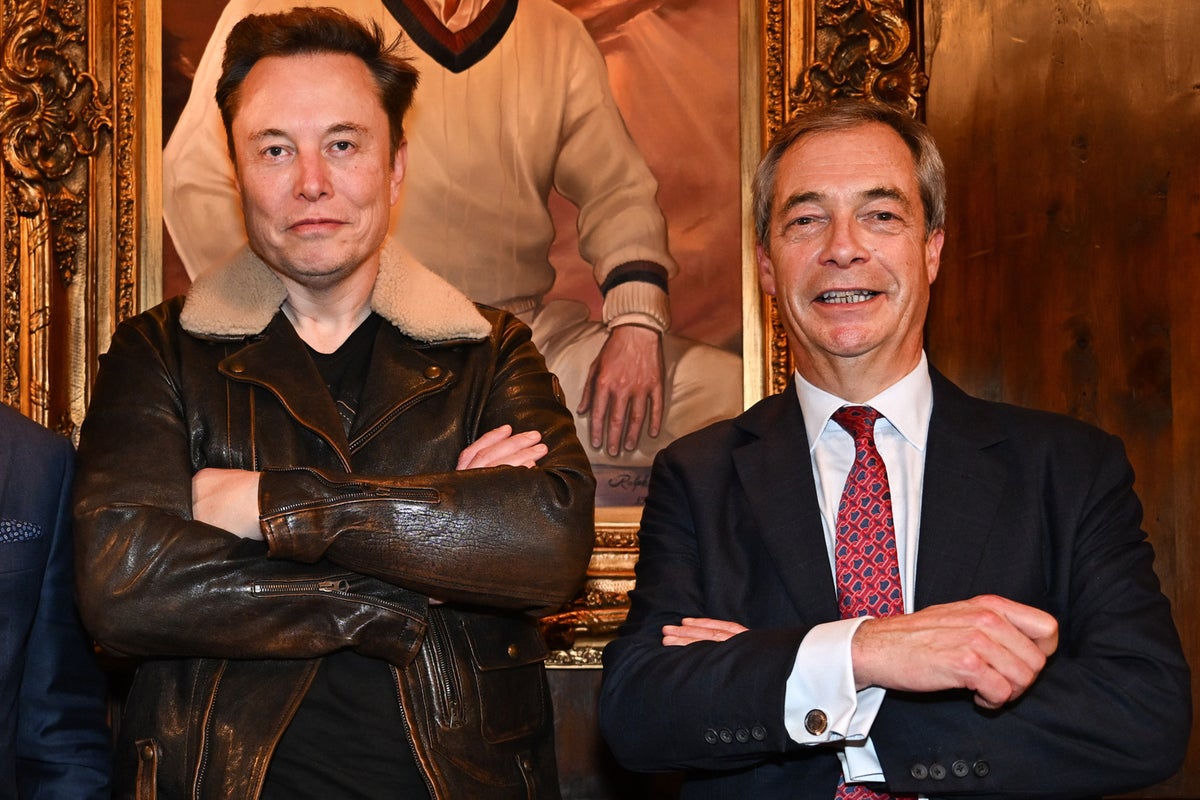
When Elon Musk publicly threw his weight behind Restore UK—a rival, harder-edged populist party contesting the Makerfield byelection against Farage’s Reform UK—he did not just split a voting bloc. He shattered an illusion. The tech billionaire, armed with an algorithm and a megaphone that reaches hundreds of millions, decided to play kingmaker in a British constituency that most global elites could not find on a map.
The resulting explosion was loud, bitter, and deeply personal.
The Battle for the Discontented
To understand why a tech mogul crossing swords with a British populist matters, you have to look past the Westminster bubble. You have to look at the people sitting in those rain-streaked Manchester towns.
For a decade, the political narrative in these areas was simple. The traditional parties had failed them. The factories were gone. The high streets were ghost towns of charity shops and betting parlors. Reform UK offered a vessel for that resentment. They were the outsiders.
Then came Restore UK.
They did not just mimic Farage’s platform; they weaponized it, pushing the boundaries of the cultural debate even further to the right. To the casual observer, they seemed like a fringe distraction. But to a billionaire sitting across the Atlantic, obsessed with what he terms the "woke mind virus" and convinced that Western civilization is on the brink of collapse, Restore UK looked like a frontline trench.
Musk’s endorsement was not a casual nod. It was a digital airstream that propelled a minor political entity straight into the national conversation.
Farage’s reaction was swift and uncharacteristically raw. He hit out. He accused Musk of failing to understand the nuances of British politics, of meddling in affairs where he possessed no skin in the game. It was a fascinating role reversal. The man who had spent his entire career being the insurgent, the disruptive force tearing up the rulebook, suddenly found himself playing the role of the institutionalist, pleading for decorum and structural understanding.
Imagine a veteran stage actor who has spent forty years perfecting a monologue. He knows exactly when to pause, when to raise his voice, how to make the back row weep. Suddenly, a tech executive installs a giant holographic projector on the stage next to him, broadcasting a completely different play in flashing neon colors. The actor is furious. Not just because his audience is distracted, but because the rules of the theater have changed overnight.
The Invisible Stakes of Digital Feudalism
We are witnessing the birth of a new kind of political warfare. It is no longer about who has the best ground game, who can knock on the most doors in the freezing rain, or who can secure a fifteen-minute slot on the evening news.
It is about algorithmic leverage.
When a platform owner decides to favor a specific political movement, the traditional checks and balances of democracy melt away. Farage understands the media deeply. He knows how to feed the beast, how to give journalists the headline they need to sell papers. But Musk does not need the journalists. He owns the printing press, the delivery trucks, and the newsstands.
Consider the mechanics of a modern political campaign. A local candidate spends months raising a few thousand pounds to print manifestos. They walk miles in worn-out shoes to push those papers through drafty letterboxes. Then, with a single tap on a glass screen in Texas, an alternative message is injected directly into the eyeballs of every smartphone user in that exact postal code.
The asymmetry is terrifying.
It creates a sense of vertigo for those who have spent their lives studying the pendulum of British democracy. The power has shifted from the party headquarters to the server farms. The stakes in Makerfield are not just about who wins a seat in Parliament. The stakes are about whether a sovereign nation’s political landscape can be tilted on the whim of a foreign tech oligarch who views global politics through the lens of internet culture wars.
The Fractured Mirror of Populism
The irony here is thicker than the Manchester fog. Populism has always been built on the promise of returning power to the ordinary citizen. "Take back control" was the anthem that defined a political generation.
Yet, the moment that power is up for grabs, it is intercepted by the wealthiest individual on the planet.
This conflict exposes the fragile fault lines within the populist movement itself. It is a house divided. On one side stands Farage’s brand of populism: institutional, media-savvy, focused on the leverage of traditional political structures to achieve specific policy goals. On the other side sits the chaotic, decentralized, internet-native populism of the Silicon Valley elite, which views the world not in terms of policy, but in terms of disruption.
They are fighting over the same raw material: human anxiety.
Walk down the high street in any town undergoing an economic winter. Talk to the butcher, the taxi driver, the retired nurse. Their fears are tangible. They worry about the cost of heating, the waiting times at the hospital, the feeling that the world their grandchildren are inheriting is smaller and meaner than the one they knew.
Farage tells them the villain is the bureaucrat in Whitehall.
Musk’s favored factions tell them the villain is even more insidious, woven into the very fabric of modern cultural institutions.
When these two narratives collide, the result is not clarity. It is noise. The voter is left standing in the middle of a digital crossfire, bombarded by notifications, unsure which version of the rebellion they are supposed to sign up for.
The Human Cost of the Digital Circus
There is a danger in viewing this purely as a high-stakes chess match between two massive egos. When billionaires and political icons clash, the spectacle can become so blinding that we forget the people living in the shadow of the colosseum.
The volunteers in Makerfield are still folding those leaflets.
They are doing it because they genuinely believe they are fighting for the future of their community. They are driven by a desire for relevance, for a voice in a system that has ignored them for half a century. There is something profoundly human about that impulse. It is an impulse born of loyalty, community, and hope.
But that local reality feels entirely disconnected from the global digital apparatus that has descended upon the byelection. To the algorithms running out of California and Texas, Makerfield is not a place where people live, work, and die. It is a data point. It is a testing ground for engagement metrics. It is a laboratory experiment to see how effectively a digital platform can swing a localized political outcome.
That is the true tragedy of the modern political arena. The genuine, localized grievances of a community are harvested, processed, and turned into fuel for a global culture war that serves the egos of men who will never walk those streets.
The Echoes in the Rain
The rain outside the social club shows no signs of stopping. The light is fading early, casting long, dark shadows across the wet pavement.
Inside, the stack of leaflets is slowly diminishing. The volunteers are tired, their fingers stained with ink. They talk about the weather, about the local football scores, about the rumors of what the latest polls are saying. They are operating on old-world rules. They believe that if they just talk to enough people, if they just explain their case clearly enough, the truth will win out.
But on the table, next to a half-empty cup of tea, a smartphone vibrates.
A new notification lights up the screen. Another post, another algorithmic push, another wave of digital adrenaline sent crashing into the local bloodstream from thousands of miles away. The phone screen reflects in the window pane, a tiny, piercing blue light against the vast, gathering darkness of the northern night. The old world of politics is not just changing; it is being overwritten in real-time, and no one, not even the man who started the fire, knows what the landscape will look like when the smoke finally clears.