The standoff at Kharg Island has reached a point of no return. As of March 26, 2026, the Iranian military has transformed the Persian Gulf’s most vital oil terminal into a fortress of mines and man-portable air-defense systems (MANPADS). This isn't just a defensive posture; it is a calculated dare to the Trump administration, which has openly weighed the merits of a ground invasion to break the Islamic Revolutionary Guard Corps (IRGC) blockade of the Strait of Hormuz. By seeding the coral shorelines with anti-personnel and anti-armor mines, Tehran is betting that the American appetite for a high-casualty amphibious assault is non-existent.
Kharg Island is a five-mile sliver of land that handles roughly 90% of Iran’s crude exports. For decades, it has been the juggernaut of the Iranian economy. Today, it is the center of a geopolitical hurricane. The United States has already signaled its capability, launching precision strikes on March 14 that "obliterated" nearly 100 military targets on the island, including mine storage facilities and missile bunkers. Crucially, the oil infrastructure itself was spared. President Trump termed this restraint a "matter of decency," but the strategic subtext is clearer: once you blow up the oil terminal, you lose your most potent piece of leverage.
The Fortress in the Gulf
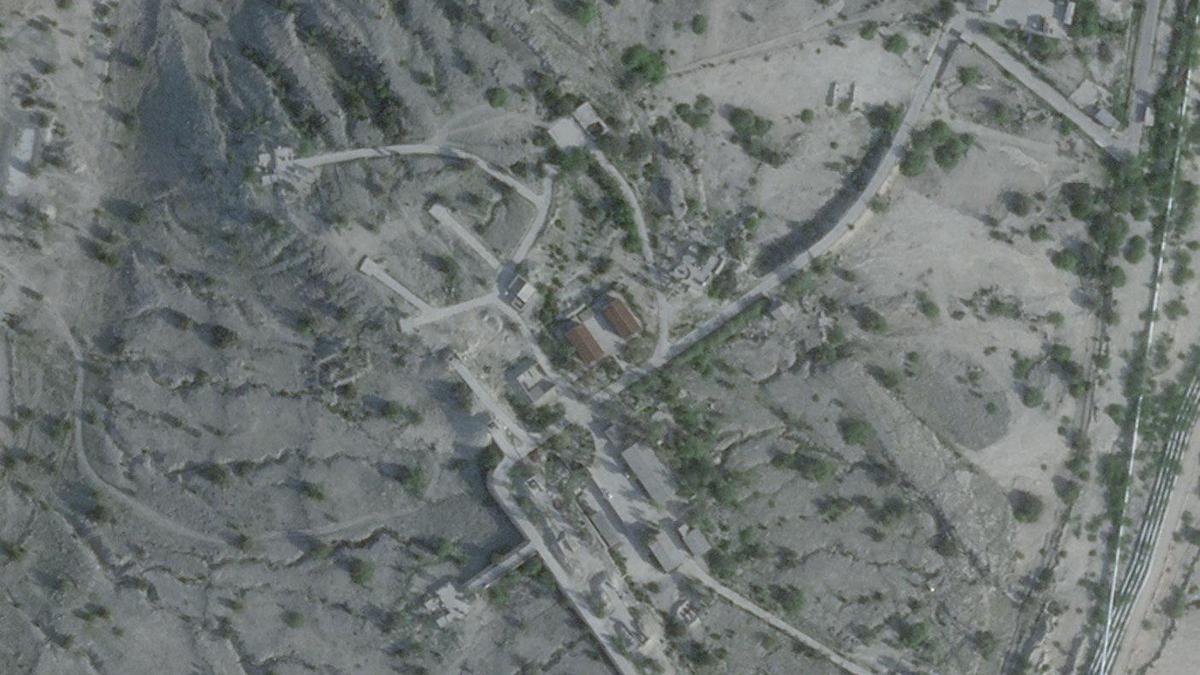
Intelligence reports indicate the IRGC has moved beyond simple reinforcements. The 112th Zolfaghar Surface Combat Brigade is now dug in, supported by a dense layer of shoulder-fired missiles designed to swat down the very helicopters and tiltrotor aircraft that would carry U.S. Marines ashore. Satellite imagery confirms a flurry of activity along the western beaches—the only viable landing spots for heavy equipment.
The "how" of this defense is a classic lesson in asymmetric warfare. Iran knows it cannot win a traditional naval engagement against the two U.S. carrier strike groups currently loitering in the Arabian Sea. Instead, they have turned Kharg into a "suicide pill." If the United States attempts to seize the island to reopen the Strait of Hormuz, they will be forced into a bloody, Manhattan-sized urban and industrial slog.
The Marines in the Middle
As the USS Tripoli and its 31st Marine Expeditionary Unit (MEU) approach from the Pacific, and the USS Boxer follows from California, the calculus for a ground invasion becomes a numbers game. Together, these units provide approximately 4,500 to 5,000 Marines—hardly a massive invasion force, but enough for a rapid-response seizure if the conditions are right.
The problem, however, is that Kharg is no longer a soft target. The island’s geography—surrounded by deep water but possessing few accessible landing beaches—makes it a natural kill zone. An amphibious assault would require the U.S. to neutralize every MANPADS site and every minefield before a single boot touches the sand. In a landscape of high-stakes gambling, this is the most dangerous bet on the table.
The Economic Leverage of Destruction
There is a growing debate within Washington about the "why" of this operation. Proponents argue that seizing Kharg Island would strip the IRGC of its primary source of revenue, effectively "annihilating" the Iranian economy, as Senator Lindsey Graham put it on March 14. This would be the ultimate lever to force Tehran to reopen the Strait of Hormuz, where nearly 20% of the world's oil is currently trapped behind a wall of Iranian drones and missiles.
Critics, however, point to a fatal flaw in this logic. If the United States occupies Kharg, it becomes responsible for defending it. An isolated island, 16 miles from the Iranian mainland, would be a magnet for unending drone swarms and ballistic missile salvos. The cost of maintaining a garrison on a 15-square-mile rock would be staggering, and the risk of a mass-casualty event—similar to the 1983 Beirut barracks bombing—is ever-present.
The Blockade Alternative
Some military analysts, including former NATO Commander James Stavridis, are suggesting a middle path: an offshore blockade. Rather than putting troops ashore and risking a meat-grinder on the beaches, the U.S. Navy could simply prevent any tankers from leaving or entering Kharg’s waters.
This accomplishes the same economic goal—stopping the flow of IRGC-funded oil—without the "boots on the ground" commitment that has haunted American foreign policy for decades. The question is whether a blockade is "hard-hitting" enough to satisfy an administration that has already launched hundreds of strikes under Operation Epic Fury.
The Regional Spillover
The standoff at Kharg Island is also forcing a reckoning for the Gulf neighbors. Saudi Arabia and Bahrain have shifted their stances, with Riyadh now permitting some U.S. operations from its territory. This is a dramatic departure from the "neutrality" often sought by regional powers. They are realizing that if Kharg falls, or if the Strait remains closed, their own economic survival is at stake.
The IRGC has responded with direct threats. In a March 25 post on X, Iranian Parliament Speaker Mohammad Bagher Ghalibaf warned that if any regional country supports a U.S. takeover of an Iranian island, "all the vital infrastructure of that regional country will be targeted with relentless, unceasing attacks."
The Shadow Fleet and the China Factor
Despite the conflict, Iran’s "Ghost Fleet" remains surprisingly active. Satellite tracking shows that roughly 14 million barrels of crude were handled by Kharg in the first half of March alone. Most of this oil is heading east toward China, the primary buyer of sanctioned Iranian crude.
This creates a secondary, diplomatic layer to the Kharg crisis. If the United States seizes or destroys the island, it isn't just an attack on Iran; it is a direct blow to China’s energy security. This adds a layer of international complexity that goes far beyond a simple island seizure. The risk of dragging Beijing into a direct confrontation with Washington over Persian Gulf oil is the nightmare scenario that keeps Pentagon planners awake at night.
The Human Factor on Forbidden Island
Lost in the talk of MANPADS and minefields is the reality of the 20,000 people who live on Kharg. Most are oil workers and their families, living in what has become one of the most dangerous zip codes on Earth. The island is often referred to as "Forbidden Island" due to its extreme security, but now it is a "Fortress Island" where the civilian population is effectively trapped between IRGC defenses and the threat of U.S. invasion.
Any amphibious operation would inevitably involve urban combat in the worker housing complexes and the industrial zones. The moral and political cost of high civilian casualties on an island that handles 94% of a nation's energy exports would be a public relations disaster for the United States, potentially alienating the few regional allies still supporting the operation.
The Minefield Reality
Laying mines is a cheap, effective way to buy time. For the cost of a single Tomahawk missile, Iran can seed a kilometer of shoreline with explosives that take weeks, if not months, to safely clear. This is the ultimate "slow-down" mechanism. Even if the U.S. Navy achieves total air and sea superiority, the actual process of landing Marines remains a logistical slog through hidden lethality.
The Trump administration's decision to "postpone" strikes on energy infrastructure for five days—citing "productive conversations"—suggests a flicker of a diplomatic opening. But on the ground, the IRGC isn't talking; they are digging. The mines on Kharg Island are a clear signal that Tehran is preparing for a long, bloody siege, gambling that the United States will blink before the first landing craft hits the beach.