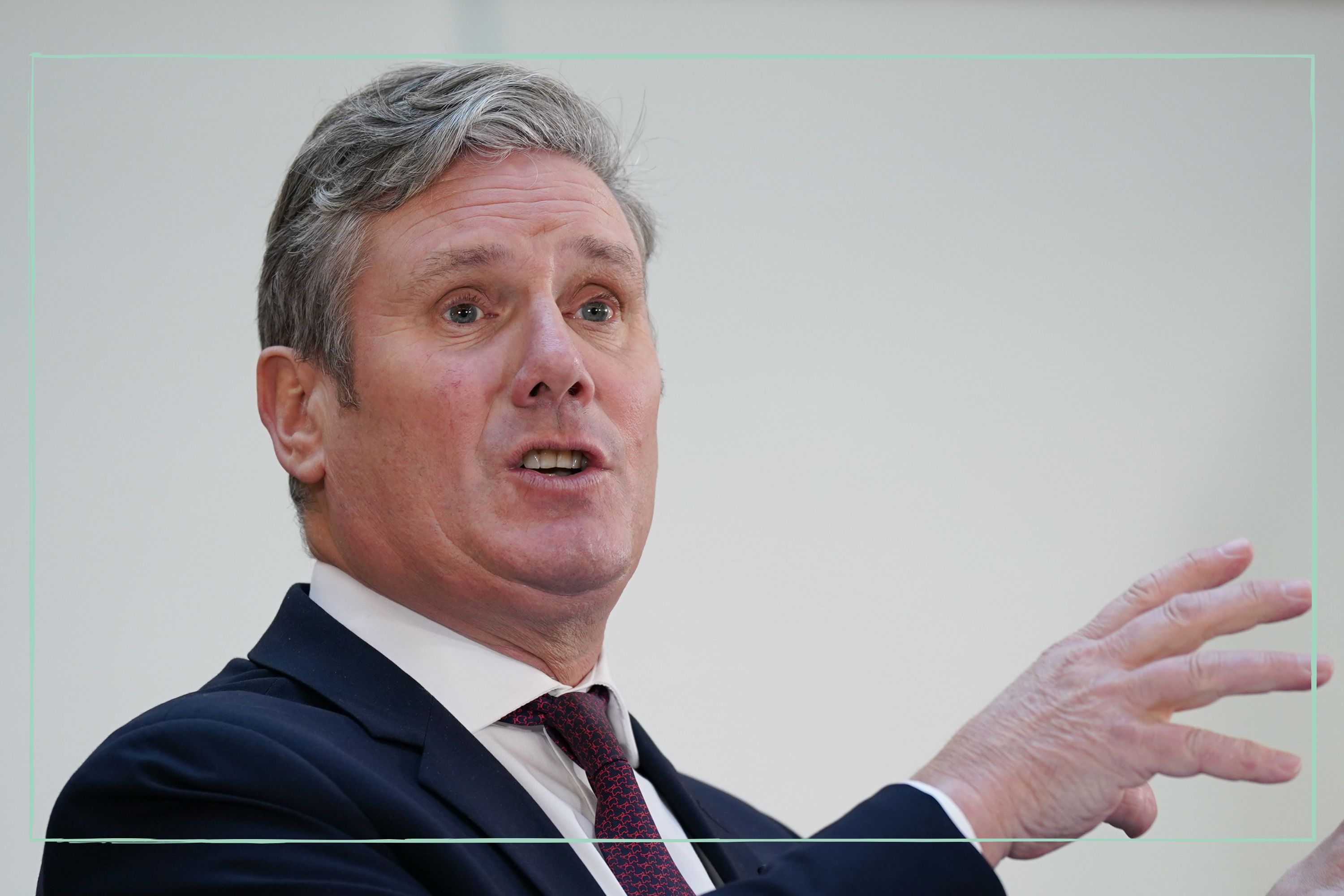
Donald Trump just reminded everyone why he's the most unpredictable negotiator on the planet. By threatening to "rip up" the UK-US trade deal because Britain won't join his military campaign against Iran, he’s trying to corner Keir Starmer. But if he expected the British Prime Minister to crumble, he’s got another thing coming. Starmer hasn't just declined the invitation to war; he’s essentially told the White House that British foreign policy isn't for sale.
The tension reached a boiling point during Prime Minister’s Questions on April 15, 2026. Starmer was blunt. He told Parliament, "It is not our war." It’s a rare moment of public friction in the "special relationship," and it highlights a massive shift in how the UK views its role in Middle Eastern conflicts.
The Trade Deal Holding the Relationship Together
Last year, the UK and US finally inked a trade agreement that was supposed to be the crown jewel of post-Brexit economic strategy. It wasn't perfect, but it provided a safety net. Now, Trump says that deal "can always be changed." He’s using it as a literal stick to beat an ally into submission.
Trump’s logic is classic Mar-a-Lago: if you aren't with us on the battlefield, why should we give you a break at the ports? During an interview with Sky News, he called Britain’s refusal to join strikes on Iran "sad" and took swipes at everything from Starmer’s immigration policies to North Sea oil decisions. He’s making it personal because that’s how he wins.
But Starmer’s gamble is that the UK economy can’t afford another "forever war" more than it can’t afford a trade spat. Chancellor Rachel Reeves has already voiced her "anger and frustration" over the lack of a clear exit plan in the US strategy. For the Labour government, growth is the priority. Getting bogged down in a regional conflict that could send oil prices through the roof is the opposite of a growth strategy.
Why Britain is Staying Out This Time
You might wonder why the UK is being so stubborn. Usually, London is the first to follow Washington into the fray. Not this time. There are three big reasons Starmer is digging his heels in:
- Public Opinion: Roughly 59% of the UK public opposes involvement in the Iran conflict. After the legacies of Iraq and Afghanistan, there’s zero appetite for a new Middle Eastern front.
- Economic Fragility: The Bank of England recently held interest rates steady instead of cutting them, specifically citing the instability caused by the Iran war. Starmer knows that joining the war would likely kill any hope of a 2026 economic recovery.
- Sovereignty: If Starmer folds now, he proves that the UK is a "vassal state"—a term his critics love to throw around. By standing firm, he’s attempting to show that Britain can have an independent foreign policy.
The King Charles State Visit Dilemma
The timing couldn't be worse. King Charles III and Queen Camilla are scheduled to visit the US on April 27 to mark the 250th anniversary of American independence. Liberal Democrat leader Ed Davey has already called for the trip to be scrapped, comparing Trump’s tactics to a "mafia boss running a protection racket."
Starmer isn't biting. He insists the visit should go ahead. His reasoning is actually quite smart: the monarchy represents the long-term bond between nations, something he says is "far greater than anyone who occupies any particular office at any particular time." It’s a subtle way of saying he’s waiting for the Trump era to pass, or at least for the current tantrum to subside.
What Happens if Trump Actually Rips Up the Deal
If Trump follows through, the fallout won't be one-sided. Sure, UK exporters would take a hit, especially in the services and automotive sectors. But US consumers would also see prices rise on British imports.
It’s worth noting that UK officials are still talking to their US counterparts behind the scenes. They’re trying to decouple the trade agreement from the military situation. It’s a messy, high-stakes game of chicken. Starmer has already made some concessions—like letting the US use British bases for defensive operations—but he’s drawn a hard line at offensive strikes.
What You Should Watch For Next
The next 14 days are critical. If the rhetoric from the White House ramps up before the King arrives, the pressure on Starmer to cancel the visit will become unbearable.
If you're a business owner or an investor, keep a close eye on the following:
- Energy Prices: Any escalation in the Strait of Hormuz will hit your wallet at the pump immediately.
- Sterling Volatility: The Pound is going to be sensitive to every "Truth Social" post Trump makes about the trade deal.
- Diplomatic Language: Watch for whether other European allies, like France or Germany, back Starmer’s play. If the UK stays isolated, Trump’s leverage grows.
Starmer is betting that the "special relationship" is strong enough to survive a "no." It’s a massive risk, but in a world where trade deals are being used as weapons, he doesn't have much of a choice. He's choosing domestic stability over international compliance. Whether that holds through the end of April is the $100 billion question.
Keep your eye on the news out of Washington on April 27. If the King is greeted with a trade threat instead of a red carpet, the UK-US relationship will be in uncharted territory. For now, Starmer is holding the line. Don't expect him to move unless the US offers something much bigger than a verbal threat.