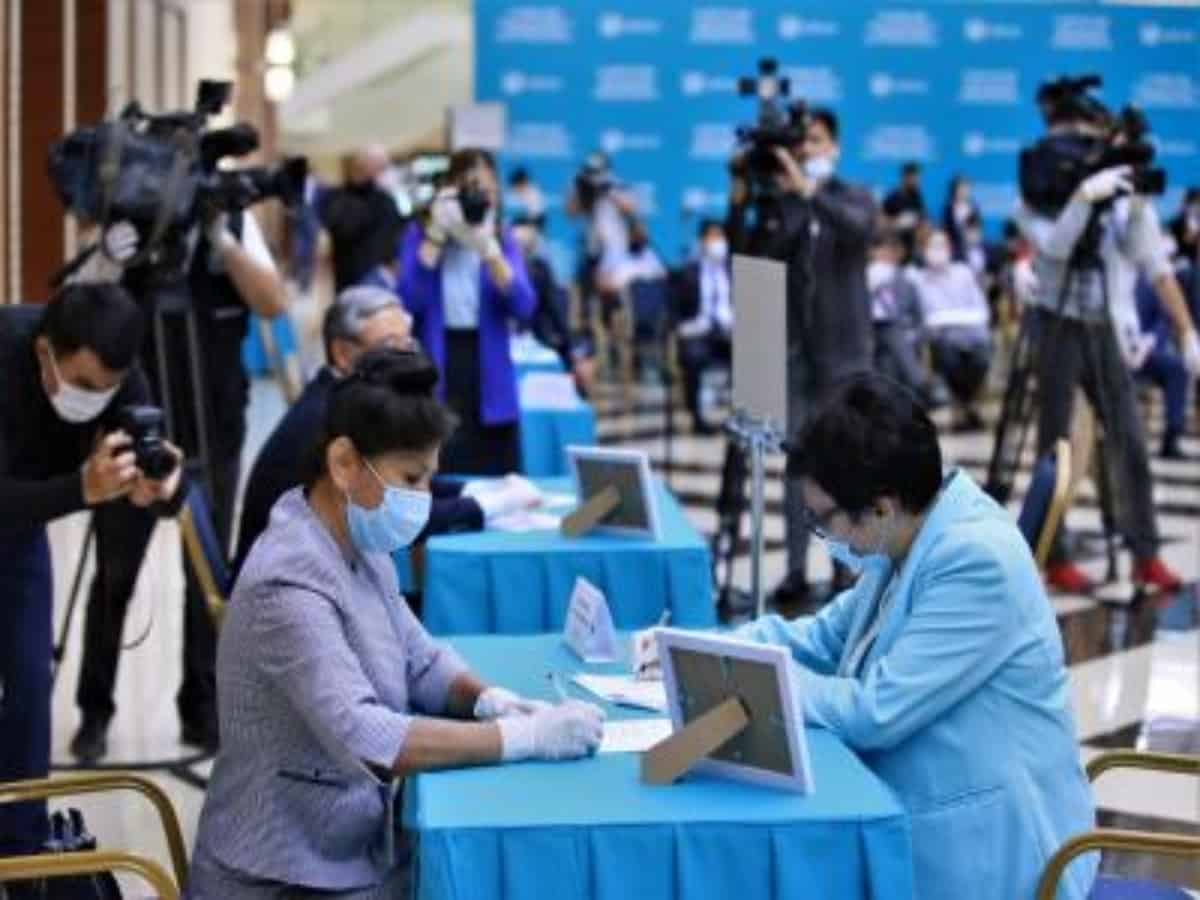
The Western media loves a "democratic awakening" narrative. It’s clean. It’s hopeful. It sells subscriptions to people who want to believe the world is trending toward a specific brand of liberal parliamentary bliss. When Kazakhstan’s exit polls signaled a landslide victory for constitutional reform, the international press corps dusted off the same tired scripts they used during the Arab Spring and the Color Revolutions. They called it a "turning point" and a "break from the past."
They are wrong. Don't miss our previous article on this related article.
This wasn't a revolution. It wasn't even a pivot. It was a sophisticated software update for an authoritarian operating system that had become too buggy to run. If you think a 77% "yes" vote in a country with a history of orchestrated transitions represents a sudden burst of grassroots liberty, you aren’t paying attention to how power actually functions in Central Asia.
The Myth of the New Kazakhstan
The "New Kazakhstan" slogan is a marketing campaign, not a political reality. President Kassym-Jomart Tokayev didn't hand power to the people; he reclaimed it from the old guard. For decades, the country operated under a duarchy. Nursultan Nazarbayev, the "Leader of the Nation," may have stepped down from the presidency in 2019, but he kept his hands on the levers of the security council and the ruling party. If you want more about the background of this, NPR offers an excellent summary.
The bloody January 2022 unrest—the "Tragic January"—changed the math. When the smoke cleared and thousands were detained, the regime realized that the old system of patronage was cannibalizing itself. The referendum was the final nail in the coffin of the Nazarbayev era, stripping the former president of his "Elbasy" status and constitutional privileges.
But don't confuse the removal of a dictator’s portrait with the removal of dictatorial power. The presidency remains the sun around which all Kazakh political life orbits.
De-monopolization is Not Democratization
The most lauded change in the new constitution is the prohibition of the president’s close relatives from holding high-ranking government positions. On paper, this is a strike against nepotism. In reality, it is a strategic purge.
By constitutionalizing the exclusion of the "First Family," Tokayev effectively locked out his rivals and cleared the board of the billionaire clan that controlled the country’s natural resources for thirty years. It’s a brilliant move. It wins applause from the IMF and the US State Department while simultaneously centralizing control within a new, more loyal technocratic elite.
We see this in corporate restructuring all the time. When a new CEO takes over a bloated, family-run firm, the first thing they do is "professionalize" the board by firing the founder’s cousins. It’s not about giving power to the entry-level employees; it’s about making sure the new CEO’s orders aren't filtered through a legacy hierarchy.
The Illusion of a Multi-Party System
Critics and "experts" point to the simplified registration process for political parties as a victory for pluralism. Let’s look at the mechanics. Lowering the threshold for party registration from 20,000 to 5,000 members sounds significant.
Imagine a scenario where a tech giant "opens its platform" to third-party developers but maintains total control over the API and the app store's approval process. You can build whatever you want, but if it threatens the core business, it gets de-listed.
In Kazakhstan, the Ministry of Justice remains the ultimate arbiter. If a party looks like it might actually organize a meaningful opposition—particularly one that challenges the state’s grip on the oil and gas sector—it will face the same "administrative hurdles" that have stifled dissent for decades. A "multi-party system" where the state chooses the parties is just a more expensive way to run a one-party state.
Why the Market Loves Managed Stability
If you are an investor in the Caspian region, you aren't looking for a messy, unpredictable democracy. You are looking for a predictable autocracy that can maintain the "Rule of Law" for capital while ignoring it for citizens.
The constitutional changes were designed to signal to Western capital that the "Nazarbayev risk" is gone. The message is clear: the contracts you signed with the old regime are safe, but the people you used to bribe have changed.
Kazakhstan produces roughly 2% of the world's oil supply. It is the world's largest producer of uranium. Global markets reacted to the referendum with a collective sigh of relief. Why? Because a "Yes" vote meant that the internal power struggle was over. It meant that Tokayev had successfully consolidated power without a protracted civil war.
- Foreign Direct Investment (FDI): Flows toward stability, not liberty.
- Sovereign Credit Ratings: Benefit from the removal of "succession uncertainty."
- Geopolitics: Russia and China both prefer a stable, authoritarian Kazakhstan over a volatile, democratic one.
The referendum wasn't for the people of Almaty or Astana. It was a prospectus for London, New York, and Beijing.
The Human Rights Trap
The re-establishment of the Constitutional Court and the formal ban on the death penalty are the "shiny objects" designed to distract human rights monitors.
While the death penalty is gone, the "use of force" protocols for security services during "anti-terrorist operations" remain dangerously broad. While the Constitutional Court exists, the process for appointing its judges ensures they are unlikely to rule against the executive branch on any matter of consequence.
I’ve seen this play out in dozens of emerging markets. A regime adopts the vocabulary of liberal democracy to shield itself from sanctions while maintaining the infrastructure of repression. They build a beautiful courthouse, but they keep the same prosecutors who haven't lost a case in twenty years.
The Wrong Question
People ask: "Is Kazakhstan becoming more democratic?"
That is the wrong question. It assumes democracy is the goal. For the Kazakh elite, the goal is modernization without liberalization. They want Singapore's efficiency and Dubai's skyline without the messy protests of Paris or the legislative gridlock of Washington.
The referendum was a success because it achieved exactly what it set out to do: it modernized the facade of the state to make it more palatable to a 21st-century global audience. It replaced the "Sultanism" of the 1990s with a "Rule-by-Law" technocracy that is much harder for the West to criticize.
The Battle Scars of "Reform"
I have watched "reform" efforts in the post-Soviet space for two decades. The pattern is always the same. There is a crisis. The leadership promises "deep changes." They hold a vote. The West praises the "step in the right direction." Then, three years later, everyone is shocked to find the same people in power, the same corruption in the ministries, and the same police on the street.
The only difference this time is the sophistication. Tokayev is a career diplomat. He understands how to use the "exit poll" and the "international observer" as tools of statecraft. He knows that if you give the people the sensation of participation, they are less likely to demand the substance of power.
The Brutal Reality of the Result
The 77% approval rating is likely "real" in the sense that many Kazakhs genuinely want stability after the chaos of January. But a choice between "this version of the regime" and "the older, scarier version of the regime" is not a democratic choice. It’s an ultimatum.
If you want to understand what happened in Kazakhstan, stop reading the human rights reports and start looking at the reshuffling of the national wealth fund, Samruk-Kazyna. That is where the real constitution is written. The legal document is just the brochure.
Stop waiting for Kazakhstan to "turn a corner." It isn't turning. It’s just accelerating in the same direction, with a faster engine and a fresh coat of paint.
Accept the reality: the era of the "strongman" isn't ending in Central Asia; it's just getting an upgrade.