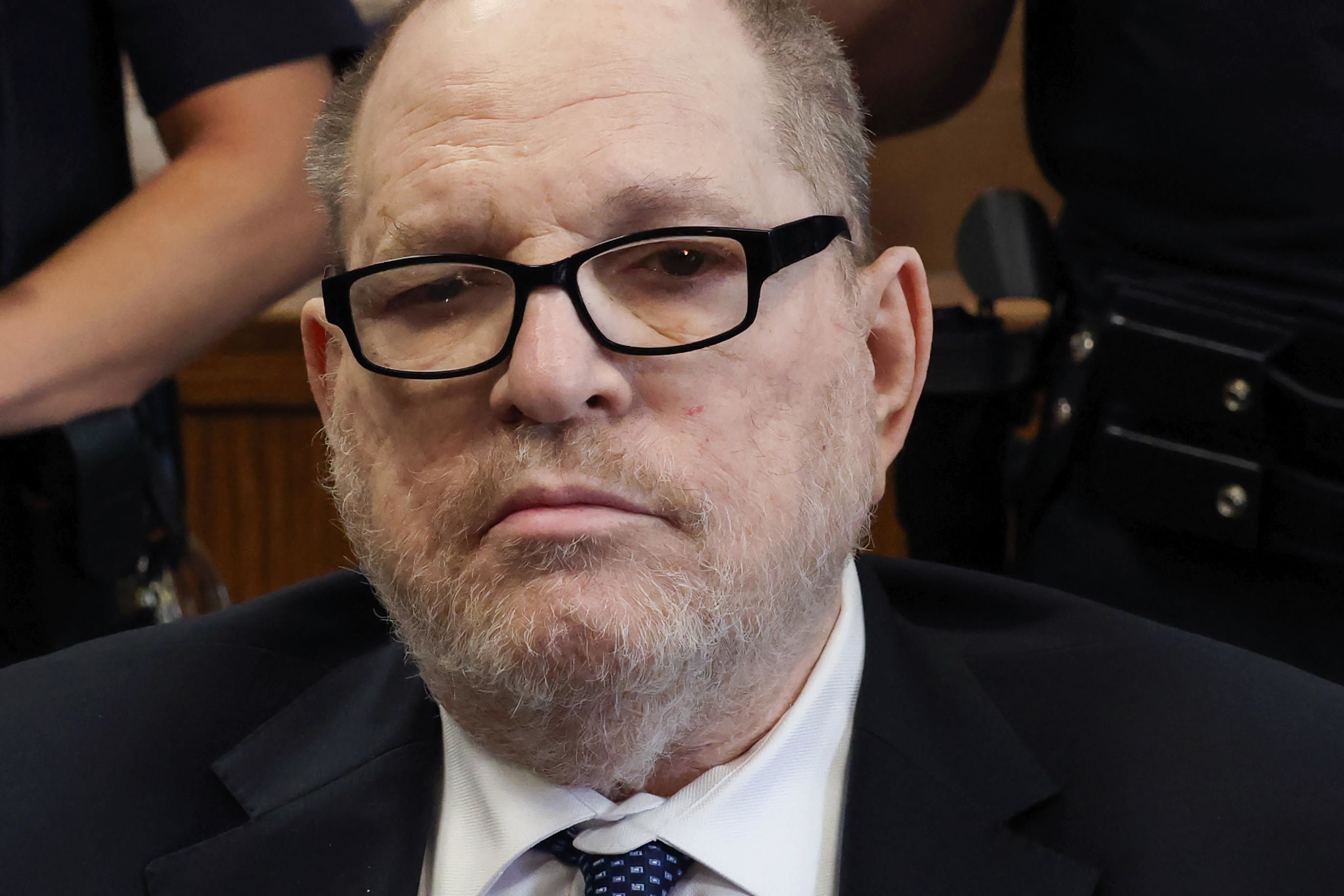
A Manhattan courtroom fell silent as Judge Curtis Farber read the second note of the morning from a deadlocked jury. For the third time in six years, a group of citizens had been asked to reach a unanimous consensus on whether Harvey Weinstein raped aspiring actress Jessica Mann in a Midtown hotel room in 2013. The answer from the majority-male panel was definitive only in its division. They could not agree. The resulting mistrial leaves a cornerstone charge of the modern accountability movement in permanent legal limbo.
While the former Hollywood titan remains incarcerated due to convictions on other charges, this specific failure to reach a verdict exposes the limits of trying historical sexual assault allegations within standard criminal frameworks. The state cannot simply rely on the cultural momentum of a movement when the evidentiary standard requires proof beyond a reasonable doubt.
The Friction Between Cultural Reckoning and Criminal Law
The legal architecture of a criminal trial is intentionally designed to be cold, rigid, and resistant to external societal shifts. When the New York Court of Appeals overturned Weinstein’s initial 2020 conviction, it did so because the original trial judge allowed "prior bad acts" testimony from women whose allegations were not part of the specific indictment. The appellate court ruled that this prejudiced the jury, effectively putting Weinstein’s character on trial rather than the specific actions alleged in the charges.
Stripped of that broader narrative, the prosecution was forced to present the Jessica Mann allegations in isolation during the subsequent retrials. This legal narrowing transformed the case from a macro-level referendum on institutional abuse into a micro-level assessment of a single, highly complicated interpersonal relationship.
Jurors were forced to evaluate a timeline that spanned several years, involving a series of consensual encounters both before and after the alleged 2013 assault at the DoubleTree hotel. For a criminal conviction, the prosecution must prove that forcible compulsion occurred during that specific hotel room encounter. When a case rests almost entirely on the conflicting testimonies of two individuals from over a decade ago, the defense only needs to surface enough ambiguity to prevent unanimity. They succeeded.
The Credibility Battlefield
The defense strategy executed by Weinstein’s legal team focused heavily on contemporaneous documentation. Jurors were presented with personal notes, journals, and text messages sent by Mann in the days, months, and years following the alleged incident. In one text message, Mann referred to Weinstein as "big guy" and stated that she missed him.
To an outside observer or a trauma specialist, these communications can be understood as "appeasement" or the complex coping mechanisms of someone attempting to navigate a relationship with a highly powerful, volatile industry figure. In the context of a jury room, however, these documents serve a different purpose. They provide tangible, physical evidence that defense attorneys can contrast against a witness's spoken memory.
[State's Case: Verbal Testimony] <---> [Defense Case: Written Texts/Journals]
               |                                       |
       Requires total trust                    Introduces material doubt
Juror interviews following the mistrial announcement revealed exactly where the prosecution's case fractured. Josh Hadar, a 57-year-old juror, noted to reporters outside the courthouse that while Mann possessed an incredible memory during direct examination by the state, she frequently failed to recall specific details when pressed by defense attorneys on cross-examination. Hadar stated that nine of the twelve jurors were leaning toward acquittal.
Another juror, 25-year-old Sarae Perez, explicitly cited the high threshold of proving guilt beyond a reasonable doubt, stating there were elements of the testimony where the jury simply could not trust the accuser's word as absolute fact. The defense did not need to prove Weinstein was innocent or gentlemanly. They merely had to establish that the boundary between an abusive, transactional relationship and a criminal assault was legally blurred.
The Heavy Burden on the Witness Stand
The institutional demand for absolute consistency over a ten-year period places an immense psychological burden on complaining witnesses. Jessica Mann took the stand for five consecutive days during this retrial, marking her third time publicly recounting the details of the 2013 encounter.
Following the mistrial, Mann released a statement emphasizing that the jury's inability to reach a verdict did not alter the truth of what occurred, describing the process of being cross-examined across three separate trials as being "flayed open" by a system where the power of predators remains formidable.
The reality of the American jury system is that it operates on a binary switch: guilty or not guilty. It possesses no mechanism to declare a relationship "exploitative but non-criminal," nor can it issue a verdict of "highly suspicious." When a jury deadlocks, it is often a sign that the system is working exactly as designed—refusing to deprive a citizen of liberty when twelve people cannot achieve absolute certainty.
The Future of the Manhattan Prosecution
Manhattan District Attorney Alvin Bragg faces a complex calculation regarding whether to pursue a fourth trial on this specific charge. A status hearing has been scheduled for June 24 to announce the state's next moves.
Financially and logistically, mounting another multi-week trial with an identical evidentiary pool offers diminishing returns. Weinstein is 74 years old, in failing health, and already serving a 16-year sentence stemming from a separate 2022 conviction in California. He also remains convicted of a separate felony sex crime from his 2025 New York retrial involving production assistant Miriam Haley.
The state has achieved its primary structural goal: keeping Weinstein behind bars for the remainder of his natural life. Pursuing a fourth trial on the Mann allegation would serve less as a pursuit of incapacitation and more as a symbolic effort to secure total legal validation for a primary voice of the movement. Given the clear patterns of jury skepticism displayed across the last two retrials, a fourth attempt carries the distinct risk of producing an outright acquittal, a result that would weaponize the defense's narrative far more than another hung jury.
The systemic lesson of the Weinstein retrials is that cultural reckonings cannot be seamlessly copy-pasted into criminal indictments. The public square allows for nuance, systemic critique, and the aggregation of pattern behavior. The courtroom allows only for the strict evaluation of a specific charge on a specific day. When those two standards collide, the result is frequently a deadlocked room of citizens staring at a mountain of old text messages, unable to cross the high threshold that the law demands.