Jerusalem doesn’t usually go quiet during Eid. But on Friday, March 20, 2026, the air wasn't filled with the usual celebratory calls to prayer from within the Al-Aqsa compound. It was filled with the roar of sirens and the bone-shaking thud of ballistic missile fragments.
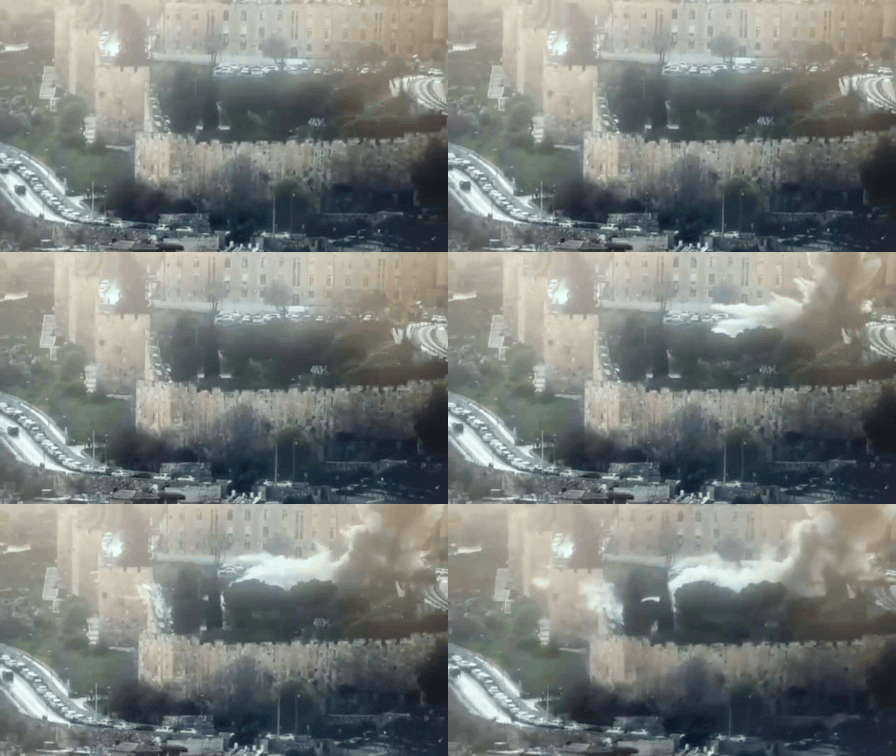
If you're wondering how we got here, it’s simple and terrifying. A fragment from an intercepted Iranian ballistic missile crashed into the Jewish Quarter of the Old City. It landed roughly 400 meters from the Al-Aqsa Mosque and the Western Wall. That is less than a quarter-mile from one of the most explosive religious flashpoints on the planet.
The miracle of a parking lot impact
The strike happened at a parking lot near the Dung Gate. It’s a busy spot, usually teeming with visitors and locals. Luck—or something else—was on Jerusalem's side. The debris caused localized damage to vehicles and pavement, but remarkably, nobody died in that specific impact.
Contrast that with the chaos in Dimona and Arad the same day. In those southern cities, missiles made direct hits. Over 100 people were injured. A 12-year-old boy is currently in serious condition. While the world's eyes are on the footage of smoke rising over the Dome of the Rock, the real human tragedy was unfolding a few dozen miles south.
Why does the distance matter? If that warhead had veered just a few hundred meters, it wouldn't have hit a parking lot. It would have hit the Al-Aqsa Mosque or the Dome of the Rock during the holiest time of the year. The regional fallout from a direct hit on the Temple Mount is something most diplomats don't even want to simulate. It’s the ultimate nightmare scenario.
Locked gates and empty courtyards
For the first time in nearly 60 years, Al-Aqsa was closed to worshippers for Eid al-Fitr. Think about that. Since 1967, through wars and intifadas, people usually found a way in. Not this time.
Israeli authorities cited the threat of mass-casualty events from the ongoing missile exchange with Iran as the reason for the closure. Palestinian officials, predictably, called it a blatant violation of the "status quo" and freedom of worship.
The result was a surreal scene. Thousands of Muslims gathered on Salah al-Din Street and near the gates of the Old City. They prayed on the asphalt, surrounded by police cordons and the constant threat of more incoming fire. It wasn't just a religious loss; it felt like a personal blow to the city's soul.
The rhetoric of holy sites
Politics and religion are messy, especially when missiles are involved. The IDF was quick to point out that the Iranian regime is firing indiscriminately. Their argument? Iran claims to be the "protector" of Al-Aqsa, yet their own weapons are falling within spitting distance of it.
On the other side, voices in the Arab world are split. Some, like commentators in Jordan and Saudi Arabia, are calling out Tehran. They're asking how a regime that claims to champion Islam can risk destroying its third-holiest site. Others see the closure of the mosque by Israel as the bigger "strike."
Basically, Jerusalem has become a giant game of chicken with the highest stakes imaginable.
What actually happened in the sky
The missile in question was likely part of a larger wave targeting strategic assets or simply aiming for the psychological gut-punch of hitting the capital. Israel’s Arrow and David’s Sling systems are doing the heavy lifting. They intercepted the bulk of the threat, but interception isn't magic.
When a missile is hit in space or the upper atmosphere, the pieces have to go somewhere. In this case, the warhead—which reportedly remained somewhat intact—tumbled toward the Old City.
- Detection: Radars picked up the launch from Iranian territory.
- Interception: An interceptor engaged the ballistic threat.
- Impact: Debris fell at 2:00 a.m. near the Western Wall.
- Assessment: Sappers cleared the area to ensure no unexploded ordnance remained.
Real talk about what comes next
Don't expect the tension to dissipate tomorrow. This isn't just another flare-up; it’s a direct conflict between two regional powers that has finally landed in the streets of Jerusalem.
If you're living in or visiting the area, the advice is grim but necessary. Follow the Home Front Command instructions without hesitation. The "miracle" at the parking lot isn't a strategy.
For the rest of us watching from afar, keep an eye on the diplomatic backchannels. PM Modi has already spoken with the Iranian president about keeping shipping lanes open. The UN is calling for "maximum restraint," a phrase we've heard so often it’s lost its meaning. But with holy sites now in the literal crosshairs, the pressure for a ceasefire—or a much larger escalation—has never been higher.
Check the updates from local Jerusalem news outlets for the most recent gate openings. If you’re planning to travel, wait. The situation is too fluid, and the "status quo" at the holy sites is currently nonexistent.