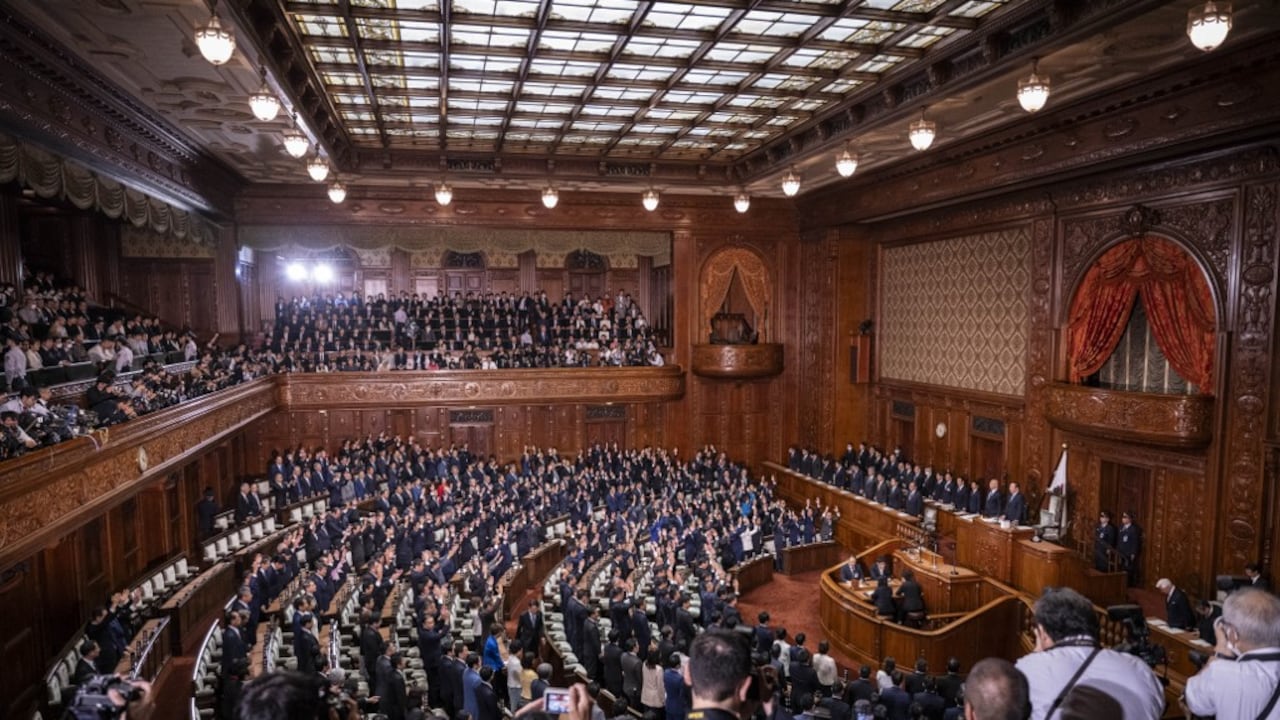
You'd think a modern powerhouse like Japan could figure out bathroom math. Apparently not. The nation's parliament, the National Diet, just announced it's adding a grand total of two new women's toilet cubicles. Yes, two.
This isn't a minor infrastructure hiccup. It's a glaring symbol of a political system built by men, for men, that's dragging its feet into the modern era. When a cross-party coalition of 58 female lawmakers, including Prime Minister Sanae Takaichi, has to spend months petitioning just to double the number of stalls near the main legislative chamber from two to four, you know the system is broken.
The real question isn't why the plumbing is slow. It's why one of the world's most advanced democracies treats its female leaders like an afterthought.
The Ridiculous Math Inside the National Diet
Let's look at the actual numbers because they paint a damning picture. During the February lower house election, 68 women won seats out of 465 available. That brought total female representation in the House of Representatives up to 73.
But when these women need to use the restroom right before a major plenary session, they run into a wall. The single restroom located closest to the main lower house chamber contains exactly two cubicles for women. Meanwhile, the entire lower house building boasts 12 men's restrooms packed with 67 stalls, compared to just nine women's facilities with 22 cubicles total.
Yasuko Komiyama, a lawmaker from the opposition Constitutional Democratic Party, didn't hold back when describing the situation. She noted that before major sessions kick off, a massive queue of female politicians routinely snakes out into the hallway. It's not just an inconvenience. The official petition filed by the lawmakers explicitly stated that the bathroom shortage is a critical issue impacting the actual conduct of parliamentary proceedings and their ability to do their jobs.
Imagine missing a vote because you're stuck in a ridiculous line. That's the reality inside Japan's top legislative body.
A Building Stuck in 1936
To understand how things got this bad, you have to look at the history. The National Diet building was completed in 1936. That's nearly a decade before Japanese women even won the right to vote in December 1945, let alone run for office.
When the architects designed the building, they didn't anticipate women being in the room where it happens. They assumed the hallways would only ever host men in dark suits. For decades, that assumption held true.
The problem is that the physical architecture hasn't kept pace with changing times. Even with Sanae Takaichi breaking the ultimate glass ceiling to become the nation's first female prime minister, the physical space she walks through every day remains stubbornly retro.
It takes a lot of time and money to renovate historic stone buildings. But Hideko Nishioka, the lone female member on the committee that finally approved the expansion, pointed out that this shortage doesn't just affect elected officials. It directly hurts female staffers, political secretaries, and the growing ranks of women journalists covering the government. They're all fighting over the same handful of stalls.
The Broader Struggle for Potty Parity
This isn't just an issue for politicians. The battle inside parliament perfectly mirrors a nationwide crisis. Japan routinely scores terribly on international equality metrics, landing at 118th out of 148 nations in the World Economic Forum's Global Gender Gap Report.
The Ministry of Land, Infrastructure, Transport and Tourism recently ran the numbers across public spaces and found some shocking gaps:
- Train station restrooms have 37% fewer fixtures for women than men.
- Airport facilities offer 34% fewer options for women.
- Movie theaters feature an 11% deficit for female patrons.
The government recently released new draft guidelines urging public and private facility managers to achieve "potty parity." The rules state that if an equal number of men and women visit a location, the women's restroom should have an equal or greater number of fixtures.
Men's rooms naturally move faster because urinals take up less physical space than private stalls. Women also take longer due to physiological reasons, managing menstrual products, or accompanied children. Giving both genders the exact same square footage actually guarantees a massive line for women.
What This Means for Women in Japanese Politics
The toilet crisis highlights why it's so hard to change the face of Japanese leadership. The government frequently repeats its goal of getting women into 30% of legislative seats. Right now, women hold less than 16% of the seats in the lower house.
When women do run for office, they face hurdles their male colleagues never encounter. Candidates frequently report facing blatant sexism on the campaign trail, with voters and older peers telling them they belong at home taking care of kids instead of drafting laws.
When the very building where laws are written tells you that you don't belong, it sends a loud message. If you want more women to run for office, you have to create an environment where they can actually function. Failing to provide basic workplace infrastructure is just another way of saying "we didn't expect you to be here."
Fixing the two stalls next to the main chamber after the Diet session ends on July 17 is a start. House spokespeople claim they're looking into expanding restrooms on other floors too. But tweaking the plumbing shouldn't require a prime-minister-backed petition.
True structural change requires shifting how space is allocated, how budgets are approved, and who gets to sit at the decision-making table. Until the physical spaces of power adapt to the people holding that power, real equality remains a distant goal.