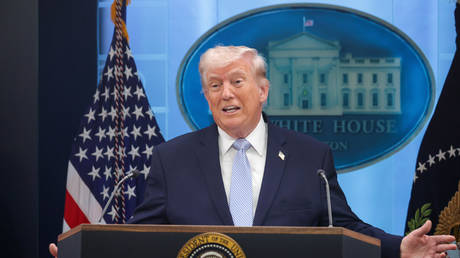
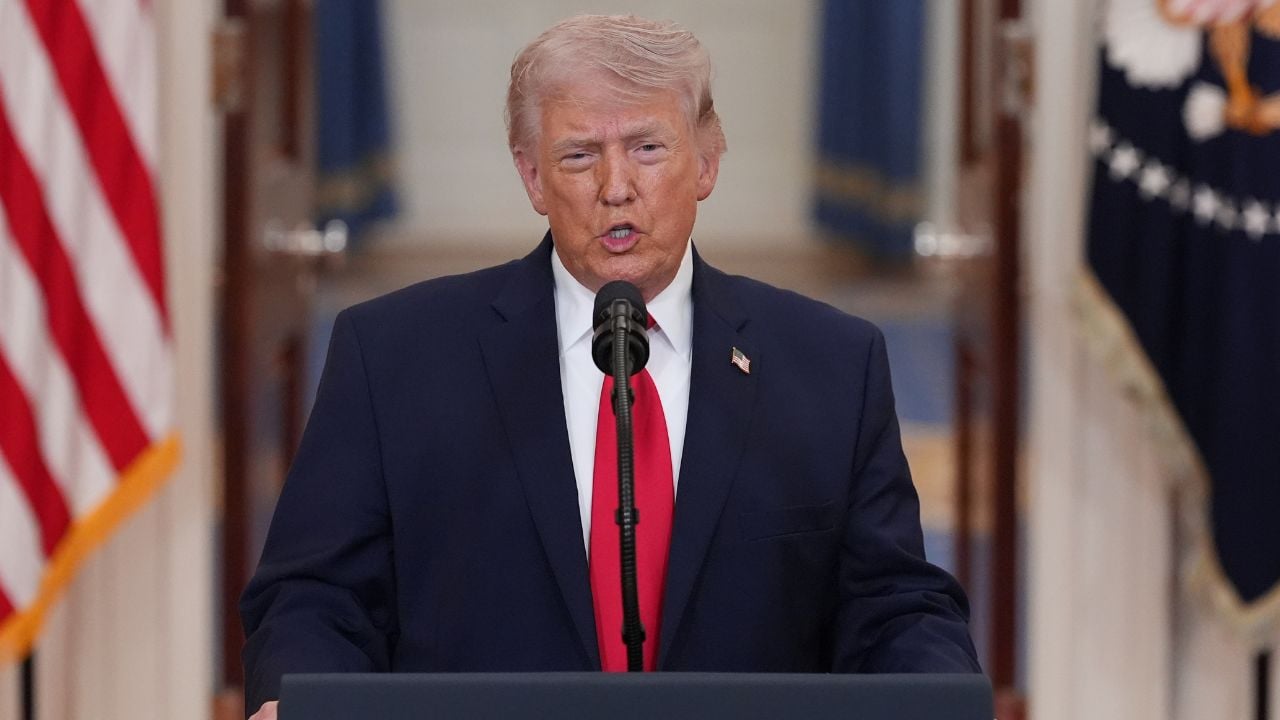
Donald Trump doesn’t like paying for other people’s safety. If you’ve followed his "America First" rhetoric over the last decade, that’s the one constant. In 2026, this isn't just campaign trail talk anymore; it's a reality that’s sending shockwaves through the Indo-Pacific. For decades, Japan hid behind a pacifist constitution and a massive U.S. security umbrella. Now, that umbrella feels like it’s being held by someone who might close it the moment it starts to rain.
But here’s the twist: Japan isn't just panicking. It's pivoting. The Japanese arms industry, long a sleeping giant restricted by post-WWII guilt, is waking up. Under Prime Minister Sanae Takaichi, Tokyo is making a massive bet that Trump’s unpredictability is the perfect cover to turn Japan into a global defense powerhouse. We're talking about a country that spent years refusing to export a single bolt for a tank now eyeing markets from Manila to Warsaw.
The Trump Factor as a Catalyst
Trump’s return to power has created a specific kind of anxiety among U.S. allies. When he questions the value of NATO or suggests that wealthy allies like Japan and South Korea should "pay up" or defend themselves, he’s not just talking about money. He’s signaling a retreat from the global policeman role. This creates a massive trust gap.
If you're a neighboring country like the Philippines or a distant one like Poland, you're looking at the U.S. defense industry and seeing two things: incredible tech and a massive backlog. Between the wars in Ukraine and the Middle East, American production lines are pushed to the limit. Add Trump’s "will-he-or-won't-he" approach to security guarantees, and suddenly Japan looks like a very attractive alternative.
Japan offers something the U.S. currently can't: high-end manufacturing capacity that isn't already bogged down by three different global conflicts. Tokyo’s 2026 defense budget just cleared 9 trillion yen ($58 billion). That’s not just for buying American jets. It’s for building a domestic industry that can stand on its own two feet.
Breaking the Pacifist Taboo
For the longest time, Japanese brands like Mitsubishi, Kawasaki, and Toshiba were terrified of being labeled "merchants of death." They worried that selling missiles would hurt their brand image for air conditioners and laptops. That fear is evaporating.
The Takaichi administration is moving to dismantle the "Three Principles" on arms exports—the legal red tape that made selling weapons abroad nearly impossible. Just this month, the government moved toward a formal adoption of rules that would allow the export of finished defense systems, not just parts.
- Mitsubishi Electric is already expanding its staff in London and Singapore.
- Toshiba executives are openly stating that "reputational risk" isn't what it used to be.
- Mitsubishi Heavy Industries is already raking in trillions of yen in domestic contracts for advanced missile systems.
This isn't just about making a quick buck. It's about "economy of scale." If Japan only builds weapons for its own Self-Defense Forces, the unit price is astronomical. If they can sell those same systems to Vietnam, Australia, or India, the cost per unit drops, making Japan’s own military buildup much more sustainable.
What Japan Is Actually Selling
Japan isn't trying to compete with the U.S. on every front. They’re carving out a niche in high-tech, reliable hardware. Think of it as the "Lexus" of defense.
One of the first big moves involves exporting used frigates to the Philippines. These aren't just old boats; they're sophisticated platforms capable of standing up to maritime pressure in the South China Sea. Japan is also looking at co-producing the AIM-120 AMRAAM (Advanced Medium-Range Air-to-Air Missile) with the U.S., which would mark a massive step into the global supply chain.
The Submarine Question
Japan builds some of the best non-nuclear submarines in the world. The Soryu and Taigei classes are quiet, deep-diving, and packed with lithium-ion battery tech that gives them incredible underwater endurance. In a world where China’s navy is expanding at breakneck speed, every country in the Indo-Pacific wants what Japan has. Previously, Japan lost a massive sub deal to Australia because of political hesitation. In 2026, under the current leadership and the "Trump pressure," that hesitation is gone.
Why This Matters for the Global Market
If Japan enters the market in a big way, it changes the math for everyone. For decades, the global arms trade was dominated by a few players: the U.S., Russia, France, and increasingly South Korea. Japan joining the fray provides a "third way" for countries that don't want to be caught between U.S. political whims and Chinese regional dominance.
It's also about supply chain security. The Trump administration actually welcomes this, though it sounds counterintuitive. Trump wants allies to carry more of the "burden." By Japan building its own industry and arming other allies, it fulfills the "burden-sharing" requirement that Trump harps on. It’s a rare win-win in a very messy geopolitical situation.
The Challenges Japan Still Faces
It’s not all smooth sailing. Japan’s defense industry is still roughly 25 times smaller than the U.S. version. They have the tech, but they don't have the sales experience. Selling a fighter jet isn't like selling a Camry; it requires decades of maintenance contracts, training programs, and political maneuvering.
There's also the "China reaction." Beijing has already called Takaichi’s military expansion a "dangerous direction." Any Japanese arms sale to a country with a territorial dispute with China will be seen as a direct provocation. Japanese companies have to weigh the profits of a missile sale against the potential of being boycotted in the massive Chinese consumer market.
How to Track This Shift
If you're looking at where this goes next, keep your eyes on three specific areas:
- The Philippines Deal: If the frigate transfer goes through without a hitch, it opens the floodgates for more "excess defense articles" transfers across Southeast Asia.
- The Next-Gen Fighter: Japan is currently working with the UK and Italy on a sixth-generation fighter (the GCAP). Watch to see if Tokyo tries to push for more export rights for this jet than they’ve ever had before.
- AMRAAM Co-production: This is the litmus test for U.S.-Japan industrial cooperation. If they can successfully mass-produce these missiles in Japan, it proves Japan can be a "factory" for the alliance, not just a customer.
Japan is no longer content to be a passive observer of its own security. Trump’s "America First" policy might have been intended to save the U.S. money, but its lasting legacy might be the creation of a newly militarized, export-ready Japan. For the first time in 80 years, the rising sun is looking a lot more like a rising arsenal.
Don't expect them to turn back now. The gears are already turning, the budgets are signed, and the "peace constitution" is being treated more like a set of suggestions than a rigid rulebook. If you're in the defense business, or just watching the balance of power in Asia, ignore Japan’s industrial pivot at your own peril.