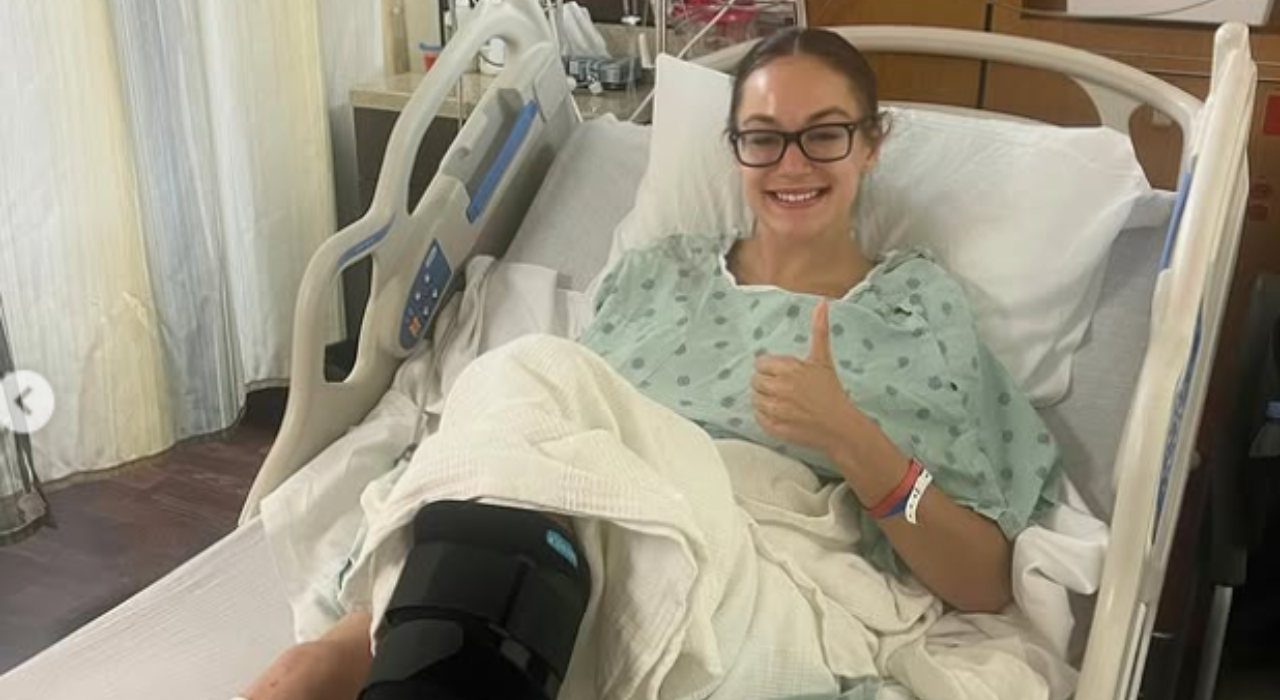
The press release is a sedative. When you hear that an elite athlete's recovery "couldn't be looking any better," you are being fed a curated narrative designed to stabilize stock prices and fan anxiety. Jack Grealish’s latest stint on the sidelines isn't a "setback" or a "stroke of bad luck." It is the logical conclusion of a broken philosophy in modern sports science that prioritizes pain suppression and rapid return-to-play over long-term structural integrity.
We love the narrative of the miraculous recovery. We want to believe in the $500,000 hyperbaric chambers and the "innovative" physiotherapy routines. But the reality is far grittier. Most "perfect" recoveries are actually just aggressive management of symptoms that leave the underlying biomechanical flaw untouched.
The Calf Strain Fallacy
Everyone talks about Grealish’s calves as if they are a freak of nature. In reality, they are a ticking time bomb. When a player possesses that much localized mass, the eccentric load during a sudden deceleration is astronomical.
Most club physiotherapists are under immense pressure to get the "£100 million man" back on the grass. This leads to a reliance on isometric loading and isolation exercises. It looks good on a spreadsheet. The player hits their strength markers. The medical department ticks a box. But football isn't played in a vacuum or on a Leg Extension machine. It is played in a state of chaotic, multi-planar movement.
The "lazy consensus" suggests that if the scan is clear, the player is ready. This is a fundamental misunderstanding of tissue quality versus tissue appearance. A scarred muscle might look "healed" on an MRI, but its elasticity is compromised. By rushing Grealish back the moment he stops feeling a "twinge," City aren't helping him. They are prepping him for a compensatory injury in his hamstring or opposite glute.
The Psychology of the Glass Ceiling
There is a dirty secret in elite locker rooms: once a player is labeled "injury-prone," the medical intervention actually becomes part of the problem.
I have seen clubs spend millions on GPS tracking and load management software, only to ignore the most basic variable—the player's own proprioception. When you over-monitor an athlete like Grealish, you create a "nocebo" effect. Every sensation is scrutinized. Every tight muscle becomes a crisis.
We are moving toward a version of football where players are treated like Formula 1 cars. The problem? A car can have its gearbox swapped in twenty minutes. A human tendon requires months of remodeling. You cannot "bio-hack" your way out of a Grade 2 tear. You can only mask it.
Stop Managing the Injury and Start Managing the Athlete
The industry is obsessed with "Return to Play" protocols. We should be talking about "Return to Performance."
If I’m in that medical room, I’m telling the manager that Grealish doesn't need three weeks of light jogging. He needs a complete overhaul of his kinetic chain.
- Deceleration Training: His injury happens when he stops, not when he goes. We focus too much on top-end speed and not enough on the mechanics of the "brake."
- The Compensation Loop: Grealish draws fouls. He takes hits. His ankles are perpetually battered. This leads to a subtle shift in gait that puts more stress on his calves.
- The Truth About Cortisone: While clubs won't admit it, the use of anti-inflammatories to get players through "big games" is the primary driver of chronic degeneration. It stops the pain but halts the healing.
Why the "Perfect Recovery" is a Warning Sign
When a club says a recovery is going "better than expected," it usually means they’ve accelerated the timeline. In the Premier League, time is the only currency nobody wants to spend.
Take a look at the data on re-injury rates for soft tissue issues. If a player returns within the "optimal" window defined by modern sports science, their chance of a secondary injury within 30 days is nearly 30% higher than if they had taken an extra ten days of deloading.
The "optimal" window is a myth created by broadcasters and stakeholders. True recovery is boring. It involves stillness. It involves missing the "crucial" Champions League tie. Grealish is a victim of his own price tag. The club feels they cannot afford to leave him in the stands, so they "leverage" (to use a term the suits love) his health for immediate tactical gain.
The Counter-Intuitive Truth
If you want Grealish to stay fit, you have to let him get "unfit."
The modern obsession with maintaining "match fitness" during an injury layoff is what kills careers. By trying to keep his aerobic capacity at 100% while his leg is in a boot, you are stressing a system that is trying to divert energy to cellular repair.
We need to stop praising players for "working hard in the gym" during rehab. We should be praising them for sleeping ten hours a day and doing absolutely nothing. The most advanced medical tech on the planet is still inferior to the restorative power of biological time.
The next time you read a headline about a "miracle recovery" or a player "ahead of schedule," don't cheer. Prepare for the news three weeks later that he’s "felt something" in training. Jack Grealish doesn't need a better medical department; he needs a department brave enough to tell the manager "no."
Stop looking at the calf. Start looking at the calendar.