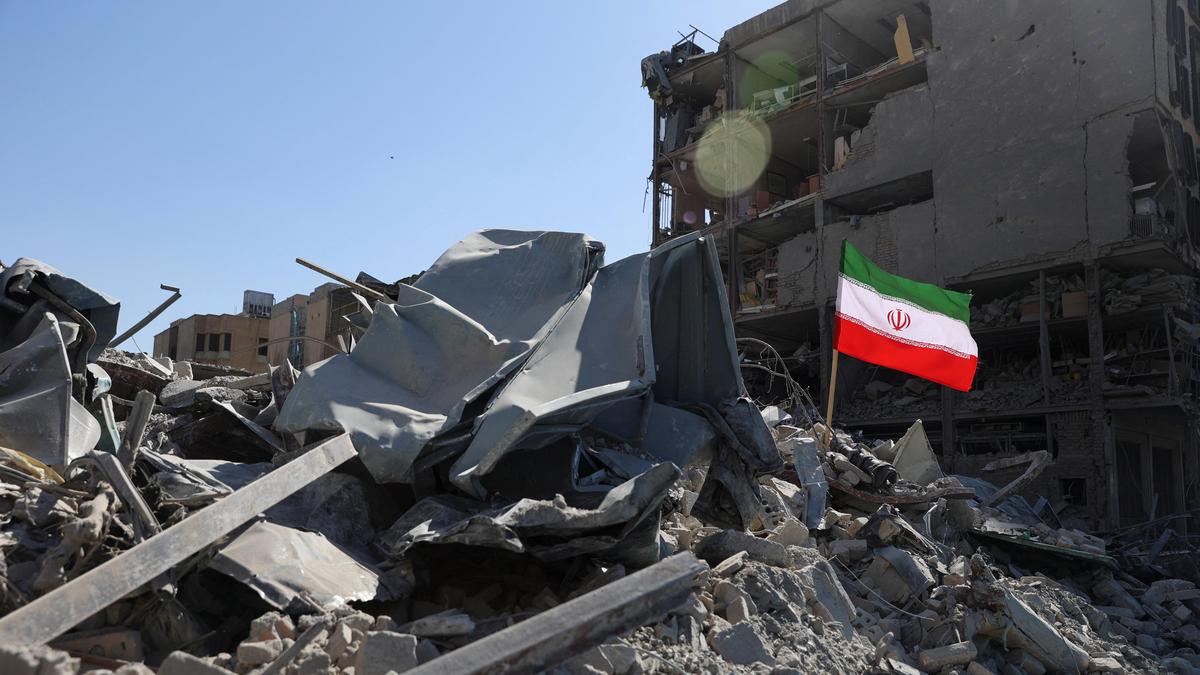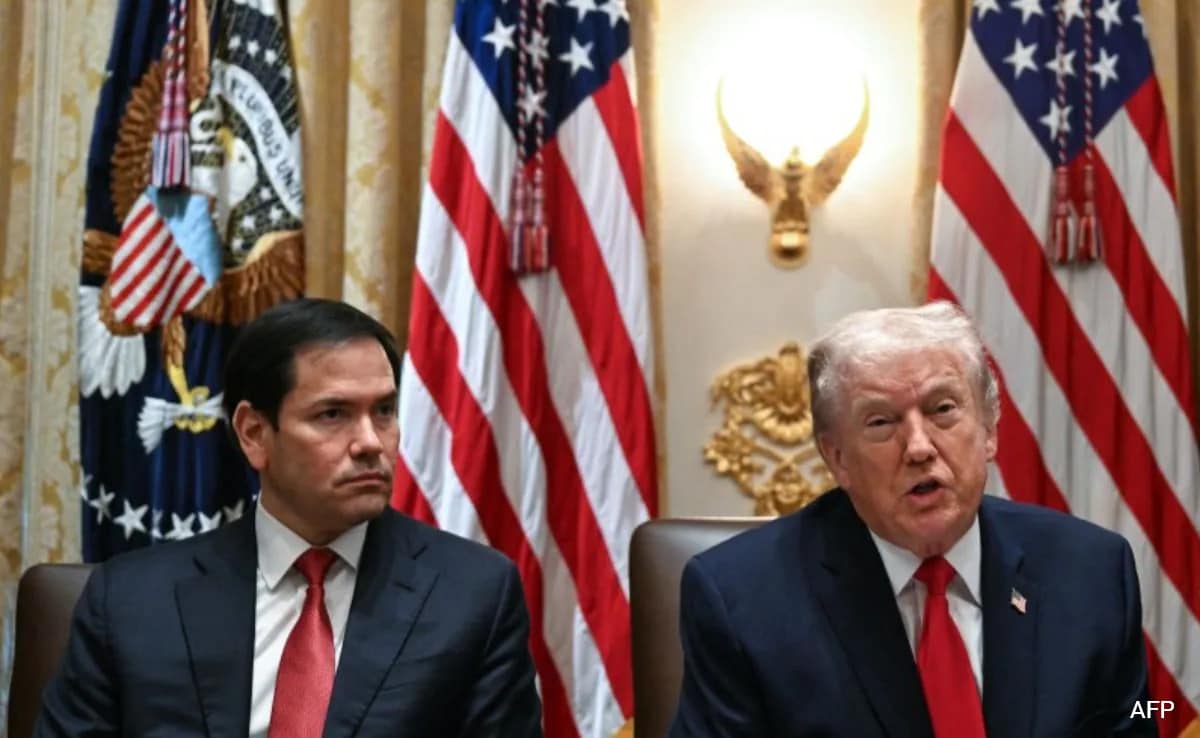
You are reading a script written in a boardroom in Northern Virginia, and you think you are witnessing a clash of ideologies. The media wants you to believe that Donald Trump and Marco Rubio represent two fundamentally opposing paths for American involvement in the Middle East. They present you with a choice between transactional isolationism and strategic interventionism.
They are lying to you.
The disagreement between these political figures regarding Iran is not a policy debate. It is a styling choice. It is the political equivalent of deciding whether to wear a tie or a collared shirt to a board meeting where the agenda—the expansion of military influence and the preservation of regional hegemony—is already set in stone. When you focus on the "why" of the conflict, you fall directly into the trap set by the machinery of defense spending and political signaling.
The machinery does not care about the rhetoric. Whether the justification is "America First" or "Democracy Promotion," the outcome for the Pentagon remains unchanged.
The Myth of the Ideological Divide
The popular analysis suggests that Trump’s approach is defined by a desire to avoid "endless wars" through a withdrawal of commitment, while Rubio represents a more classical, muscular foreign policy that demands engagement to preserve order. This is a fairy tale.
Look at the history of the last four decades. Administrations change. Rhetoric shifts from "nation-building" to "transactional diplomacy" to "maximum pressure." Yet, the defense budget continues to climb, and the presence of US military assets in the Middle East remains remarkably constant.
The reason is simple: The United States military establishment is an institution with its own inertia. It is not a tool that perfectly aligns with the transient, poll-tested desires of a president or a senator. It is a massive, self-sustaining bureaucracy. When a politician takes office, they do not steer this ship; they are merely passengers who get to choose which port to visit next, provided the engine keeps running.
If you analyze the conflict through the lens of political philosophy, you will always be wrong. You must analyze it through the lens of institutional preservation.
Following the Money Trail
Stop looking at the press releases and start looking at the contracts.
The military-industrial complex thrives on instability. A period of absolute peace is not just bad for business; it is an existential threat to the budget. This is not a conspiracy; it is basic economics. If you manufacture components for long-range missiles, stealth aircraft, or naval support systems, you require a global theater that justifies the continuous procurement of your product.
When a politician like Rubio speaks about the necessity of confronting Iran, he is not just speaking to voters. He is speaking to the donors, the contractors, and the lobbyists who populate the committees that authorize the spending. He is telegraphing that the "threat" is real and, more importantly, that it is expensive to address.
When Trump pivots, he is not necessarily arguing for peace. He is often arguing for a shift in who pays for the security architecture. He wants other nations to foot the bill for the instability they are allegedly creating. This is not a retreat from the global stage; it is a demand for a higher return on investment.
Both approaches require a baseline of tension. Without the looming threat of an Iran-backed conflict, the justification for the multi-billion dollar naval deployments in the Gulf evaporates. The tension is the product. The political justification is the marketing.
The Failure of the "Why" Question
The mistake you are making is asking "Why would we go to war with Iran?" or "What is the reason they are providing?"
These questions assume that the war is a deliberate, rational choice made by leaders weighing the moral and strategic pros and cons. That is a naive perspective. The reality is that we do not "choose" to enter these conflicts in the way you choose to buy a car. We slide into them.
We slide into them because the mechanisms of alliance, deterrence, and bureaucratic momentum create a situation where the path of least resistance leads to escalation.
Imagine a scenario where a drone strike occurs, or a tanker is seized. Does the president have a menu of options? No. He has the military establishment telling him what is possible, his political advisers telling him what is palatable, and a terrified public being fed a narrative of national security risk. The "reasons" provided by a Rubio or a Trump are essentially post-hoc justifications for an inevitable response.
The Institutional Reality
You need to understand the concept of "administrative drift." In government agencies, policy does not change rapidly because a new person sits behind the desk. It changes slowly, and often, not at all. The career officials at the State Department, the Pentagon, and the intelligence agencies provide the continuity. They provide the briefing books. They define what is "feasible."
When you hear a politician arguing for a specific path, they are often just reciting the options presented to them by these institutions. The "conflict" between different political styles is mostly performative. It gives the illusion of democratic control over foreign policy when, in reality, the trajectory is locked.
The Real Question to Ask
If you want to understand what is happening, you must stop asking "Why?" and start asking "Who benefits from this escalation?"
Stop paying attention to the speeches on the Senate floor. They are designed to satisfy the base and secure the donors. Instead, look at the procurement schedules. Look at the shift in military exercises. Look at where the supply lines are being reinforced.
If the government is truly preparing for a pivot or a conflict, the financial data will always be the first to tell the story. The rhetoric will lag, often by months. The stock prices of companies like Lockheed Martin, Raytheon, and General Dynamics are more accurate indicators of future military policy than any statement released by a press secretary.
How to Survive the Noise
The temptation to pick a side is overwhelming. You want to believe that there is a "correct" way to handle the Middle East. You want to believe that if we just had the right person in charge, the constant cycle of threats and posturing would end.
This is the most dangerous illusion of all. It keeps you invested in the system. It keeps you watching the news, clicking the links, and debating the merits of one flawed strategy over another.
Here is how you break the cycle:
Treat All Statements as Marketing: Whenever you read a justification for foreign military action, replace the politician's name with "CEO of Defense Corp" and see if the statement makes more sense. It almost always will.
📖 Related: Why the Middle East War Just Changed ForeverTrack the Procurement: Do not watch the news; watch the budget. The government tells you what it values by what it pays for. If a region is being built up with new infrastructure, that is where the conflict will happen, regardless of what the politicians say.
Ignore the Morality: The moral arguments are for the voters. They have no place in the calculations of power projection. The sooner you strip away the language of "values" and "democracy," the sooner you will see the mechanics of power.
Follow the Inertia: Assume that the current path will continue indefinitely. It takes a massive, exogenous shock to change the direction of a superpower’s military policy. A change in president is rarely enough to constitute such a shock.
The debate between Trump and Rubio is not about the future of the Middle East. It is about who gets to manage the decline of American influence, or who gets to oversee the next phase of its expansion. They are arguing over the seat, not the destination.
You have been conditioned to look for a hero to save you from the war, or a villain to blame for it. You should be looking for the machine that creates the war, and acknowledging that it does not serve you. It serves its own perpetuation.
The narrative of "conflicting reasons" is the smoke. The fire is the institutional appetite for perpetual, manageable tension. Keep your eyes on the fire, not the smoke. And stop acting surprised when the machine does exactly what it was designed to do.