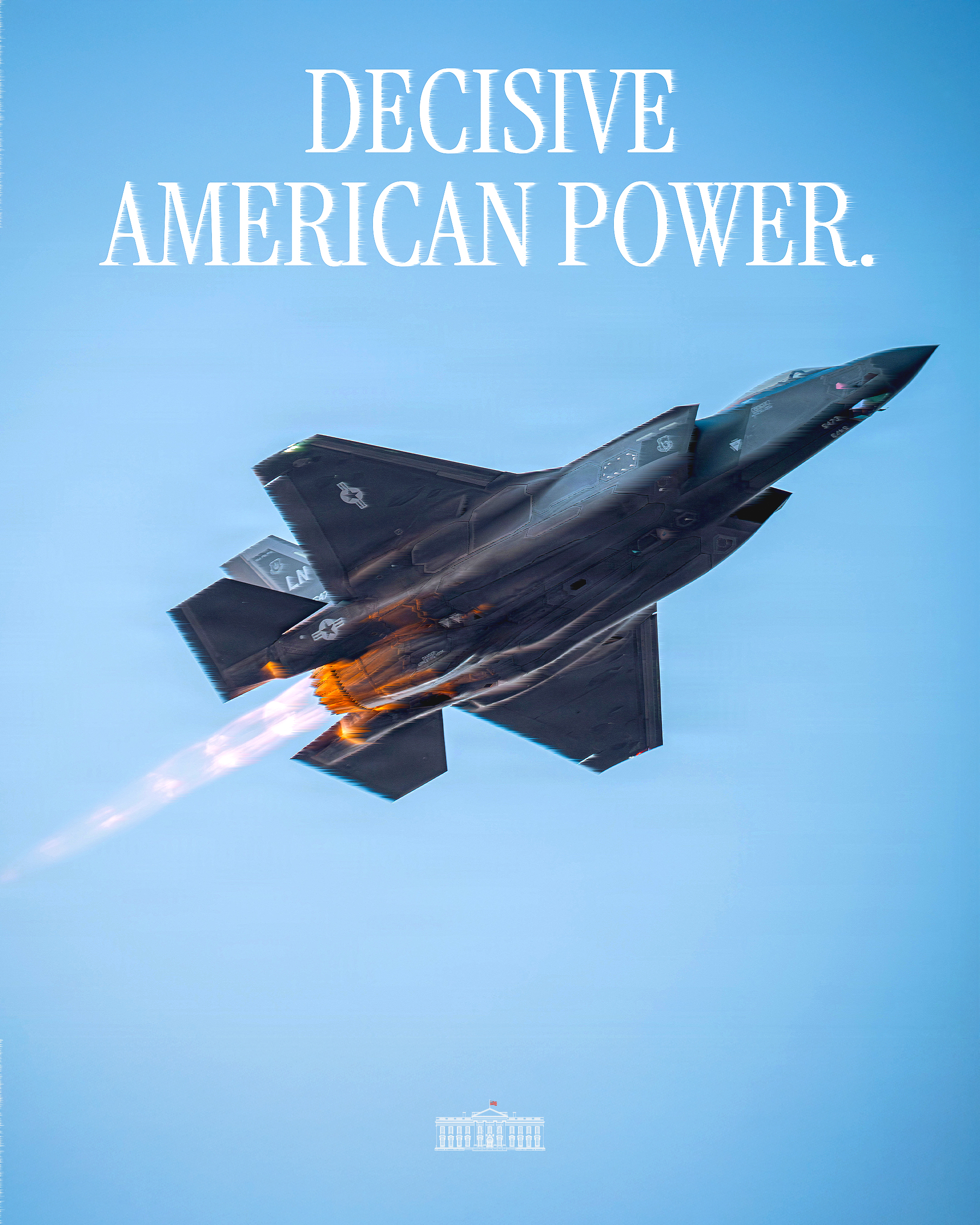
The desert air near the Nevatim Airbase doesn’t just shimmer with heat. It vibrates. When an F-35 Lightning II approaches for landing, the sound isn't a roar so much as a tearing of the sky itself. It is the sound of $100 million of carbon fiber and classified algorithms defying the very idea of being seen.
But on a Tuesday that felt like any other, that sound changed. It became labored. A stutter in the mechanical breath of the world’s most advanced warplane.
The pilot, encased in a helmet that costs more than a suburban home, wasn't looking at a traditional dashboard. He was seeing through the floor of his own jet via a distributed aperture system, a god-like perspective provided by six infrared cameras. Yet, all the processing power in the world cannot compute away the visceral instinct of a human being who realizes their multi-ton kinetic sculpture is no longer behaving.
An emergency landing followed. It was caught on grainy footage, a puff of smoke from the tires, a heavy settle onto the tarmac. To the casual observer, it was a technical glitch. To the geopolitical strategist, it was a crack in the armor of Western aerial hegemony.
The Claim in the Static
Thousands of miles away, in the command centers of Tehran, a different story took flight. The Iranian military didn't see an "emergency landing." They claimed a scalp. They announced to the world that they had achieved the impossible: the first successful kinetic or electronic "hit" on a fifth-generation stealth fighter.
The Pentagon countered with the sterile language of bureaucracy. They spoke of "technical malfunctions" and "precautionary measures."
This is where the truth stops being a list of parts and starts being a psychological war. In the world of high-stakes defense, perception is often more lethal than a missile. If a stealth jet can be touched—even if that "touch" is a glitch triggered by a sophisticated electronic jammer—the invisibility that the United States has spent decades and trillions of dollars to buy starts to evaporate.
Consider a hypothetical engineer named Elias. He has spent fifteen years obsessed with the Radar Cross Section (RCS) of the F-35. To Elias, the plane isn't a weapon; it’s a mathematical miracle. Its shape is designed to reflect radar waves away from the source, making a massive bird of prey look like a bumblebee on a radar screen.
When a claim emerges that this "bumblebee" was swatted, Elias doesn't just look at the damage to the fuselage. He looks at the damage to the deterrent.
The Ghost in the Machine
We often think of warfare as a game of "who has the bigger hammer." But the F-35 is less of a hammer and more of a ghost. Its primary job isn't to dogfight; it is to manage the battlefield from the shadows, networking with ships, satellites, and other aircraft to strike before the enemy even knows a fight has begun.
The vulnerability of such a system isn't always a hole in the wing. Sometimes, it’s a hole in the code.
Imagine the cockpit as a digital cocoon. The pilot is fed a "fused" picture of reality. If an adversary like Iran manages to inject noise into that fusion—a process known as electronic warfare—the pilot’s "god view" becomes a hall of mirrors. You don't need to blow a wing off to win. You just need to make the pilot lose faith in what his sensors are telling him.
The US military confirmed the emergency landing but remained tight-lipped about the "why." Was it a bird strike? A hydraulic failure? Or was it a successful test of a new Iranian electronic countermeasure?
By refusing to elaborate, the vacuum is filled by the loudest voice. In this case, that voice claimed a historic victory.
A Trillion Dollar Shadow
The stakes of this incident are buried under layers of national pride and defense contracts. The F-35 program is the most expensive weapon system in human history. Its price tag is roughly $1.7 trillion over its lifetime.
When you spend that kind of money, you aren't just buying a plane. You are buying the guarantee that you own the sky. You are buying a decade of peace through absolute, unquestioned technical superiority.
But technology is a moving target.
While the US was perfecting stealth, its rivals were perfecting ways to see the unseeable. They invested in "over-the-horizon" radar, passive detection systems that look for the turbulence a stealth jet leaves in the air, and sophisticated jamming arrays.
If Iran’s claim holds even a grain of truth, it suggests that the gap is closing. It suggests that the billion-dollar ghost is starting to cast a shadow.
The Human in the Loop
Behind the headlines of "hits" and "landings" is a person whose heart rate was likely 160 beats per minute as they guided a crippled titan back to Earth.
The pilot’s experience is the ultimate filter. No matter how many simulations are run, the reality of an emergency landing in a high-tension zone is a brutal reminder of human fragility. The machine might be stealthy, but the person inside is still made of blood and bone, susceptible to the same adrenaline and fear that pilots felt in the biplanes of 1917.
There is a certain irony in our obsession with these machines. We build them to be autonomous, intelligent, and invisible so that we don't have to risk the human element. Yet, when the software fails or the enemy finds a way to pierce the digital veil, we are left right back where we started: relying on the steady hands of a pilot to prevent a catastrophe from becoming a global incident.
The F-35 sat on the runway, a silent testament to the complexity of modern power. It didn't look broken. It looked like a puzzle.
The Cost of a Doubt
The real fallout of this event isn't the repair bill for a single aircraft. It’s the seed of doubt planted in the minds of allies and adversaries alike.
In the corridors of power in East Asia, the Middle East, and Eastern Europe, leaders are watching. They are asking if the "invisible" shield they’ve been promised is actually porous. They are wondering if the era of the untouchable superstar jet is ending before it truly began.
Warfare has always been an evolutionary race. The knight’s armor was invincible until the longbow appeared. The battleship was the king of the sea until the dive-bomber took its crown.
We are currently witnessing the most expensive evolutionary pivot in history. The F-35 is the pinnacle of the current era, but the "hit" claimed by Iran—whether it was a physical strike, an electronic disruption, or a lucky technical failure—serves as a reminder that every predator eventually meets an environment it cannot dominate.
The dust has settled on the runway at Nevatim. The jet will likely fly again. The sensors will be recalibrated, the code patched, and the official reports filed away in windowless rooms.
But the narrative has already shifted.
The world watched a ghost touch the ground because it had no other choice. And in that moment, the aura of invincibility didn't just crack; it breathed. It reminded us that even in a world governed by $1.7 trillion lines of code, the ultimate reality is still written in the dirt, the fire, and the frantic breath of a human trying to find the earth.
The sky is no longer a sanctuary of secrets; it is a crowded room where everyone is starting to learn how to see in the dark.