The border between North and South Korea does not feel like a geopolitical chess square when you stand near it. It smells of wet earth, low-lying fog, and pine needles. If you look closely at the DMZ on a quiet morning, you might see a white-tailed sea eagle soaring over the barbed wire, completely indifferent to the decades of human fury frozen in the dirt below.
For the people living in the frontline border towns like Paju, this uneasy quiet is a daily companion. But lately, the silence has felt heavy. It is the kind of quiet that precedes a thunderstorm, signaled not by dark clouds, but by a shift in the wind and a sudden drop in pressure.
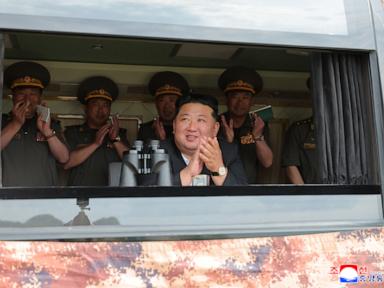
North Korea’s recent declarations have sent a chill through these valleys. Leader Kim Jong Un called for a "destructive" military readiness, a sharp escalation in rhetoric even by the standards of the Korean Peninsula. Across the border, Seoul responded not with mere words, but with a promise to dramatically scale up its fleet of reconnaissance and attack drones.
This is no longer just a war of heavy artillery and massed infantry. The confrontation has migrated into the grey zone of the sky. It is a conflict of invisible frequencies, whirring electric motors, and the terrifying realization that the next flashpoint might be triggered by a machine no larger than a bird.
The Sound of the Shift
To understand how we reached this point, we have to look past the grand military parades in Pyongyang and the high-tech press releases in Seoul. Consider the reality of a modern border guard. For decades, vigilance meant peering through binoculars, watching for footprints in the mud, or listening for the snap of a twig.
Now, danger is airborne and nearly silent.
When North Korea dispatched five small drones across the border in late 2022, it shattered the illusion of a secure airspace. One of those rudimentary aircraft even managed to drift into the no-fly zone surrounding South Korea’s presidential office in Seoul. They weren't carrying payloads of explosives. They didn't need to. The damage was psychological.
It proved that the heavily fortified border could be breached by off-the-shelf technology.
Imagine a young South Korean conscript stationed at an observation post. The night is pitch black. Suddenly, there is a faint, rhythmic buzzing overhead, like a swarm of angry hornets. By the time the sound registers, the object is already gone, leaving behind a profound sense of vulnerability. That single event forced a massive reassessment of defense strategy in the South. It revealed that traditional air defense systems, designed to track fast-moving fighter jets and ballistic missiles, are frustratingly blind to slow, low-flying plastic drones.
The Calculus of Destruction
Pyongyang’s latest rhetorical pivot toward a "destructive" posture is a direct response to this changing dynamic. Kim Jong Un's language is intentionally absolute. It is designed to project a terrifying certainty in an era where the North feels increasingly outpaced by the South's technological and economic dominance.
But behind the bluster lies a calculated military logic.
North Korea knows it cannot win a conventional tech war against a South Korea backed by American muscle. A single South Korean stealth fighter costs more than the annual budget of entire North Korean provinces. Therefore, the North relies on asymmetry. If the South builds a sophisticated digital society, the North threatens to obliterate it with overwhelming, low-tech brutality—artillery, nuclear threats, and now, swarms of cheap, deniable drones.
The danger of this "destructive" doctrine is that it shortens the fuse on a potential conflict. When a leadership structure views defense through the lens of preemptive annihilation, the room for diplomatic error shrinks to zero. A misidentified radar blip or a malfunctioning drone losing its way in the fog could be interpreted as the opening salvo of an invasion.
The stakes are no longer measured in political points. They are measured in the minutes it takes for an artillery shell to cross the twenty-some miles from the border to the crowded streets of Seoul.
The Automated Sentinels
In response to the northern threat, South Korea is leaning heavily into its greatest strength: innovation. The defense ministry's vow to boost its drone capabilities is not just a modest increase in inventory. It is a fundamental rewriting of how the nation plans to defend its borders.
Seoul is establishing an entire military architecture centered around unmanned systems. These are not the massive, multi-million-dollar drones seen in global conflicts over the past two decades. Instead, they are smaller, agile, and increasingly autonomous.
Think of them as digital counterweights to the North's sheer numbers.
The plan involves deploying thousands of these automated sentinels along the DMZ. Some are designed for pure surveillance, using artificial intelligence to detect the slightest movement in the brush. Others are built to intercept incoming threats, acting as kamikaze units that ram enemy drones out of the sky.
But this technological shield introduces its own set of anxieties. When both sides rely on automated systems to monitor and defend a border, the human element—the capacity for hesitation, empathy, and common sense—is slowly stripped away. A machine does not understand the nuance of a false alarm. It only understands inputs and outputs. If a drone is programmed to treat an unauthorized border crossing as a hostile act, it will execute its command without pausing to consider the geopolitical fallout.
The Human Weight of the Stalemate
It is easy to get lost in the terminology of military hardware, to talk about payloads, frequencies, and deterrence as if they were pieces in a board game. But for the twenty-six million people living in the Seoul metropolitan area, this techno-military escalation is an undercurrent of daily life.
You see it in the yellow-and-black signs pointing toward underground shelters in subway stations. You see it in the regular civil defense drills, where the sirens wail and traffic grinds to a temporary halt. The people of South Korea have built a miracle of modern civilization—a vibrant, hyper-connected cultural powerhouse—right beside a neighbor that threatens its total destruction.
They live with a profound, compartmentalized anxiety. It is a collective agreement to look forward, to build the future, while ignoring the low-frequency hum of a seventy-year-old war that never truly ended.
The introduction of mass drone warfare along the peninsula changes the color of this anxiety. It makes the threat intimate. A missile is abstract until it hits; it exists in the upper atmosphere, a distant mathematical problem. A drone is different. It is visceral. It is an uninvited eye looking down from the clouds, an anonymous visitor that brings the frontline directly to the city square.
The sky above the peninsula, which for decades belonged only to the birds and the weather, has become the new frontline. As the South accelerates its drone production and the North sharpens its destructive rhetoric, the space for peace feels narrower than ever. The tragedy of the Korean division has always been its longevity—how generation after generation inherits a quarrel they did not start. Now, that old quarrel is being handed over to machines, leaving the humans below to watch the clouds, listening for the faint, unmistakable buzz of an uncertain tomorrow.