The plastic handle of the grocery basket digs a little deeper into Elias’s palm today. He stands in line at a supermarket in a quiet suburb, watching the digital numbers flicker on the register screen. It is a rhythmic, mechanical dance. Beep. $4.99. Beep. $7.25.
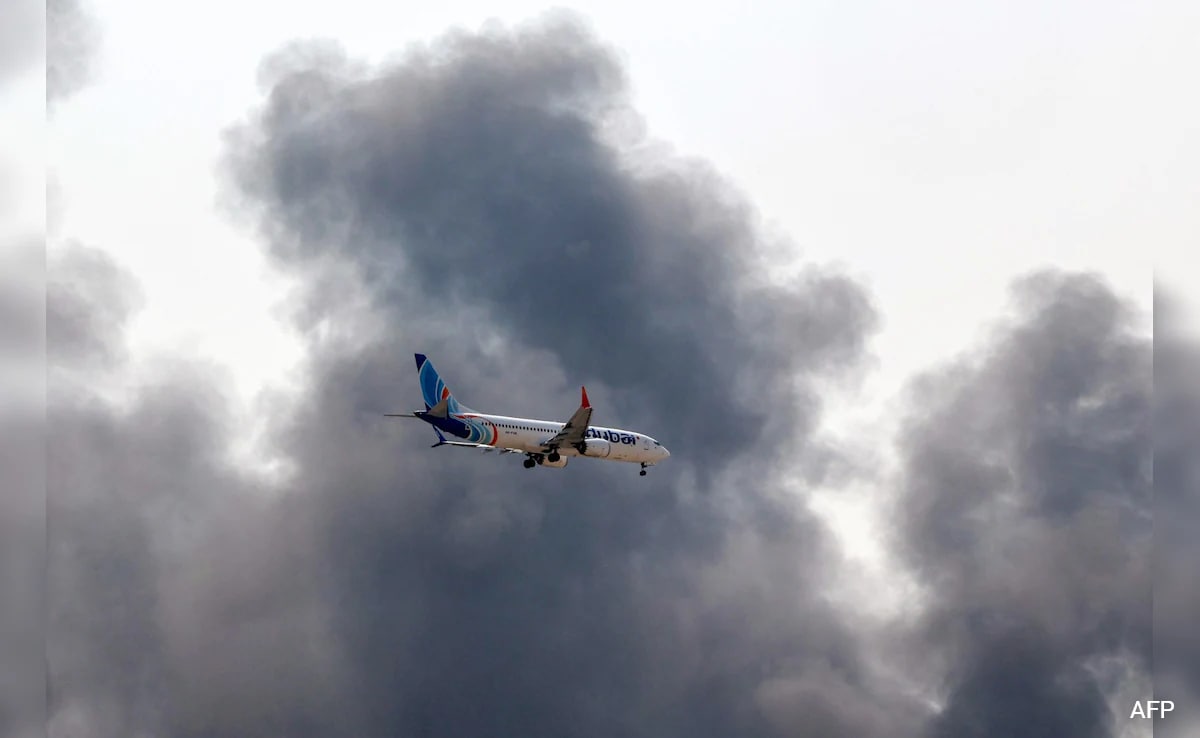
Behind those numbers, thousands of miles away, the sky over the Middle East is thick with the smoke of a widening conflict. Most people see the headlines about missile trajectories and diplomatic failures and think of it as a distant tragedy—a storm breaking on a far shore. But the storm has a way of traveling. It doesn't arrive with a bang; it arrives in the quiet, creeping increments of a price tag being swapped out on a Tuesday morning.
When war breaks out in a region that serves as the world’s primary pumping heart for energy, the blood pressure of the global economy spikes instantly. We are seeing that spike now. It is not just about the cost of a gallon of gasoline, though that is the most visible wound. It is about the "invisible tax" that war levies on every single object that requires heat, motion, or plastic to exist.
The Ghost in the Supply Chain
Consider the journey of a single bag of frozen peas. To understand why it costs thirty cents more today than it did last month, you have to look at the ghost of logistics.
First, there is the farm. Modern agriculture is, at its core, a way of turning petroleum into food. The tractors run on diesel. The fertilizers are derived from natural gas. When geopolitical instability drives up the price of crude oil, the cost of growing that pea rises before it even leaves the soil.
Then comes the transit. Imagine a massive container ship charting a course through the Red Sea or near the Strait of Hormuz. These are the world’s most vital arterial chokepoints. When a conflict escalates, these waters become a gamble. Insurance premiums for these vessels don't just rise; they skyrocket. A shipping company facing a 400% increase in insurance costs isn't going to absorb that loss out of the goodness of its heart.
They pass it down. It travels from the ship to the distributor, from the distributor to the wholesaler, and finally, to the shelf where Elias is standing. By the time he touches the bag, he isn't just paying for peas. He is paying for the risk taken by a captain in the Gulf, the premium paid to a London insurer, and the extra fuel burned by a truck idling in traffic.
The Psychology of the Hedge
Business is often portrayed as a cold calculation of spreadsheets, but in times of war, it is driven by a very human emotion: fear. Specifically, the fear of the unknown.
When a CEO looks at a map of a destabilized Iran, they aren't just seeing a conflict; they are seeing a "supply shock" waiting to happen. To protect the company's survival, they often engage in what is known as "preemptive pricing." They raise prices now because they anticipate that their own costs will be even higher tomorrow.
It is a defensive crouch.
If a manufacturer knows that the resin used for their packaging—a byproduct of oil refining—is going to become scarce or expensive, they adjust their margins immediately. They can't afford to wait for the bill to arrive. This creates a feedback loop. The expectation of inflation becomes the cause of inflation. The narrative of war becomes a self-fulfilling prophecy at the cash register.
For the consumer, this feels like a betrayal. We hear news of record corporate profits alongside news of global suffering, and the dissonance is jarring. It feels as though the chaos of the world is being used as a convenient veil for opportunism. While that may be true in some boardrooms, for the vast majority of the economy, it is a desperate scramble to stay ahead of a wave that hasn't even hit the shore yet.
The Fragility of the "Just-in-Time" World
We live in an era of terrifying efficiency. For decades, the global "just-in-time" supply chain was hailed as a miracle of modern engineering. We stopped keeping warehouses full of extra parts. Instead, we relied on the fact that a component could be ordered in one hemisphere and arrive in another within forty-eight hours.
War is the natural enemy of this efficiency.
When conflict flares, the "just-in-time" model breaks. A delay in a shipping lane doesn't just slow down one product; it halts entire assembly lines. Think of a car manufacturer waiting on a specific sensor or a tech firm waiting on specialized chemicals. When supply becomes unpredictable, the price of the remaining supply becomes astronomical.
This is the "invisible stake" we all hold in global peace. Our daily lives are built on the assumption of a frictionless world. We assume the lights will turn on, the shelves will be stocked, and the price of bread will be roughly what it was yesterday. Conflict is the friction that heats up the system until it glows.
The Human Toll of a Decimal Point
Elias finally reaches the front of the line. The cashier is a teenager who looks tired, someone who likely hasn't spent much time studying the complexities of Middle Eastern geopolitics. She doesn't see the connection between a drone strike and the fact that she has to explain to a frustrated customer why the store no longer honors old coupons.
"Total is $84.22," she says.
Elias pauses. He remembers when this exact haul was $60. He thinks about his budget, the small margins of his own life, and how they are being squeezed by forces he cannot control and will never meet.
This is where the grand strategies of nations meet the kitchen table. We talk about "macroeconomics" as if it is a weather pattern, something that happens above us. But macroeconomics is just the sum of millions of small, painful choices. It is the choice to buy the store-brand cereal. It is the choice to cancel a weekend trip because the gas tank is too expensive to fill. It is the quiet anxiety of wondering if your paycheck will have the same muscle next month that it has today.
The tragedy of war is first and foremost the loss of human life, the destruction of culture, and the displacement of families. That weight is immeasurable. But there is a secondary, creeping tragedy that ripples outward, crossing borders and oceans. It is the slow degradation of security for people who have nothing to do with the fighting.
The global economy is an intricately woven web. You cannot pull a single thread in Tehran without feeling the tug in Toledo.
As the sun sets, casting long shadows over the parking lot, Elias loads his bags into his car. He starts the engine, watching the fuel gauge needle hover just above a quarter tank. He is part of the story now, a reluctant character in a narrative written by hawks and diplomats.
He drives away, and the digital sign at the corner gas station flickers. The numbers change again. Upward. Always upward. The war is far away, but the cost is already home.